Charlie Kirk vs. Richard Reeves:  Messages To Young Men

Charlie Kirk vs. Richard Reeves: Messages To Young Men

As we process the tragic death of Charlie Kirk, let’s not debate the content of his character; instead, let’s acknowledge and understand the content and legacy of his ideas. ~ S.F.

Charlie Kirk was a powerful voice that spoke to young men in America. As author of over 10 blog posts on Richard Reeves’ book, Of Boys and Men, (introductory post on website below),

https://www.matingstraighttalk.com/visitation-of-a-crisis-in-six-parts/

I feel compelled to consider what Charlie Kirk said to men and boys and compare and contrast that with the diagnosis and solutions offered by Richard Reeves.

In this long post, I address:

  • Kirk’s message to young men
  • Kirk vs. Reeves — diagnosis and solutions: shared concerns and disagreements
  • Kirk’s blind spots related to social and economic policies
  • Criticism of Reeves diagnosis and solutions
  • Summary of agreement and disagreement between Kirk and Reeves
  • Concluding reflections: Kirk’s biblical model of marriage and the mating marketplace
  • Addendum: making matters worse — failures of the Left and the Right

What Messages Did Charlie Kirk Have for Young Men in America?

 “The biblical model for women is to have a partner who is a protector and a leader … and deep down, a vast majority of you agree.” ~ Charlie Kirk

Charlie Kirk built a substantial following among young men by addressing their feelings of alienation and insecurity with messages centered on traditional masculinity, Christian conservatism, and American exceptionalism.

Kirk’s approach combined conservative rhetoric with social media savvy, providing a sense of community for those who felt disenfranchised by mainstream culture and academia.

Embrace Traditional Masculinity and Family Values

A significant aspect of Kirk’s message was his call for young men to embrace traditional gender roles and family structures. He suggested that many of their anxieties stemmed from modern society’s erosion of masculinity and promoted a return to a “mythical past… where men were really men.” This included:

  • Prioritizing marriage and family: He promoted the traditional path of marriage and starting a family.
  • Standing up for beliefs: He encouraged young men to be bold in their convictions, offering a model of audacity that appealed to those who feared expressing conservative views on college campuses and elsewhere.

Overcome Financial Hardship and Embrace Opportunity

Kirk also presented a message of economic empowerment that resonated with young men struggling with financial concerns.

  • Rejecting poverty: He told his audience they did not have to “stay poor” or accept being “worse off than your parents”.
  • Criticizing government spending: He argued that Democrat policies and spending on foreign nations and undocumented immigrants worsened the financial prospects for young Americans.
  • Entrepreneurship over college: In some instances, he advocated for entrepreneurship as an alternative to college, suggesting that one could always return to school later.

Find Strength in Christian Faith

For many young men, Kirk’s open and unapologetic defense of his Christian faith was a significant source of inspiration.

  • His Christian conservative values resonated with followers who felt looked down upon for their religious beliefs in a mainstream, liberal-leaning culture.
  • This defense made his followers feel less lonely and affirmed their values within a supportive community.

Defend Freedom and Engage in Debate

Kirk consistently encouraged young men to engage in what he saw as a battle of ideas, particularly on college campuses.

  • He highlighted what he called the “rigidity of progressive culture.” He promoted and framed campus debates in a way that made young men feel powerful and superior.
  • He founded Turning Point USA to bring young people into the political process and spread his message of “common sense”.
  • He presented himself as a patriot who fought for “liberty, democracy, justice, and the American people” — championing American values.

Leverage a Sense of Shared Grievance

At the heart of Kirk’s message was an understanding of young men’s feelings of social isolation and anxiety.

  • Giving a voice to the voiceless: By offering seemingly simple, traditional narratives, he presented solutions to young men grappling with uncertainty in their lives.
  • Building an online and campus community: He used his platform and organization to create a community for disaffected young men, especially white men, who felt out of step with what he described as overly “woke” culture.

Charlie Kirk vs. Richard Reeves: Diagnosis and Solutions for Boys and Men

“What is needed is a positive vison of masculinity that is compatible with gender equality. We need a prosocial masculinity for a post-feminist world.” ~Richard Reeves

Charlie Kirk and Richard Reeves both acknowledge the existence of significant problems facing boys and men in modern America, including struggles in education, work, and family life.

However, their fundamental diagnoses of the root causes and their proposed solutions differ sharply, stemming from divergent ideological perspectives. Kirk would likely agree with Reeves’s diagnosis on some statistical observations but would reject his solutions as insufficient and ideologically flawed.

Shared Areas of Concern

  • Underperformance in education: Reeves highlights the gender gap in education, noting that boys are now significantly less likely than girls to earn a bachelor’s degree. This would likely resonate with Kirk, who attributes male educational struggles to an “institutionalized attack on manhood” and education policies that disadvantage boys.
  • Decline in the labor market: Both would acknowledge the economic challenges facing many men, including the decline of traditionally male jobs and the stagnation of wages for less-educated men. Kirk would attribute this to broader systemic failures by a liberal establishment, while Reeves views it as a structural challenge requiring new policy interventions.
  • Breakdown of family and social structures: Reeves identifies high rates of fathers not living with their children and the “friendship recession” among men as significant problems. Kirk would wholeheartedly agree with this diagnosis, blaming it on the erosion of traditional marriage and family values, and the rise of a “hook-up culture” driven by what he calls “radical feminism”.

Fundamental Points of Disagreement

Kirk’s “Blind Spots:” Solutions for Men and Boys in the Context of Republican Social, Economic, and Tax Policies

Charlie Kirk’s messaging to young men on economic issues often focused on personal responsibility and criticizing liberal economic policies, without addressing how Republican social, economic, and tax policies might contribute to the very problems he identified. This is a key blind spot in his analysis.

Kirk’s rhetoric framed the struggle of young men in terms of cultural decay and political opposition, but it largely sidestepped the effects of the policies his own movement championed.

Kirk Focused on Cultural Issues Over Economic Structures

Kirk’s primary focus remained on cultural issues, and he often attributed the economic struggles of young men to the “woke” political establishment rather than to structural economic factors.

  • Emphasis on individualism: He emphasized individual empowerment and entrepreneurship as a solution for young men, without a critical examination of how broader economic shifts affect earning potential, especially for those without higher education.
  • Overlooking the wealth gap: While Kirk acknowledged the financial plight of young Americans, he frequently failed to connect this to the growing income and wealth gap exacerbated by tax cuts that disproportionately benefit the wealthy.

Uncritical Support for Republican Tax Policies

Kirk was a staunch supporter of Republican tax cuts, such as the 2017 Tax Cuts and Jobs Act, which lowered the corporate tax rate and primarily benefited the wealthiest Americans.

  • Impact on young families: These policies had little to no effect on addressing the struggles of working-class men trying to achieve traditional milestones, such as buying a home or starting a family. Instead, they added trillions to the national debt, which some economists argue could lead to cuts in social services that aid lower- and middle-income families in the long run.
  • Regressive tax proposals: In August 2025, Kirk floated a flat income tax proposal, which critics quickly pointed out would place a higher tax burden on lower- and middle-income earners while benefiting the wealthy, thereby increasing income inequality.

Inadequate Solutions for Working-class Men

Kirk’s solutions often centered on a revival of traditional masculinity and rejection of perceived liberal excess, which did not adequately address the economic realities faced by many working-class men.

  • Ignoring stagnant wages: He did not provide a coherent explanation for the long-term trend of stagnant wages and reduced bargaining power for blue-collar workers. This trend accelerated during decades of Republican and Democratic deregulation and trade policies.
  • Lack of policy substance: His message lacked concrete policy proposals to address the declining manufacturing sector or the rising cost of living, which are significant economic hurdles for the demographic he targeted. Instead, he blamed political opponents and cultural forces.

Blind Spots Regarding Social Policy

While Kirk preached the importance of traditional family roles and male leadership, the specific Republican social policies he supported could undermine the stability of working-class families.

  • Undermining the social safety net: Some Republican welfare reform proposals, including work requirements for welfare recipients, have been criticized for disproportionately harming low-income families and making it more difficult for men with fluctuating employment to access benefits.
  • The cost of basic needs: Republican tax cuts and deregulation have been criticized for increasing the cost of necessities, such as healthcare, potentially putting more strain on families and undercutting the very stability they were intended to promote.

Disconnecting Economic and Social Issues

Kirk’s rhetoric tended to compartmentalize economic and social problems, treating them as separate issues rather than interconnected ones.

  • The cost of traditional life: The high cost of housing, healthcare, and education—aggravated by many Republican economic policies—directly contradicts Kirk’s idealized vision of young men achieving traditional life milestones, such as home ownership and starting a family. By not acknowledging these connections, Kirk’s solutions appear disconnected from the real economic pain experienced by his target audience.
  • Ignoring data on marginalized groups: His focus on cultural grievances often obscured the disproportionate economic impact of specific policies on marginalized communities. For example, some analysts suggest Republican economic policies negatively affect Black households more significantly, a blind spot given Kirk’s focus on a predominantly white male audience.

Criticism of Reeves’ Diagnosis and Solutions

Many reviewers concede that Reeves brings together a substantial amount of data and that the phenomenon of male underperformance (on specific metrics) is indeed real. The question is not “is something wrong,” but “how much, why, and what to do.” So, criticisms are less about denying the basic facts and more about challenges in interpretation and in solution design.

  • Some critics argue that Reeves’s proposals may have unintended consequences or overlook trade-offs. For example, starting boys’ school a year later raises questions about the size of the potential advantage to boys. And there are concerns about its feasibility, cost, and the impact on girls, and how it interacts with existing policies. While it is clear that starting school later makes some sense for the cognitive maturation of boys, Katha Pollitt in The Nation (as Left as you can get) says it is a terrible idea because that means boys in middle and high school would be bigger, more sexually developed, and therefore a threat to girls.
  • Also, critics note that Reeves is relatively mute on promoting marriage or more traditional family structures compared to what some believe the data suggests would help. But as noted below (see Conclusion), Reeves was afraid of criticism from the feminist Left on that issue, the male sexual deficit, and inequality in the mating market.
  • Critics also question the political feasibility of some of the solutions and their long-term implications. For example, reforming custody systems, changing the school start age, training more male teachers, etc., are costly, difficult, and may be politically controversial.

Summary of Agreement and Disagreement

In short, Kirk and Reeves would find a superficial agreement on the symptoms of the problems facing men—that men are struggling in school, work, and family life. However, this is where the alignment ends.

  • Agreement:
    Men are struggling, and this struggle is observable in educational and economic data.
  • Disagreement:
    They hold opposing views on the fundamental reasons for the struggle and completely different philosophies for addressing it. Kirk views the problem as a cultural and spiritual battle against progressive ideology, while Reeves sees a need for pragmatic, evidence-based policy adjustments to outdated institutions. Kirk would likely dismiss Reeves’s solutions as “woke” or incremental, while Reeves would likely find Kirk’s cultural war rhetoric unhelpful and divisive.

Conclusion: Reflections on Mating Marketplace and “Biblical Model”

Neither Reeves nor Kirk directly addresses (like Scott Galloway) the problem of many young men finding partners for sex or marriage, especially as it relates to female preferences and behavior within a mating marketplace. That topic was, admittedly, too “hot” for Reeves, who was already in trouble with progressives.

Biblical Model Resonates with Evolutionary Adaptation

But the Kirk sentiment (quote above) about the biblical model* for men as “protector and leader” is congruent (in part) with aggregate studies in evolutionary psychology, mate selection science, human reproduction, and recent on-the-ground surveys of female mating preferences. While the need for male protection might be debated and resisted, male “leadership” and confidence are critical traits for a successful heterosexual partnership even in a “post-feminist” world.

I am a liberal, social progressive. Yet, Kirk’s assertion (in various videos and podcasts) that men’s well-being may be tied to a marriage (or a committed romantic relationship) that includes children and the experience of being a successful provider resonates as true.

This does not need to be an endorsement of traditional male-female roles. Or imply that the women involved are not also providing and being empowered. We do not need to couch it in a biblical context. This is just the evolutionary and intrapsychic wiring of heterosexual men.

Deep Down

When Kirk says, “deep down you agree” (see quote above), this call for male leadership (and the capacity to “protect-provide”) shows up as largely true among heterosexual women of child-bearing age in my experience and studies. “Deep down” means an “ultimate cause.”** Resisting this truth is mostly “undiscussable” on the political Left.

Traditional Marriage – “Nice Work If You Can Get It”

Kirk’s traditional (biblical model) marriage may be a great aspiration, but first, a man must be seen by women as marriageable – he must be chosen. Not being chosen is an epidemic among men. Sexual deprivation and lack of romance and intimacy are, for many men, a part of their alienation and sense of hopelessness. Neither Kirk nor Reeves would dispute that. We all suffer the repercussions of male alienation (especially from alienated men who own and are familiar with guns). Perhaps Kirk lost his life (in part) because of it.

*Obviously, and problematically, this model leaves gay, lesbian, and other queer folks in the wilderness to fend for themselves.

**Ultimate causes of human behavior and psychological processes are causes that were adaptive for survival (natural selection) or sexual selection for our ancestors, most of which occurred during the Pleistocene Epoch.

Addendum: Politicians Making Matters Worse: Failures of the Left and the Right

There is a political stalemate on issues of sex and gender in America. Both sides have entrenched themselves in an ideological position that hinders genuine change. Views on what it means to be a man in the twenty-first century have hardened along partisan lines. But as Richard Reeves writes in Of Boys and Men:

“We can hold two thoughts in our heads at once. We can be passionate about women’s rights and compassionate toward vulnerable boys and men.”

Politicians Are Making Matters Worse

Progressives refuse to accept that important gender inequalities can run in both directions. They dismiss legitimate concerns about boys and men and pathologize masculinity.

Conservatives appear more sensitive to the struggles of men and boys, but only as a justification for turning back the clock and restoring traditional gender roles. The populist Right weaponizes male dislocation and offers false promises.

Failure of the Left and the Right

“The failure of both Left and Right to respond to the growing problems of boys and men has created a dangerous vacuum in our political life. In the dynamics of culture-war politics, the more the Right moves to the extreme, the more the Left must move to the other side, and vice versa. The Left dismisses biology; the Right [perhaps] leans too heavily on it. The Left sees a war on girls and women; the Right [less ardently or clearly] sees a war on boys and men. The Left pathologizes masculinity; the Right pathologizes feminism.”

~ Richard Reeves
Please Note: Your comment may take up to 12 seconds to register and the confirmation message will appear above the “Submit a Comment” text. 
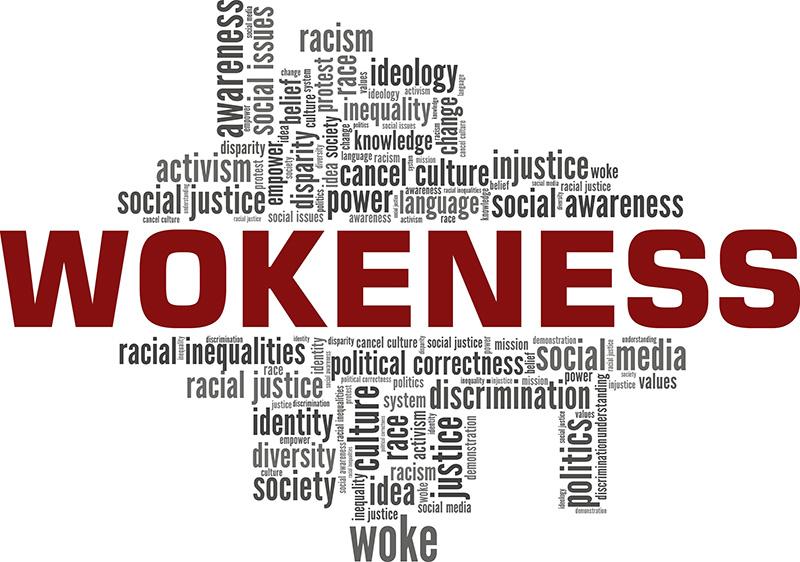
Wokeism: Good, Bad, and Misguided – a View from Mate Selection Science

Wokeism: Good, Bad, and Misguided – a View from Mate Selection Science

Prologue and Caveat – Let’s Be More Woke

Before I get into the issues of non-binary advocacy and problems with contemporary “wokeism,” as promised last week (What Does Non-Binary Mean? Biology and Politics Collide), I must revisit the true meaning of “woke” and rehabilitate its power at this moment in the early days of the Trump presidency.

“Woke” was a term borrowed from the black civil rights movement that signaled awareness of systemic injustices and a commitment to combating them.

At its root, being “woke” means being awake to (aware of) the things happening around you – including speaking out and not capitulating out of ignorance, denial, self-interest, or fear. Nothing wrong with that if one does not get “too righteous” or “elitist” in tone.

Trump, Musk, and their minions are now engaged in a soft but fast-paced coup of the U.S. federal system and the Constitution. Right now, we need to be MORE AWAKE, not less. We need to resist. I endorse being more woke to save our democracy. To quote “Elon the Great,” “we are at a fork in the road.”

Currents and Countercurrents of “Wokeness.” What a mess.

To complicate the central message of this post almost beyond recognition (and make it even less palatable to my gay friends), we now have a significant backlash against diversity, equity, and inclusion programs and a cessation of hiring targets from dozens of private companies.

Google will no longer mark cultural observances like Pride Month, Women’s History Month, and Black History Month. This is a symbolic but nasty overreach against justice and inclusion. It is another form of the fast-paced coup and demonstrates more capitulation to investors and the Trump administration — performative virtue signaling on the other end of the political spectrum.

At the World Economic Forum in Davos, Switzerland, Trump said his administration is moving to “abolish all discriminatory diversity, equity, and inclusion nonsense,” in both the government and the private sector.” Nonsense? What a mess.

(Ok, let’s shift gears and follow up from the last post through the lens of evolutionary psychology and mate selection science. The serious-minded should read the notes at the end.)

The “Wokescenti”

As wokeism infiltrated culture in the last decade, it often constructed hierarchies of moral superiority, intellectual elitism, and cultural gatekeeping, at least in the minds of the political Right. Wokeism began to accrue layers of performative virtue signaling. Meghan Daum’s term “wokescenti”* described a social class of progressive elites who wielded their “enlightened” views like a weapon, silencing descent under the guise of social justice. Yes, sometimes they do.

But the political Right mostly invented the idea of woke elites to mischaracterize their positions and demean their informed views. Science be damned. The college-educated were latte-drinking woke liberals, basking in their self-righteous superiority.

Political Implications of Non-binary Advocacy

Non-binary advocacy (and psychological identity trend) is prone to political motivation and tones of elitist “wokeism.” Such advocacy is warranted for marginalized groups within the broad and diverse LGBTQAI+ community.

But there may be a more profound purpose not openly stated: to weaken men (or “patriarchy” as they define it) and empower women generally.

Giving more power to women and less to men is arguably a good thing – but this advocacy can run off the rails of factual clarity and the rights of free speech.

Posturing and Virtue Signaling – Bad Habits of Wokeism

Modern “wokeism” is known for the display (signal) of “virtue,” or so-called “enlightened thinking,” by giving preference to the rights of oppressed communities. This awareness of outlier group identities provides a stepping stool to an elitist moral high ground, bolstering status as a sophisticated person or organization. Among Gen Z it is, no doubt, “cool” to be queer.

“Virtue signaling” can be seen every single day in advertising. Companies rush to showcase their inclusivity, saturating screens with images of interracial couples and sexual preference diversity. The line between authentic advocacy and virtue signaling is often blurred. Those companies and media productions are clearly “woke.”

Even NFL Football – as Woke as it Gets

In the recent Superbowl commercial (Leave the Past Behind), the NFL assumed it was ok to stereotype teenage boys as stupid, mean, and physically hapless when competing against girls. Featuring a white boy and black girl one-on-one, this was an unnecessary anti-male plot line used to promote girl’s flag football in high schools.

The girls outperformed the boys in a biologically inaccurate comparison of physical strength and agility. Bucking the recent trend by companies cited above, NFL Commissioner Roger Goodell recently said the NFL would continue its diversity efforts; this commercial aligns with that position.

Wokeism Supports a Social Constructivist Model of Human Difference

Contemporary wokeism primarily supports a social constructivist model of human difference. It over-emphasizes the impact of “nurture” and social conditioning and downplays the forces of nature and biology.

Evolutionary psychologists and sociobiologists know that learning (culture) and evolutionary adaptation work together – they do not conflict; they are natural explanatory partners.** Social activism, especially the most woke version, should not throw out biology to make its case.

Sometimes, this emphasis on social conditioning paradoxically conflicts with some of the claims by marginalized groups as it relates to biological sex, gender expression, and (especially) sexual preference (e.g., being born gay.)

Wokeism Paradoxically Stifles Free Speech

Perhaps the most troubling aspect of modern wokeism is its tendency to stifle free speech. Free speech was once seen as the epitome of enlightened thinking and inclusivity. But in recent years, conservative or libertarian voices have been drowned out on college campuses. Cancel culture is used as a tool of suppression. That is antithetical to a liberal education.

Men’s rights advocates (not necessarily conservative or libertarian politically) were shouted down in Canada and universities in the U.S.

Authors and advocates of a biological, evolutionary-based view of male and female differences have also been silenced or censored.

Woke Activism Does Not Include Men (or at least not White Men)

Woke activism does not include men. Wokeness does not acknowledge the legitimate concerns of men’s rights groups.

Embedded in this rationale to discount the impact on men is a pernicious premise (within the concept of patriarchy) that all men have all the power. Class intersectionality is conveniently forgotten when applied to men. Poor men, by fiat, are seen as part of an oppressive patriarchy.

To underscore this point, let me share the incisive observation of Meghan Daum:*

 For all their thinking about theories of intersectionality among oppressed groups, too many women seem to have difficulty understanding why a homeless man who whistles at a young woman as she’s off to her fancy internship every morning is not exactly a foot soldier for the patriarchy.

Mate Selection Science Recasts the Premise of the Patriarchy

As mentioned in the last post, the term “non-binary” gained traction in feminist-driven gender studies academic programs. Empowering women is a worthy goal.

However, such empowerment should also acknowledge (get ready for a heavy lift):

  • the sexual selection forces on male and female behavior,
  • the power of female preference in mate selection,
  • the collusion of women to create an uphold class hierarchy, and
  • the negative impact on men (of all races) when socioeconomic intersectionality is not applied to them.

Such acknowledgment recasts the premise of patriarchy.

Trans/Non-binary/Queer advocacy sometimes aims to:

  • De-legitimize the biological and psychological differences between the sexes – male and female. One definition of non-binary (What Does Non-Binary Mean? Biology and Politics Collide) is “neither male nor female.”
  • De-legitimize male sexuality and demonize “maleness” with subtle or not-so-subtle expressions of misandry. (See the NFL commercial above.)
  • De-legitimize or deny the existence of the male-female mating economy and the economic-erotic bargain (exchange of resources for sexual access).
  • This “bargain” is an ancient (primarily unconscious) infrastructure that rules human/primate (heterosexual) sexual reproduction and creates the expression of power and dominance hierarchies.***
  • Deny that women help create “patriarchy” and willingly participate in the economic-erotic bargain.

“Woke” Advocacy Mutes the Wisdom of Mate Selection Science

Modern dynamics of heterosexual mate selection are complicated. There are unique vulgarities of dating in the digital world, changing economics for men, and six decades of female empowerment to assimilate into contemporary male-female dynamics.

There is a (long) list of traits women prefer in their mate, some of which do not easily coexist, that exerts enormous complexity into female choice. But the ancient infrastructure, biologically and culturally encoded by thousands of years of evolutionary adaptation, remains as follows:

Men desire power and resources because women desire men who have power and resources. Female choice of mates in sexual selection drives male behavior in nearly all mammals. Female choice is the “first cause.” The motivation of men and women in sexual selection drives most human behavior and forms a symbiotic alliance.

Being Woke as Liberation

Owning our evolutionary adaptations for human reproduction may be necessary for us to be fully awake to our world. Acknowledging our biological underpinnings does not undermine the quest for equality; rather, it enriches our understanding of the forces that shape society. Being “woke” to that is not a bad habit; it is liberation and a beginning.

Acknowledging and upholding fundamental human rights and the truth that diverse teams are more productive and creative than homogeneous teams (in most cases) is also a necessary part of being awake to the world that is emerging. Being “woke” in that way is the only way forward.

One Final Reminder: Our Form of Government is Threatened

American constitutional democracy, with checks and balances, is under assault. Governmental agencies are being purged. Guard rails to protect everyday Americans are being torn down. We do not want a presidential oligarchy and kleptocracy. “I have a dream.” Let’s be “woke” to that!

Notes

*The Problem With Everything, My Journey Though the New Culture Wars, Meghan Daum, 2019

**Evolution and Learning Are Not in Conflict
Construing evolution and learning as automatically in conflict is a mistake. They are not located at the same level of analysis. Learning is a proximate explanation, whereas evolution is an ultimate one. The proximate level of analysis explains how something works, whereas the ultimate level explains why it works that way.

To say that something is a product of evolution does not imply anything about how the behavior comes about during an organism’s lifespan. Furthermore, evolutionary thinking does not suggest that behavior will be uniform across cultures but that the neurocognitive machinery that produces behavior will be uniform across cultures.

Mate selection science primarily studies the neurocognitive machinery at the ultimate level of cause – the essential components for mating and reproduction across all animal and human cultures.

***The Bargain is Part of our Neurocognitive Machinery
The bargain is more subtle and diffuse (if not undiscussable) in modern dating because it now rests primarily upon a foundation of “woke” feminist empowerment narratives.

But it remains pre-eminent or prioritized in mate choice as heterosexual women (primarily, but not entirely, of child-bearing age) navigate a tension or trade-off question: what is the necessary balance between provider-ship power and the character traits that guarantee the caretaking of children?

This question and the “bargain” are at the ultimate level of underlying neurocognitive machinery.

Please Note: Your comment may take up to 12 seconds to register and the confirmation message will appear above the “Submit a Comment” text. 
Reasons for Gender Divide in 2024 Election

Reasons for Gender Divide in 2024 Election


In the latest USA Today/Suffolk University national poll, women backed Kamala Harris, 53% to 36%. That is a mirror image of men’s overwhelming support for Trump, 53% to 37%. If these margins hold until election day, it will be the most significant disparity since a gender gap emerged four decades ago, in 1980. Among Gen Z voters, one poll had a 2% edge for Harris among men compared to a 33% advantage for Harris among women.

Four years ago, I wrote a seven-part series about our political divide through the lens of evolutionary science. Now, before the most critical election in American history, the gender gap in political affiliation is wider than ever before. In addition to contemporary cultural issues and narratives, there are reasons for this divide based on male and female adaptations for survival and reproduction.

Trump as “Strict Father”

Let’s revisit Trump’s authoritarian impulses (in the links below) and why he appeals to many men and some women. Trump says women should vote for him because he will keep them “safe.”  One of his acolytes, on a rally stage, recently demanded, “Elect Donald Trump, and bring Daddy home.”  (See George Lakoff’s 1996 book, Moral Politics; he explains how conservative moral values arise from “the strict father family.”)

Evolutionary Reasons for the Trump “Bro” Vote

Trump is also appealing directly to disaffected and aggrieved young men in swing states with a gendered, authoritarian message.  (Today, Friday, October 25, Trump is being interviewed by Joe Rogan in Austin – reaching 15 million, with 80% men and 56% between the ages of 18 and 34.) 

What I wrote in 2020 blog posts is even more accurate and troubling in 2024:

These writings are detailed and comprehensive in scope and application of evolutionary science and psychology.  Skim them if you must; read the subheads.   Read Part 2 if you can; it is more targeted for this moment.

Gendered Link Between Liberalism, Conservatism, and Authoritarianism

As explained in the blogs cited above, differences between men and women in cognition, affect, language, and social behavior mirror specific differences between liberals and conservatives. Authoritarianism is a cancerous outgrowth of conservative impulses. These sex (male and female) differences are directly correlated to male and female mating strategies.

“Stereotypes about liberalism having a feminine quality and conservatism a masculine one have empirical backing and are rooted in our neuropsychology, which was shaped by selective pressures of the natural and social environments of our ancestors. In turn, our evolved political orientations reflect those pressures. While there have been many explanations for what drives our political stances, few have as much explanatory power as the strategies we employ to survive and reproduce.”

   ~  Hector Garcia, Sex, Power and Partisanship.  How Evolutionary Science Makes Sense of Our Political Divide 

Of Men and Boys

Related to this male-female political divide in America is the work of Richard Reeves (Of Boys and Men) on the crisis of men and boys. My blog has eleven posts explaining this phenomenon – with causes and solutions.

Thank you for your attention. We desperately need to pay attention right now.


Please Note: Your comment may take up to 12 seconds to register and the confirmation message will appear above the “Submit a Comment” text. 
Gamma Bias: Cognitive Distortions About Sex and Gender

Gamma Bias: Cognitive Distortions About Sex and Gender

“Although we live in times where we rightly talk about the conscious and unconscious bias against women, we are not yet conscious of our biases against men.” ~ Martin Seager and John Barry

A bias is a prejudice in favor of or against a thing, person, or group usually considered unfair, misleading, or a direct distortion of the truth.

“Gamma” bias is a form of cognitive distortion that builds on the existing concepts of alpha bias and beta bias. Alpha bias is the magnification of gender differences. Beta bias* is the minimization of gender differences. Gamma bias illustrates how these opposing distortions can operate simultaneously.

Gamma Bias and Gender
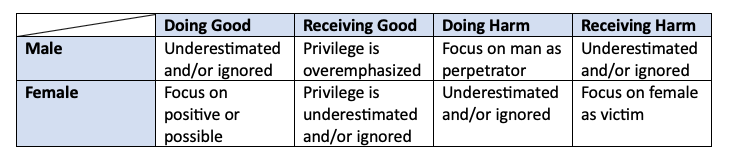
Gamma bias is a form of cognitive distortion that operates within a matrix of four possible judgments about gender**: 
  1. Doing good (celebration/valuing)
  2. Doing harm (perpetration)
  3. Receiving good (privilege)
  4. Receiving harm (victimhood)
Gamma Bias has an Ugly, Unfriendly Face

As described recently by British psychologists Martin Seager and John Barry in “Gamma Bias: A New Theory” (The Psychologist), the theory predicts:

  • Within mainstream Western cultures, masculinity is highlighted only in the domains of privilege (receiving good) and perpetration (doing harm).
  • Masculinity is hidden in the domains of celebration (doing good, heroism, etc.) and victimhood. Heroism may be gender neutralized (“firefighters”), and male victimization by women domestically is excluded in gender narratives.

Effects of Gamma Bias on Men and Women 

  • Men receive less credit for doing good and less support for being victimized.
  • Women receive more significant support for being victimized and are held less accountable for being perpetrators.
Summary of Four Judgments Related to Gender
revised gender distortion matrix
Female Privilege is Ignored in Gamma Bias

Though not explicitly addressed by Seager and Barry, female privilege (female receipt of “good” benefits) is almost entirely unaddressed because of gamma bias. This is a critical oversight for understanding the preeminence of female choice in mate selection as a gender-specific privilege.

This privilege is demonstrated by the exchange of sexual access (fertility) for resources and security inherent in the unconscious sexual psychologies for reproduction and childrearing — the supply and demand dynamics of millions of sperm (and hundreds of men) chasing one, quite privileged egg. Physically attractive, fertile-aged women (in the West) have significant privilege in securing mates and advantages in other domains of life.

The Four Judgments Operate Independently

All four judgments can operate concurrently; the opposing distortions are not zero-sum.

  • Women can be victims and perpetrators.
  • Women can be privileged and be victims.
  • Men can be heroes and perpetrators.
  • Men can be privileged and victims.

The four cognitive distortions function as independent “dials” of influence.  Each dial operates on a continuum or gradient of strength; they are not on-off switches.

Gamma Bias is Pernicious – Let’s Do Better

Gamma bias has an ugly, unfriendly face. It has never been more pernicious in American culture than it is now. Let’s be aware of our judgments, pay attention to our narratives, and be fair to all.


Notes:

*Beta bias is more characteristic of today’s narrative about gender and sex. It often includes minimization of biological differences between males and females.

**“Gender,” used here, means biological females (presenting as women) and biological males (presenting as men).

Please Note: Your comment may take up to 12 seconds to register and the confirmation message will appear above the “Submit a Comment” text. 
Why Bella’s Sexuality in Poor Things Disturbs Men

Why Bella’s Sexuality in Poor Things Disturbs Men

“You mean I actually get paid for that?”
~ Bella Baxter

Bella is a female Frankenstein “monster” in the movie Poor Things. For most of the film, she is an unbridled child with primal sexual urges detonating within her adult female body – a kind of “erotomania.” Bella scares the sh…t out of men.

Bella does some “whoring” in a Paris brothel to find herself. She discovers that her sexuality is easily exchanged for money. Bella acknowledges and accepts the utility of her sexual passion, saying, “I am my own means of production.” But that is not what scares men. She most disturbs men when she inquires with amazement: “You mean, I actually get paid for that?” Let me explain.

Bella’s Sexuality is Outside the Norm

Evolutionary psychology, mate selection science, and studies of female sexuality describe long-term and short-term mating strategies of women, both ancient and modern in their relevance. Bella’s sexuality is outside the understood norms of mate selection science. (See Long-term and Short-term Mating Strategies: Domain #2 of Male-Female Differences.)

 
Women’s Long-term Mating Strategy

A woman’s long-term heterosexual mating strategy seeks a sexual relationship with a man who has the resources and character traits that ensure stability, protection, and loyalty to her and her children over the long term.

Women’s Short-term Mating Strategy

A woman’s short-term mating strategy seeks, first and foremost, genetic fitness in male sexual partners – traits of muscularity, strength, masculinity, and features associated with symmetry. Short-term mates need only minimal generosity and kindness – but may require a modest amount of resources (less than required in the long-term strategy) in case of pregnancy or the desire to switch mates. (See Mate Switching Hypothesis).

A woman’s short-term strategy is not dominant in female mate selection; it is secondary and selective. But rarely is the sex act itself the only reason.

Why Women Have Sex

In research for their book Why Women Have Sex, Cindy Meston and David Buss surveyed 1006 women in seven countries about their reasons for having sex (defined as sexual intercourse.) Two-hundred and thirty-seven (237) reasons were identified. The number one reason given was related to “biochemical attraction” – what Buss and Meston said conferred unconscious signals for genetic and resource benefits. The #2 reason was “because it feels good” – to experience pleasure. But this was never the only reason. Of paramount importance was the need to experience love and enhance an emotional bond.

Buss and Meston concluded: “What motivates a woman to have sex is often multifaceted, containing various combinations of motivation. It is a fungible asset that provides great utility to secure many tangible and intangible benefits.” For more on the topic, see the Mating Straight Talk page Why Women Have Sex.

But Bella Wants Sex Only for the Sensory Feedback

A woman’s short-term, potentially non-monogamous mating strategy is concerned with a man’s genetic material, resources, and sometimes the goal of securing a long-term mate. It is not about sex as an end in and of itself.

That is why Bella in Poor Things is so disturbing. In her sexual awakening, Bella seeks a singular experience of titillation and release. Her pleasure is entirely a personal event of her nervous system; it is not interpersonal.

Male-oriented porn depicts sex as an end in and of itself. No form of women’s erotica (or modern female sexuality in practice) depicts sex that way.

Sex For Money

Bella eventually discovers the “fungibility” of her sexuality in the Parisian bordello. Sex for money becomes her motivation. Her sexuality is a business. But sex for resources is not where she starts. Initially, she can’t believe she will be paid for something so inherently pleasurable. Bella’s lesbian encounters with her female bordello friend are not in the context of her sexual fluidity or bisexuality. No, Bella, at that point, is more of a pansexual – up for anything that turns her on

Females Sexuality with No Moral Compass

Bella scares heterosexual men because, in the early exploration of her sexuality, she acts like a man with a strong sex drive and no moral compass. She acts like some gay men who have unrestrained access to express their sex drive with like-minded men. (No judgment here — just the statistical facts about the ease and frequency/quantity of lovers for gay men.) Ultimately, Bella’s early sexuality is an existential threat to men and their evolutionary need to be chosen in competition with other men. There would be no loyalty to a man who had “competed” successfully for her because she cannot be “won.” There would be no paternal certainty or genetic legacy with Bella, which is a preeminent directive of sexual selection.

Bella As Feminist Crusader

By the conclusion of this science fiction story, Bella’s primitive self “evolves” into a wise philosophical narrator (even a philanthropic “do-gooder”). Along her journey of adult self-discovery, Bella articulates a clear, feminist, anti-misogynist message, adding a dose of sweet revenge. Good for her. “Evolved” Bella does seem to have some allegiance to the doctor scientist who wants to marry her.

The Book Behind It All

Poor Things, the movie, is based on Alasdair Gray’s novel (of the same name) about a young woman who frees herself from the confines of the suffocating Victorian society she was created to serve. Poor Things (the book) is a hilarious political allegory and a thought-provoking duel between men’s desires and women’s independence.

Who Are the “Poor Things?”

Bella develops an awareness of the poor and oppressed while in Alexandria. However, some reviewers have said that it is the men of that time (including her sadistic former husband) who are the “poor things.” But modern male moviegoers may also be troubled by Bella’s sexual liberation and independence from the rules of romantic partnership.

Bella is a Heroine

For all its explicit sex and foul-mouthed dialogue, Poor Things (the movie) is a romance about a woman learning to fall in love with herself, no matter what others think she should be. For that reason alone, Bella is a cinematic heroine, and Poor Things is a unique piece of artistry.


Please Note: Your comment may take up to 12 seconds to register and the confirmation message will appear above the “Submit a Comment” text. 
What Am I Made For?  Barbie Goes Beyond The Battle of the Sexes

What Am I Made For? Barbie Goes Beyond The Battle of the Sexes

“I don’t know how to feel, but I wanna try.”
~ Barbie speaks through Billie Eilish

At the end of the movie Barbie, Ruth Handler (creator of Barbie) tells Barbie: “You should not take this leap into the real world unless you know what this means.”

Ruth gently holds Barbie’s hands. She asks Barbie to close her eyes and feel, and Barbie sees images of girls and women of various ages. She sees (as do we) images of mothers and children embracing, connecting, playing, and bonding. This montage – made from footage that Gerwig sourced from the film’s cast and crew, fills Barbie with emotion as she understands the full scope of womanhood, including birth, childhood, motherhood, and generational love. We see the entire life cycle as a female human being and the expressions of female emotions. It is quite beautiful. Barbie says, “Yes,” she wants this.

“I Don’t Know How to Feel, But I Want to Try”

As the video montage runs, the movie is essentially over; it is easy to dismiss or not fully “see” this fleeting black-and-white montage — or truly savor the haunting melody and poignant lyrics of Billie Eilish singing, What Was I Made For? The images are more profound because of this background music. Eilish wrote this song specifically for Barbie in an immersed zone of connection; she channels the critical message at the movie’s end with this chorus: “I don’t know how to feel, but I wanna try. I don’t know how to feel, but someday I might.”

Please watch and listen to the video. (Lyrics in video and in the Appendix.)


Barbie Enters the Human World of Mate Selection and Sexuality

Barbieland is asexual and non-maternal; it has no children. The entire film is devoid of young children until the scene with Ruth. When stereotypical Barbie (Margot Robbie) goes to the real world, she owns her sexual reproductive instincts and visits the gynecologist. She enters the real world of mating and dating; Barbie must begin to swim in the streams of heterosexual dynamics with men.

Sexual Reproduction and Motherhood Are Aspirational

The real-world “Kens” come fully equipped, and they do know (unlike Kens in Barbieland) why they might want to sleep over with Barbie. This is the world that Barbie must navigate to fulfill Ruth’s assertion and promise. Sexual reproduction and motherhood are included in the mix of aspirations for Barbies to be anything they want to be.

Gerwig and Motherhood

During the writing of Barbie, Greta Gerwig was nursing and attending to her new baby boy, Harold, with partner Noah Baumbach. Gerwig and Baumbach had another baby boy in March 2023. So, two kids were on the Barbie promotion circuit under the watchful eye of their mother. Suffice to say, being a mother is one crucial element of Gerwig’s personality. Mattel discontinued Pregnant Barbie, but Gerwig had not lost sight of this part of the female experience, even though there is no maternal instinct in Barbieland. (Gloria and Sasha represent a central mother-daughter plot in the real world.)

Feminism Includes Motherhood

Gerwig is undoubtedly not endorsing a return to 1950s motherhood – being a wife and stay-at-home mother (often pregnant). Gerwig’s feminism includes maternity as an option. It is part of the natural order for many women, even women with creative, full-time careers.
“In creating Barbie,” Ruth Handler explained, “my philosophy was that, through the doll, girls could become anything they wanted to be. Barbie has always represented a woman who chooses for herself.”

Barbies Do Not Have an Ending, But Humans Do

Ruth tells Barbie: “Humans only have one ending. Ideas live forever.” Barbie accepts that she will die. Barbie says “yes” to entering the real world because the experience of human emotion is what we are made for.

Old Woman on A Bench

In one scene, Barbie sees an old woman on a bench and tells her, “You are beautiful.” The woman says, “Yes, I know.” This is not a commentary on physical attractiveness or even the inner beauty of older people; it is an endorsement of the beauty of the full spectrum of human experience.

Barbie Wants to Imagine as Subject, Not Object

“I want to be the one imagining, not the idea.”

When Barbie decides whether to return to a worry-free life or experience humanity (the opposite), she says, “I want to be the one imagining, not the idea.” Barbie’s desire to be subject, not object, is a longing felt by human women whose worth in society is often measured by how aesthetically pleasing they are to men. (Many women have a place in their sexuality for being “object,” but that is another topic.) Barbie would be more objectified in the real world than in Barbieland, so why does she want to be human?

Female Emotion as a Strength

The reason to be human is the exaltation of feeling the range of human emotions, especially as a woman. The ending to Barbie shows women’s emotions as a strength, not a weakness. A central thesis of Barbie may be that emotion isn’t just an accessory to the human experience – it plays a vital role in making the human experience worthwhile.

Barbie Wants the Human Experience – She Wants “Ubuntu”

“Ubuntu” is a South African term popularized by Desmond Tuto. Ubuntu means “I am what I am because of who we all are.” You cannot exist as a human being in isolation. We are interconnected. People are not people without other people.

We Even Need People We Have Never Met

 Barbie experiences memories of people she has never met, but that’s the whole point: We don’t have to know the women in the montage to resonate with them. Female moviegoers across the globe connected to this scene in ineffable ways – they cried together, not always knowing why they were sad or moved. (Men cried too, empathizing with the spirituality of the human experience, longing for their mother, or even longing for their father and a similar intergenerational bond between boys and men.)

The Infinite Chain

The essence of womanhood and humanity has nothing to do with careers or pink outfits. By taking Ruth’s hand, Barbie becomes another link in an infinite chain of mothers and children. She glimpses a sweet intergenerational heritage of beings incarnated as Homo sapiens — an experience not available to her as a fictional construct. Barbie feels a spiritual connection between generations of women, passing down their hopes and dreams for a better world. Barbie becomes human.

Now She is Barbara Handler

Final scene: Barbie walks up to a reception desk (in her pink Birkenstock sandals) and says: “I’m here to see my gynecologist.” Barbie is now “Barbara” and part of the legacy of female creation and personhood. She’s a Handler now, like Ruth.

Barbie’s Transition: Maslow’s Hierarchy and Attachment Bond

Briefly shifting gears, please allow me to connect Barbie to psychological theory. You might be familiar with Abraham Maslow’s hierarchy of needs. Maslow believed that we begin life by trying to satisfy physiological and social motives (love, belonging, and esteem /respect), which he viewed as deficiency needs. If you fulfill those deficiency needs, you can move on to growth needs; the highest level is self-actualization. Maslow’s work was done before the modern integration of evolutionary biology and psychology, so he gave no attention to the central Darwinian themes of reproduction. Maslow gave incomplete attention to one of the essential elements of Barbie’s transition — the preeminence of the attachment bond between mothers and children.

Barbie and the New Hierarchy of Human Motivations

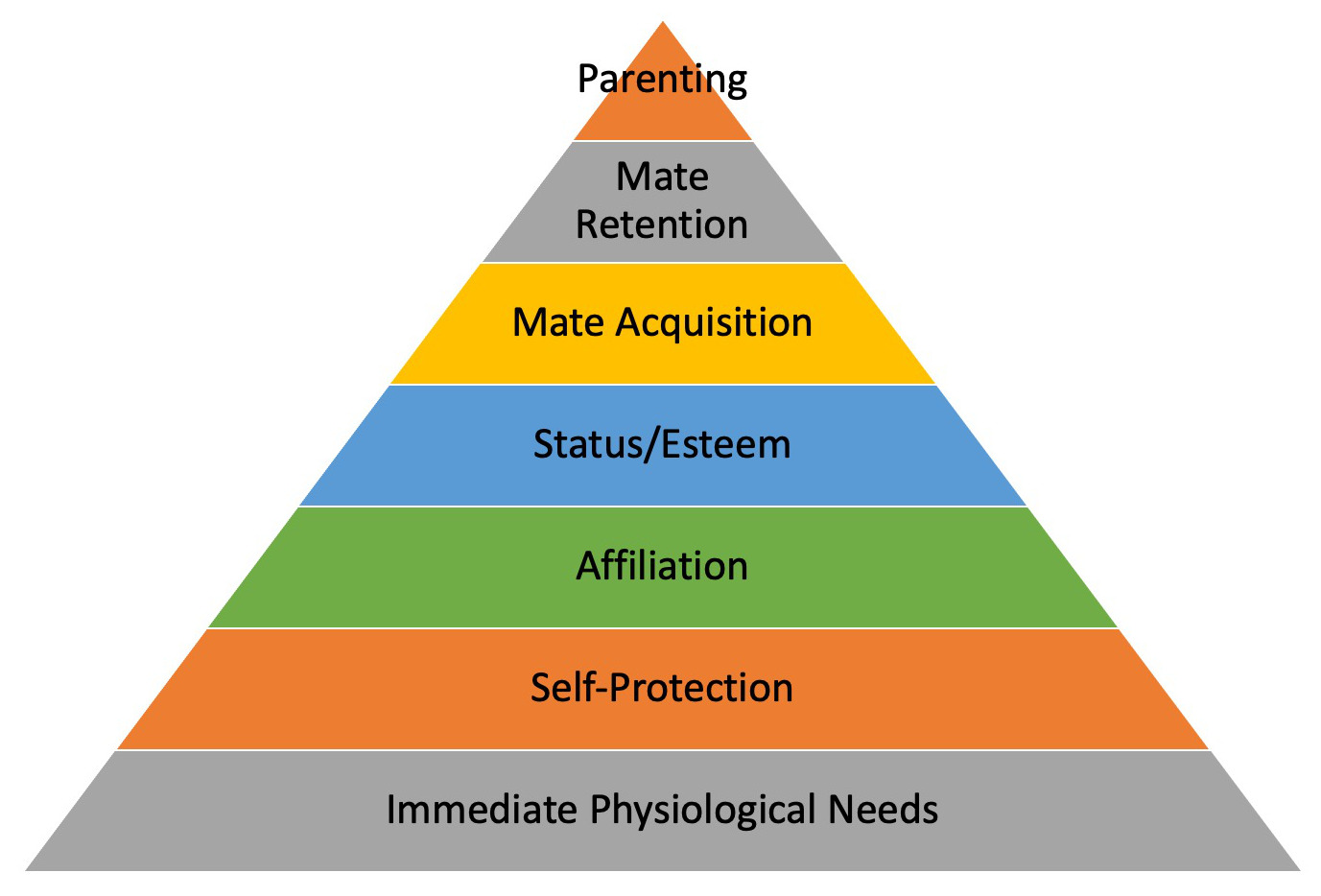
After studying the evolutionary psychology of human motives for 20 years, psychologist and researcher Douglas Kenrick (Solving Modern Problems with a Stone-Age Brain) updated Maslow’s hierarchy of needs to reflect developments in the behavioral and biological sciences. Self-actualization was removed from its hallowed place at the top.

Finding Mates, Retaining Mates, and Parenting

The new hierarchy of human motives addresses the missing goal that is paramount from a Darwinian perspective, adding three more layers associated with reproduction: finding mates, retaining mates, and parenting. In this new model, the seven human needs or motivations are not stacked on top of one another but are seen as overlapping. Yet, Kenrick suggested that kin care, or parenting, is the ultimate goal of humanity.

What Was I Made For?

According to Kenrick, if you have young children, parenting motives become increasingly linked to your sense of self-actualization and meaning in life. Cue the Barbie movie montage of women, relationships, and human emotions. Cue the Billie Eilish song. This answers Barbie’s question: what was I made for? You were made for acquiring a mate, retaining a mate, and taking care of your family (and the families of all women) with all its attendant joys and pathos. Ruth holds Barbie’s hands and shows her that this is what it means to take the leap from Barbieland into the real world of humanity.

Postscript: What I Left Unsaid About Barbie (related to the film’s message, not its production)

This post and my last post on Barbie (Unpacking Barbie’s Apotheosis – Which Complaints Hold Up Under Scrutiny?) can be seen as bookends in tone: embracing and honoring the human-female experience vs. a detailed critique of Barbie’s central feminist message. But there is a lot left on the table to talk about; I just choose to move on.

Left unsaid and not fully discussed by me:

  • Barbie’s misandry (the movie is anti-male on the surface): no men in Barbieland or in the real world have any redeeming qualities. They are portrayed as silly, stupid buffoons — superfluous for the most part and oddly attached to horses. (Allen is a special case that does not disprove the point.)
  • After the Barbies retook Barbieland, it was close to an apartheid state for men. Men will have no voice or real representation — less representation than women in the real world. (It is unclear if the Kens get places to live.)
  • Barbies use trickery and their erotic power over men to retake Barbieland. They lie to the men when they act interested in what the men are saying or singing. Barbies strategically use jealousy (intra-sexual competition) between the men to cause them to fight one another. (This is of course common in the real world, but it is almost interesting here, given Barbieland is supposedly an asexual environment.)
  • Relatedly, Barbies exploit male fragility; the movie does have relevant things to say about the fragility of men. Kens need a Barbie more than Barbies need a Ken. There is an existential threat to men if they are not sexually acceptable to a woman. Ken: “I only exist within the warmth of your gaze.” And, “Barbie has a great day everyday, but Ken has a great day only if Barbie looks at him.” Ultimately, Ken might be “enough” of a nice guy, but he will not be a suitable sex partner or mate. Barbie is not interested. Full stop.
  • There are perhaps relevant reflections (and reviews to share) about non-binary gender presentation and even implied queer sexual preference in Barbie.
  • There is a rise of bimbo feminism (especially on TikTok) in response to this movie – the combination of hyper-femininity and feminism.
  • There is a message about patriarchy via Mattel’s corporate capitalism windfall.
  • There is a twist on the creation myth: analog to the Garden of Eden and Adam and Eve.
  • There is a possible connection in the Barbie video montage to the alloparenting instinct – pair bonds with fellow female alloparents who help raise children. (see It Takes a Village – Alloparenting and Female Sexual Fluidity.
Final thoughts: Barbie is Allegory and Satire

Given all this, it is important to remember that the movie Barbie is an allegory and satire. Greta Gerwig is a sly filmmaker. As the marketing promotion said: if you love Barbie, you will love this movie. If you hate Barbie, you will love this movie. But you might hate this movie in both cases. Not me. I was intrigued and stimulated more than I wanted to be. I cannot hate that.

Appendix

What Was I Made for – Lyrics by Billie Eilish

I used to float, now I just fall down
I used to know but I’m not sure now
What I was made for
What was I made for?

Takin’ a drive, I was an ideal
Looked so alive, turns out I’m not real
Just something you paid for
What was I made for?

(Chorus)

‘Cause I, ’cause I
I don’t know how to feel
But I wanna try
I don’t know how to feel
But someday I might
Someday I might

When did it end? All the enjoyment
I’m sad again, don’t tell my boyfriend
It’s not what he’s made for
What was I made for?

‘Cause I, ’cause I
I don’t know how to feel
But I wanna try
I don’t know how to feel
But someday I might
Someday I might

Think I forgot how to be happy
Something I’m not, but something I can be
Something I wait for
Something I’m made for


Please Note: Your comment may take up to 12 seconds to register and the confirmation message will appear above the “Submit a Comment” text.