Assortative Mating and Indian Match-Making — “Caste” in Stone?
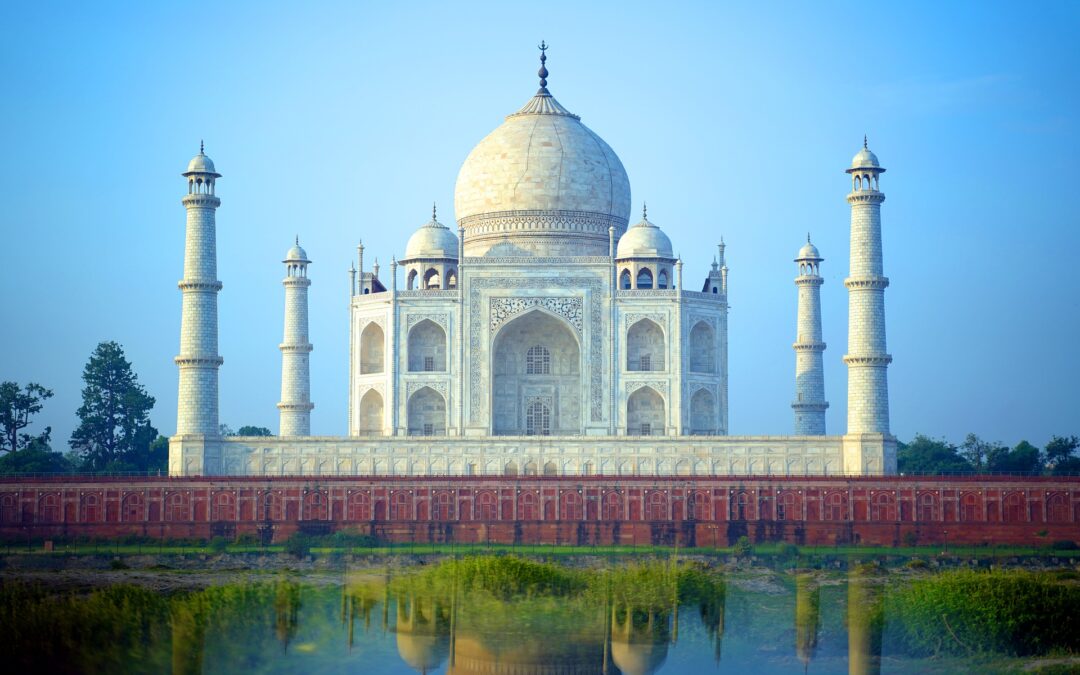
Often described as one of the architectural wonders of the world, the stunning 17th-century white marble Taj Mahal was built by the Mughal emperor, Shah Jahan, as a mausoleum for his beloved wife Mumtaz who died giving birth to their 14th child. Mumtaz was Shah Jahan’s third and favorite wife, and their love story is legendary. The Taj Mahal is a symbol of Indian love and marriage that is congenial to prescribed gender roles. Yet some historians believe Mumtaz wielded considerable political power and influence. She was not exactly a dutiful wife despite being pregnant all the time. Reportedly, she was an excellent chess player and was ambitious, if not ruthless. Apparently, imperial women in the Mughal period exercised significant political authority.
Hold that thought. (I will get back to the Taj Mahal.)
Indian Matchmaking on Netflix
Television comedies, dramas, and reality shows almost always contain stories about love, romance, and the challenges of finding a mate. I have always found narratives and situations that explicate evolutionary psychology and mate selection science in these shows. These past two weeks I found myself fascinated by the Netflix show Indian Matchmaking. This show demonstrates “assortative mating” through the lens of Indian culture.
Indian Matchmaking is a reality-based “confection” (filmed in pre-Covid, 2019) that tastes pretty good on the tip of the tongue as entertainment but has layers of after-taste that are disheartening about marriage-making in India and in the American desi community. Indian Matchmaking has more than a hint of satire and perhaps a political message of self-deprecation. It can be quite educational to American audiences who are mostly ignorant (like myself) of Indian culture, although critics caution that it is an incomplete view of modern Indians. Released on July 16, Indian Matchmaking was a top 10 Netflix series in the U.S. for weeks, and number one in India.
What is Assortative Mating?
Assortative mating is the tendency to pursue and be attracted to someone who is similar in age, socio-economic status, educational attainment, geographic location, religion, physical appearance, and facial attractiveness. Assortative mating is the dominant force in the mating market around the world—with some unique cultural expressions, as we shall see.
What is Caste?
Caste is a form of social stratification characterized by hereditary status and the custom of marrying only within the limits of a local community, clan, or tribe (endogamy). Caste includes stratification by occupational status in a hierarchy and social exclusion based upon cultural notions of purity. Modern India’s caste system is based on colonial imposition on the four-fold system (Varna) found in ancient Hindu texts. There are five levels of caste if you also count the lowest group, the Dalits (untouchables). Scholars believe the Varna system was never truly operational in India society . The practical division of society has always been in terms of birth groups (Jatis) which are not based on any religious principle, but could vary from ethnic groups, to occupations, to geographical areas. However varied and amorphous in its application, caste remains as an idea of social stratification that is a function of hereditary status. (See below for thoughts about caste in the U.S. spurred by the just published, Caste: The Origins of Our Discontents, by Isabel Wilkerson.)
What is Colorism?
Colorism is the discrimination people face, usually within their own racial group(s) where lighter skin tones/complexions are seen as more desirable than darker skin tones. With this prejudice, people are treated differently based on the social implications and cultural meanings that are attached to skin color.
Mate Selection and Assortative Mating – Indian Style
Assortative mating is the utilitarian workings of a mating marketplace – to “buy, sell, and deal.” The objective is to get the best deal available in an ever-moving landscape (chessboard) of mating game dynamics. It is the musical chair you are in when both people decide to decide. Assortative mating is the conscious and unconscious sausage-making of finding a partner within the boundaries of a person’s mate value and opportunities in a mating pool.
A match-making show is based on the long-term mating strategy for both sexes – the search and intention to create a life-long pair bond. In Indian Matchmaking, the male short-term sexual strategy is nearly absent. While attraction is understood, sexual chemistry is barely implied or acknowledged.
An Interesting Variation
Assortative mating “Indian style” is an interesting variation. Here we see the usual assortative dynamics of the match-making process superseded by the requisites of the culture itself. Assortative mating means sorting by caste, socioeconomic standing, religion, (they all overlap), and parental preference. Indian Matchmaking uses short-cut phrasing such as “family background” to capture all of this.
Power of Parental Choice
What stands out with Indian match-making is the immense power of parental choice (especially the mother) and the need to join two families in a marriage partnership. This has a long tradition in human cultures, especially with the merging of families of power or royalty. The influence of a 3,000-year Indian caste system is veiled but literally shows its “colors” on Indian Matchmaking. And the conversation about caste generated in response has powerfully dove-tailed into the current “awakening” of race in America. More on that later.
Major Sociological Themes in Indian Matchmaking
Here is the panoply of themes to be found in this “playful” reality TV show:
- Generational divide – old world vs. new, parent vs. child
- Tradition and/or modernity
- India vs. the wider diaspora in the U.S. and Canada
- Agency of adult children vs. paternalism
- Influence of caste and colorism (shadeism)
- Class, religion, and ancestral region (“family background”)
- Female equality and aspirations
- Destiny, fate, and influence of cosmological forces
Major Themes of Mate Selection in Indian Matchmaking (see definitions below)
- Assortative mating
- Trait preferences in a long-term mating strategy
- Mate value (especially physical attractiveness and “family background”)
- Mate value trajectory
- Mating economy and marketplace
- Mating Intelligence or lack thereof
- Mating pool
Time and space do not permit me to cover all of the above themes, but if you watch the show (again), look for these themes to increase your interest.
“Caste” of Indian Matchmaking
Indian Matchmaking compares and contrasts match-making inside of India vs. the United States. Here are the main characters:
- Sima (Mumbai): Professional matchmaker. Hindu. (F)
- Aparna (Houston): Lawyer. Hindu. Sindhi. (F)
- Pradhyuman (Mumbai): Jeweler. Hindu. Marwari. (M)
- Akshay (Mumbai): Businessman. Hindu. (M)
- Nadia (New Jersey): Event Planner. Hindu. Guyanese. (F)
- Vyasar (Austin): H.S. Counselor. Hindu. Kshatriya. (M)
- Ankita (Delhi): Businesswoman. Hindu. Baniya. (F)
- Rupam (Denver): Divorced mom. Sikh. (F)
- Richa (San Diego): Unknown. (F)
Trait Preferences – An Indian Long-term Mating Strategy
Indian Matchmaking reveals and verifies tenets of male sex appeal and female sex appeal from an evolutionary perspective. Female clients (and especially their parents) are looking for a tall, ambitious “boy” who must make as much or more money than the woman, if she is working. Male clients (and especially their parents) are looking for a relatively tall, pretty, fair-skinned “girl” who has a pleasing and “flexible” personality.
As writer Sonia Saraiya noted in Vanity Fair, “matchmaking quite literally regulates reproduction by determining the bounds of their descendant’s gene pool. It diminishes the individual’s personal choice in favor of the collective stability.”
“The Boys Just Want Pretty Girls”
Indian Matchmaking has been criticized (see below) for its portrayal of the criteria of physical attractiveness in choosing a mate. This preference is a cultural universal, but we actually see quite a bit of flexibility shown by the show’s hopeful clients. Less so by their parents.
Ankita is told by her parents and others that “boys just want pretty girls.” The show seems to view this as shallow or at least unfortunate. Ankita jokes that she would like to find someone who looks like David Beckham or the Indian film star, Abhay Deol. To her credit, Ankita knows this is a severe “mate value mismatch” given her own level of physical beauty. (Sima describes Ankita to a fellow matchmaker saying “she is not photogenic.”) Ironically, we see Ankita in Delhi working with gorgeous female models to display and sell her garments.
Overall, the show does not focus on “pretty girls” or handsome men. Vyasar finds his matches to be pleasing even though they are quite overweight. His second match, Rashi, admits in one scene that “it takes a lot to make this look good. Beauty is pain.” Vyasar seems to unconsciously know his own mate value given his financial resources and level of physical fitness.
Beauty as Cultural Universal
Human beings share universal, hard-wired preferences for physical traits that are pleasing to the eye — traits we find sexually attractive and aesthetically pleasing, or “beautiful.” Beauty is highly prized in prospective mates because it is a proxy for reproductive fitness and genetic strength. It is more than mere aesthetics. Beauty is nature’s shorthand for health and fertility, for reproductive capacity — visual cues that a woman or man has the potential to bestow good genes on future generations. Attraction and beauty are mostly inseparable from each other and from sexual selection generally.
“Beauty may be in the eyes of the beholder, but those eyes, and the minds behind the eyes, have been shaped by millions of years of human evolution.” (David Buss, The Evolution of Desire, p. 53)
Ideal Beauty is Rare
It is notable that Indian Matchmaking has only one example of “ideal” female beauty. Pradhyuman takes fashion model and actress, Rushali (former Miss Delhi), riding at a horse stable. When he first sees her bio-data picture, he asks Sima, “why have I not seen someone like this before? Now you are on the right track.”
Mate Value
Finding a “workable” match with the highest mate value is the job of the matchmaker. Sima knew intuitively who rated a “5” and who rated a “9” or “10”. While considering the client’s and family’s desire for everything on the criteria list (the “best deal”), she had to start with the basics – a match “sorted” by physical attractiveness/stature, socioeconomic class, and caste background. In business decision-making, it is known that some criteria are more important (weighted) than others. So it is with human mating. Attractiveness for the women has a criteria weight that is 2-5 times greater than her career. For the man, his career and financial security are rated 2-5 times more than his personality or his physical appearance. “Chemistry” or “clicking” cannot be predicted absolutely and is part of match-making magic, or destiny in its most benevolent form.
Mate Value Trajectory
Most of the mate value matching attempts were sorted correctly by Sima. But there were a couple of mismatches because of the influence of poor mate value trajectory – a criterion applied almost exclusively to men.
Vyasar is an affable, engaging, sensitive person with great communication skills and a penchant for over-sharing early in the process (certainly early if this was a normal dating environment). He is a high school counselor and no doubt has the weakest financial and family profile of any of the male clients. While it starts out promising, there seem to be a host of incompatibilities with his first match, Manisha, who is a Research Health Analyst in North Carolina. Manisha finally admits to the deal-breaker: Vyasar’s poor mate value trajectory and ambition. “You can be a nice person, but that is not going to pay the bills five years from now.” Sima acknowledges on camera that Manisha “did not find Vyasar’s earnings sufficient.”
Aparna is hard to please almost to the point of satire. Her mother not only wanted her to have three degrees but tells Sima that money is not secondary for her prospective mate; the man must not be less successful than her. We come to know the degree to which Aparna has been conditioned for achievement by her mother and has “inherited” her mother’s failed-marriage trauma. She sees her mother every day. Aparna has a good date (especially for her) with a guy named Srini. He is very affable and articulate, a public speaker and author of three books. But Srini admits to financial insecurity and lack of clarity about what happens next in his career. Aparna immediately glazes over. No trajectory. Srini is seen as a loser. Aparna jettisons him quicker than you can say “Bollywood.”
Mating Pool
The entire enterprise of match-making in desi communities is affected by a restricted dating pool. Aparna acknowledges this directly (she is, if nothing else, rational) referring to her age in the first episode: “At 34, there is not a huge pool for me.” The pool is even more restricted for Rupam who is divorced with a daughter. This is “two strikes” in any dating scenario, let alone a culture where divorce is historically frowned upon. Sima knows it will be tough to find her a match. Rupam ultimately finds another Sikh man on Bumble.
Mating Intelligence (MI)
Vyasar says he “does not know how to make romance.” Although he has preoccupations of a quintessential “beta male” (dungeons and dragons among them), he actually is quite romantic and has a fair amount of mating intelligence. But he does lack confidence – the most important MI trait for a man.
Akshay is quite deficient in MI. He has never really had a girlfriend and is probably a 25-year-old virgin. That apparently is a possibility even for a successful urban millennial male in India. One culture writer even ventured that Akshay is actually in love with his cousin Mansha, who gets quite a bit of screen time.
Sex?
It is worth noting (again) that sex and sexual experience is nearly absent on this show. The astrologer brings it up once, as does the life coach. It seems this topic is mostly “undiscussable.” One or two of the older, arranged-married couples playfully allude to sex.
Then there is Nadia and Vinay. She goes out with him six or seven times. What was their sexual connection? He “ghosts” her for dubious reasons, although that seems to be a source of ongoing debate, post-production. Nadia is the “full package.” She has an adorable personality, infectious laugh, and is very pretty. And she is Guyanese. Hmm. We are left to wonder about caste, but mostly in this case, about sexual chemistry inside the Indian match-making equation.
Female Equality, Agency, and Aspirations – Modernity Faces Paternalism
Anna Purna Kambhampaty reported (Time, July 24, 2020) that “approximately 90% of all Indian marriages [in India] are arranged. About 74% of Indians between the ages of 18 and 35 prefer it that way.” Yet, there are a few intersecting sociological issues revealed in Indian Matchmaking:
- Tension between the traditions of older Indians and the desi community, versus the perspectives and needs of their more modern, adult children.
- The apparent paternalism of the Indian family structure and its effect on the agency and choices of their adult children.
- Equality, independence, and empowerment of Indian and desi women and how they navigate the expectations for marriage held by their families and community.
Go Ankita!
In Indian Matchmaking, Ankita holds the vision of female empowerment inside of India, but she also struggles to stay connected to her family. “Just because you are independent does not make you non-marriageable, or stubborn, or arrogant,” she says. “I do not need a man’s support.” And yet, Ankita still lives with her family in Delhi. Her father describes her as ahead of her time but later agrees with his wife that Ankita is rebellious.
Ankita has strong commitment to her career but wants a relationship, at least in the beginning of the show. She joked to friends about the match-making process: “This is like Tinder premium, but the family is involved. Families also have to swipe right.” Sima cautions, “things don’t work out without the guidance from the parents.”
Aspirations and Real Choice?
Indian women have aspirations but the match-making process and family involvement seem to mitigate against real choice. Sima says more than once, “in India nowadays, the boy and girl can refuse. They have full freedom.” Really? The language of paternalism is always present – the words “boy”, “girl”, and “auntie” (Sima).
An opening vignette of an older arranged-married couple complains that “girls are so independent; boys want their wife to be submissive.” Ironically, in most of these older couples the woman does most of the talking. One husband underscores a well-worn cliché: “happy wife, happy life.”
Overbearing is an Understatement
The archetypal overbearing Indian mother is Akshay’s mother, Preeti. Preeti says the “girl” must be flexible and adjust in order to join her family and her home. Under tremendous pressure from Preeti, Akshay almost marries the “Udaipur girl,” Radhika, who hardly said a word when they were together with the parents. However, when alone with Akshay, she said she wanted to be a working woman. Akshay thought he wanted a women who was also modern, but on this issue, he opined: “I don’t think she is enough like my mother.”
Negative but (mostly) Her Own Agent
Aparna was portrayed as “Ms. Negativity” with absolutely no intention to “improve” for any man. She famously said after one date: “It’s a big deal that I don’t hate him.” Sima retorts: “I think she has a block in her energy.” The astrologer said Aparna was “fickle-minded” and “rude in speech.” I found her redeemable and interesting. And she has had defenders (nearly all women) in the social media sphere. She too is seen as exhibiting female aspiration and agency in spades. Aparna has started a travel business as a side hustle called My Golden Balloon, which should improve her outlook.
“Caste-ing” Aspersions – Indian-American (Women) Thought Leaders
Since its debut, Indian Matchmaking has drawn criticism from Indian and U.S. media for sidestepping issues of colorism, dowry, sexism, body shaming, and caste. The strongest voices have come from female writers in the desi community.
The Atlantic (Culture) — Yashica Dutt
Yashica Dutt, writing for The Atlantic, said “caste appears on almost every criteria list that the marriage hopefuls lay out. By coding cast in harmless phrases such as ‘similar background’, ‘shared communities’, and ‘respectable families’, the show does exactly what upper-caste Indian families tend to do when discussing this fraught subject: it makes caste invisible.”
“The caste system is an active form of discrimination that persists in India and within the Indian American diaspora.” Dutt criticized Indian Matchmaking for not portraying couples who identify as Muslim, Christian, or Dalit — communities that represent 40 percent of India’s 1 billion-plus population.
Sanjena Sathian — New York Times
Sanjena Sathian takes a hard look at the show’s idea of “adjustment” for brides-to-be. “The show asks us to consider whether adjustment connotes open-mindedness or gender imbalance. The unsettling answer seems to be that it’s both.”
Sonia Saraiya — Vanity Fair
Sonia Saraiya reports that India’s National Family Health Survey (2005) found 37 percent of women in India had experienced some kind of physical or sexual abuse. She says women are often cut off from access to household funds. She says Indian marriages are frequently unhappy and unequal. On a personal note she concludes: “the price of belonging to an Indian culture is to leave some of your individuality behind – and for me at least, it was a price I was not willing to pay.”
Scaachi Koul — Buzz Feed News
Koul says the representation from Indian Matchmaking isn’t wrong, it’s’ just one version of the story. “These stories are always about middle-class, or outright rich people, Brahmin Hindus, the people who live in big cities like Mumbai and Delhi. I don’t feel burdened by my South Asian identity, by my family’s often archaic and frustrating rules, or by my big nose and consonant-heavy name. Rather, I feel burdened by the white supremacy that taught me not to go into the sun lest I get dark and by the sexism my father showed when he wanted me to get an arranged marriage.”
Mallika Rao – Vulture
“Hindus are largely casteist. Much of India, today, leans Hindu supremacist. Marriage is a business and a game, whether in India or America, and grotesque from many angles.”
In America: “Caste is the Bones, Race the Skin”
In her recently published book, Caste: the Origins of Our Discontents, Isabel Wilkerson asserts that the Indian system of caste hierarchy explains more about the racial divide in America than does the idea of race alone. “Race, in the United States, is the visible agent of the unseen force of caste. Caste is the bones, race the skin.” Reviewing the book in The New Yorker, Indian scholar Sunil Khilnani writes: “Underlying and predating racism, and holding white supremacy in place, is a system of social domination: a caste structure that uses neutral human differences, skin color among them, as the basis for ranking human value.” Wilkerson says a caste system tends to promote dehumanization and stigmatization of lower castes and a belief in the superiority of the dominant caste.
Revisiting the Taj Mahal
Indian Matchmaking did not start the discussion about caste but it has given it resonance. A cringe-worthy reality show on Netflix about choosing mates has played a part in getting our attention to face the human predilection for hierarchy and the way to get past it. Creator of the show, Smriti Mundhra, said she hoped the show “will spark a lot of conversation that all of us need to be having in the South Asian community with our families – that it’ll be a jumping-off point for reflections about the things we prioritize and the things we internalize.”
There does seem to be a convergence of new awareness in the mind of American and Indian viewers. Certainly, the conversation about caste in America is just beginning.
Endogenous marriage is not the worst societal outcome of the caste system, but there must be a sweet spot for South Asian women that includes modern expressions of power and influence, while also holding respect for traditional culture. Ankita is the heroine carrying the torch for modern womanhood, especially inside India. “It is time to be equal,” says Ankita.
Just ask Mumtaz Mahal. You know where to find her.
Appendix: Definitions relevant to Indian Matchmaking
Most of the definitions below come from the Terms & Definitions section of Matingstraighttalk.com.
cultural universals
Cultural universals are evolutionary processes of sexual selection and natural selection that appear with little variation in any and all human cultures, past or present. Known also as “human universals,” cultural universals are behavior traits that are universal across human populations.
desi
A person born or living in another country whose ancestry is from India, Pakistan, or Bangladesh.
diasporic community
A widely dispersed community as a result of a natural disaster, politics, etc. Diaspora – a dispersion of people from their original homeland or the community formed by those people.
long-term mating strategy
Mating strategy to attract a mate to ensure sexual access and fidelity (especially for men) and the provision of resources and protection of children over time (especial for women.) A long-term strategy is predominant for women and forms the basis of our ancient pair-bond and tendency toward a monogamous (albeit serial) human culture.
mating economy/marketplace
Interaction between mating strategies of men and women given their individual mate value, mating priorities, trade-offs, and conditions/sex ratio of the local mating environment. Subject to a “collision” between a woman’s long-term strategy and a man’s short-term mating strategy, the mating marketplace commonly “sorts” by similarities (see assortative mating).
mating intelligence
Entire set of universal cognitive processes (mating mechanisms) that underlie human mating psychology: assessing one’s mate value and the mate value of others, modifying one’s mating behavior as a function of ecological conditions, displaying one’s self in an attractive manner, assessing the mate relevant thoughts of a potential partner and discriminating dishonest mating signals from honest ones. Mating intelligence also includes (more recently in EP) individual differences in creativity (courtship display mechanisms) such as musical ability, artistic ability and sense of humor.
mating pool
Available, “suitable” mates (by standards of similarity; equal mate value or above) in the local, proximate physical environment and/or in the digital environment that can be reliably accessed.
mate value
Degree of attractiveness a person embodies as perceived by potential mates, relative to the local mating pool. Men with resources, status and larger physical attributes (height and v-torso) have greater mate value than men who are less successful and smaller. Women who are physically beautiful (signaling fertility) have greater mate value than average looking women. Creativity, humor, generosity, and intelligence also influence value attributions. Mate value rankings of 1-10 are in colloquial usage with moderate reliably and agreement. Mate value drives the initial mate selection process.
mate value mismatch
Usually a temporary condition of unsuccessful courtship behavior. When a person (most commonly a man) romantically pursues another person who has significantly higher mate value. A mating strategy that is strategically and evolutionarily unsustainable.
mate value trajectory
Assessment of future mate value, most commonly made by a woman about a man, given his socio-economic family background, education, career track, education, and traits of industriousness and ambition.
paternalism
The policy or practices by people in positions of authority that restrict the freedom and responsibilities of subordinates supposedly in the subordinate’s best interest.
short-term mating strategy
As an evolutionary adaptation, men’s short-term mating strategy seeks more immediate sexual access and variety of partners to garner genetic fecundity. Men’s short-term strategy is more predominant than men’s long-term strategy but the difference is less pronounced behaviorally in modern times. A woman’s short-term strategy seeks short-term mating in order to secure resources for survival and higher quality genes to pass on to potential offspring. A woman’s short-term strategy is decidedly less predominant than her long-term strategy.
Photo Credit: shalender kumar from Pixabay
Please Note: Your comment may take up to 12 seconds to register and the confirmation message will appear above the “Submit a Comment” text.