
Synergy of Beauty, Youth, and Erotic-Economic Exchange – the Sex Work Studies

Synergy of Beauty, Youth, and Erotic-Economic Exchange – the Sex Work Studies

Author’s Note:

This post has been sitting in my queue for months. I withheld it for fear of being perceived as insensitive to the plight of young women, especially economically-disadvantaged women in the third world who are coerced and abused. However, this post is not about those women.

I fell prey to my own avoidance and denial of “undiscussable” content. That lack of candor is not in keeping with the mission of Mating Straight Talk. I decided to release this post about sex work because it is based on credible economic research and underscores critical issues about the evolutionary dynamics of mate and sexual selection.

I am not endorsing prostitution, especially for women under the age of 18. Based on the study appearing in Evolution and Human Behavior, I assume that Indonesian authorities (more or less) monitor the safety and informed consent of their regulated sex worker industry.

Prostitution is indeed the oldest profession, but modern-day sex work is ubiquitous and comes in many different manifestations, as described below.

Preference for Younger Women – the Prostitute Studies

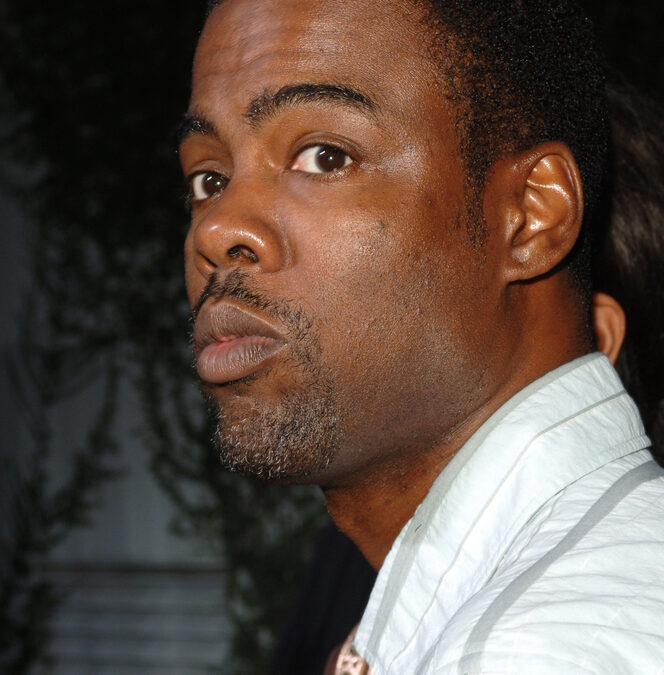
My last post about Chris Rock* provided research that explained why men are attracted to younger women. Pretty obvious stuff — based on evolutionary biology. In compiling that information, I ran across studies about the age of prostitutes and their earnings, and also a little nugget about why older women disapprove of sex work (I will start there). I have no salacious interest, moral judgments, or personal experience with sex workers, but find the topic fascinating, primarily in its revelations about the complexities of female sexual psychology. But female sexual psychology is not the main focus of this post except as it relates to a service agreement: sex (or “comfort”) provided to men willing to pay for it.

Motivations of Men in the Context of Barter and Trade

The pertinent psychological spotlight here is more about the motivations of men. This post is primarily an addendum to prove further the point of men’s intractable, mainly hard-wired attraction to young fertile women. But, I will also provide brief commentary on sex for barter and trade from the book, Why Women Have Sex, which directly comports with three truths delivered by Chris Rock about sexual selection. I will revisit those truths and examine the direct and indirect manifestations of sex work and how female sexuality is a fungible asset.
*Chris Rock’s Selective Outrage – The Truth of Sexual Selection and Preference for Younger Women

Disapproval of Sex Work and Age-Discrepant Couples

Yael Sela at Oakland University did a study with 430 men and women to determine why men and women might condemn age-discrepant couples. She found a unique variable. Older women’s condemnation of relationships between older men and younger women was partly explained by their greater disapproval of sex work. Younger women expressed less disapproval of prostitution. Sex work was correctly perceived as an exchange-based relationship – money for sex, inspiring more moral outrage from older women than from younger women.

Prostitute’s Age and Earnings Research

As I reported in a prior post** (proving that the male sex drive is more robust than a woman’s), men pay for sex – not women. The professions of prostitution, escort, and other forms of sex work are almost exclusively a business where women provide the service and men pay for that service. **Biological Differences – Part 5.2: Aggression, Risk-Taking, and Sex Drive

The Price of Younger Prostitutes

A study published (2016) in the journal Evolution and Human Behavior, examined the link between a prostitute’s age and the price she charges. Economist Kitae Sohn used prostitutes’ earnings to address a much broader scientific question that applies not only to paid sexual exchanges, but to everyday concerns: what does the opposite sex actually find attractive in a partner?

Universal Biological Constraints on Mate Choice

The age women and men desire in a mate is important because it addresses interesting questions about the relative importance of universal biological constraints on human mate choice. In particular, biological theorists expect that men’s uniform attraction to women should be altered because female fertility peaks in early adulthood, drops from 25 to 45, and goes to zero after age 50. Hence male teenagers and their grandfathers may be similarly desirous of women in their early 20s. However, each may have difficulty attracting a woman of that age for different reasons.

“Revealed Preference” for Choice of Prostitutes

By examining what men are willing to pay for sex, Sohn provided a new “window” into the issue of fertility and attraction. Men have a restrained choice in whom they marry or date, but they do get to choose whether or not to pay a prostitute for sex, and the amount they are willing to pay reveals something about what they most prefer. Economists call this “revealed preferences,” assuming that the amount we are willing to pay for any commodity gives a good index of how much we value it.

Prostitutes of Indonesia

Sohn’s sample included 8,560 prostitutes from 15 different cities in Indonesia. As Sohn notes, Indonesia provides an ideal place to examine this issue because prostitution is “quasi-legal” and tacitly supported by the government, which keeps official records on prostitutes’ income alongside incomes from other professions.

Prostitutes Aged 35-40 Earn Much Less

When hiring the short-term services of a prostitute, men pay the most for women between their late teens and early twenties. Between the ages of 25 and 35, the price men are willing to pay for a prostitute drops significantly.

An Equation Related to Prostitute’s Earnings

Sohn provided an exact equation related to age and a prostitute’s earnings.
For each increase of a year in age, a prostitute’s hourly wage decreases by 4.5 percent. Sohn found that prostitutes between the ages of 35 and 40 earned 52.8 percent less per hour than women under 20.

Evolution Predicts Similar Results in Other Countries

Although this data comes only from Indonesia, Sohn argues that: “evolution influenced all humans, so we expect that future research will find similar results in other countries.” Evolutionary psychologist Douglas Kenrick supports Sohn’s argument and asserts that age preferences found in this research are consistent with findings from other methods in other societies worldwide.

Sex Work Manifestations and Sexual Selection

The Synergy of Beauty, Youthfulness, and Erotic-Economic Exchange

In my post about Chris Rock’s Selective Outrage, I said that Rock told the truth about three things related to sexual selection:

  1. There is a collusion between men and women related to sex and money – i.e., the “erotic-economic bargain” is the underbelly of sexual selection (with ancient and modern forms) that includes sexual access granted in exchange for provision and protection – calculations of mate value for mate selection.
  2. Female beauty provides immense power and particular privileges.
  3. Men have a powerful and evolutionarily sensible sexual attraction to young women.

In that previous post, I outlined studies and data sets that illustrate the ubiquitous nature of men’s attraction to young women. Now I have described research that shows that younger prostitutes are valued more by their clients than prostitutes above the age of 25. Obviously, there is a direct synergy between youthfulness, beauty (as a signal of fertility), and the economic “bargain” afforded a woman because of male sexual attraction.

“Sex-Work” Has Direct and Indirect Manifestations

The “sex industry” has many manifestations. There is a robust and diversified market created by the supply of men desirous of (in demand for) young beautiful women who will pay for the opportunity to be with them. Researchers define prostitution in two broad categories, “direct” and “indirect.” Direct prostitution includes everything from the brothel or street women in Indonesia to exclusive and expensive “escorts” in major cities worldwide. “Indirect” prostitution (sexual favors for money in some form) includes lap dancing in strip clubs, massage parlor services, internet modeling (e.g., Onlyfans), and chat lines, to name a few. The possibilities are nearly endless.

One “Possibility” — Men Want to Be Cuddled

Liz Plank in For the Love of Men says that men need intimacy (a point that seems correct and inarguable***) by citing the booming “cuddle industry,” where “someone meets up with you and will nuzzle you for a set amount of time for a set amount of money.” As Plank explains, “most of the clients seeking out this service aren’t ladies; they’re straight men in their fifties.” Yikes, Liz, of course, the clients are men in their fifties! These men are desperate for female attention and touch. They are willing to pay for that! (***All humans seek cuddling as a return to the mother-child attachment bond.)

Is Cuddling Indirect Sex Work?

Maybe cuddling is an indirect form of “sex work.” The absence of intercourse or other overt sexual activities is irrelevant to the central male-female sexual dynamic. Straight men are paying for female company, not the warm arms of other men. It may or may not prove the point about the male need for intimacy, but in no way does it prove (as Plank implies) that the male sex drive is subservient to the need for intimacy. It is (I contend) the heterosexual male sex drive that is the driving force underneath the willingness to pay to be cuddled – the emotional connection is an artifact, a bonus. Cuddle contracts just prove that men need female touch, and some men can only get it by swiping their credit cards.

Why Women Have Sex – One Reason Among Many

Let me close by offering the sobering (and revealing) words of researcher and evolutionary biologist Nancy Burley: “Gift giving or even cash payment for sexual intercourse cannot be used as criteria to define prostitution, for these occur in courtship or even marital situations. Since prostitution and courtship exist as a continuum, the vast majority of copulatory opportunities involve costs to males in terms of time and/or material goods.” These thoughts appear in Chapter 8 – “Barter and Trade,” in Why Women Have Sex by David Buss and Cindy Meston. The narrative stories from women in this chapter are stunning in their descriptions of how sex is used to acquire goods and services. However, the motivation to receive something of material value is just one of the many reasons women have sex, according to Buss and Meston.

Female Sexuality and Beauty is a Fungible Asset

Buss and Weston asserted that “these observations, along with an avalanche of other findings, strongly support a basic fact about human economics: women’s sexuality is something that women can bestow or withhold, something that men want and value highly, and consequently, something that women can use to secure resources they desire. Women, in short, have the power [apropos to Rock’s statement in my prior post] in many sexual transactions.” Buss and Weston continue: “Because women’s sexuality is so highly prized, it can be regarded as an asset that economists call fungible — it can be transposed or exchanged for many other kinds of resources” — from a comfy cave with fresh-killed meat to an address in a tony modern neighborhood where (to use Rock’s words) “women wear yoga pants at 12:15 on a Wednesday afternoon.”

References

Harcourt, C. & Donovan, B. “The Many Faces of Sex Work,” Sex Transm Infect, 2005.

Sohn, Katie. “Men’s revealed preferences regarding women’s ages: evidence from prostitution.” Evolution and Human Behavior, Volume, 37, Issue 4, July 2016.

Additional Related Posts

Dynamics in the Mating Economy: Domain #1 of Male-Female Difference
• erotic-economic bargain – the ultimate exchange in the mating economy

Mate Value of High-Income Men: Seeking Arrangements and the Erotic-Economic Bargain
• research by Rosemary Hopcroft: Evolution and Behavior (September 2021)
• research by Catherine Hakim (Univ. of North Carolina) on “erotic capital”

Why Women Have Sex

Science of Attraction and Beauty

Notes about Future Writings
  • I will suggest a new frame for male behavior and character (what I call): the “nice guy – bad boy sweet spot” — how to find “edge” and empathy in the age of consent, and how to provide “edge” and empathy as an “integrated” man in a heterosexual relationship, with forward-looking lessons and understanding for both men and women.
  • I will share an updated version of Maslow’s hierarchy of needs from a prominent evolutionary psychologist – a new pyramid of human motives.
  • I may outline the gender divide in American dating and relationships as revealed in recent surveys and illuminated in a video with Scott Galloway.

 

Please Note: Your comment may take up to 12 seconds to register and the confirmation message will appear above the “Submit a Comment” text. 
Chris Rock’s Selective Outrage: The Truth of Sexual Selection and Preference for Younger Women

Chris Rock’s Selective Outrage: The Truth of Sexual Selection and Preference for Younger Women

Don’t hate the player; hate the game. ~ Chris Rock

Chris Rock was sharply criticized for some of his comedic riffs in his Netflix special Selective Outrage. Speaking to a predominantly Black audience in Baltimore, he delivered incisive observations about the American obsession with attention and being a victim. He joked about the many abortions he paid for and cathartically unleashed his feelings about the infamous slap by Will Smith and the “entanglements” of Smith’s wife, Jada Pinket Smith.

Rock also told the truth about sexual selection, illustrating three points (Chris Rock in red):

1. There is a collusion between men and women about sex and money – the “erotic-economic bargain.”

I have made millions of dollars. And every dime I have made, I have spent on pu..y or pu..y adjacent.

Younger women just want you to buy them shoes, but the 45–50-year-old woman wants a new roof.

I’ve paid more college loans off than Joe Biden!

I want to live in a place where women are voluntarily not working and wear yoga pants in the middle of the afternoon.

You can lose a lot of money chasing women, but you will never lose women by chasing money. (From I Think I Love My Wife.)

2. Female beauty has immense power and privilege.

Nothing more powerful than female beauty. Nothing.

A beautiful woman can stop traffic. There is nothing about a man that can stop traffic.

Beyonce is so fine, that if she worked at Burger King, she could still marry Jay Z. Now if Jay Z worked in a Burger King….

3. Sexual attraction for younger (fertile) women versus older women is a male evolutionary adaptation thousands of years in the making.

I didn’t get rich and stay in shape to talk to Anita Baker. I am trying to f…k Doja Cat.

I am interested in women my age — that is 10-15 years younger.

Important note:

Before I go any further with the studies about age preference, let me assure you (if assurance will make this fact of life more palatable) the average man does not usually pursue the younger women he desires. He is more “interested,” as a practical matter, in women closer to his age. The average man has no relationship with a much younger woman unless it is a paid sex worker, of which there are several versions. (I will address “sex work” in my next post, also related to age.) But what rich and famous men do in practice is another story. More on that below.

Criticism From the Left Prompted This Post

Let me also remind my readers: I am progressive in my worldview of politics, female equality, and social justice. But, I push back against the critique from the Left that denies biological differences between the sexes and vilifies male sexuality in broad terms. It is the criticism of Rock from the liberal media that prompted me to do this post and trot out research evidence — at the risk of beating a dead horse. Otherwise, I would have (perhaps more wisely) left the “Chris Rock thing” alone.

In this post: preference for younger women and age discrepancies:

• Data from OkCupid and Zoosk
• Research from Finland and other cultures
• “Most desired” is not the same as “most interested in”
• Ages of famous movie couples
• “Chris Rock Effect”
• Age differences of 68 celebrity partnerships

Liberal Media Not Happy with Rock

Predictably, there was considerable “selective outrage” of a different kind against Rock from the liberal media. About his attraction to younger women, NPR media critic Eric Deggans called Rock “sexist.” The woman interviewing Deggans on NPR said Rock would be lucky to have Anita Baker. Anita Baker is 65. Chris Rock is 58. Doja Cat is 27, 31 years younger than Rock. See below the age differences between male celebrities and their partners.

Sexual Attraction to Younger Women – Let’s Look at the Data

Most Desirable Age for Men and Women from OKCupid

Christian Rudder, co-founder of OKCupid (and Harvard math major) collected data from millions of users on the website to reveal the ages men and women found “most desirable” in the opposite sex. The data was analyzed for men and women in their 20s up to the age of 50. Rudder displayed the resulting (now infamous) graphs in his book, Dataclysm: Who We Are When We Think No One’s Looking.

Here is what the data revealed:

Heterosexual Men Most Desire a Woman in Her Early 20s

Rudder reported that men in their twenties clicked on pictures of women about two years younger. But men in their 50s clicked on women 25 years younger than themselves.

“No matter how old a man gets, he will be attracted to a woman in her early twenties,” Rudder asserts. Twenty-year-old and forty-nine-year-old heterosexual men cite women aged 20-24 (average age was 20.77) as the most desirable.

Women Are Different

Women preferred someone roughly their own age. Before 30, they’re looking for slightly older men. Throughout her forties, a woman is most attracted to men at around the age of 40. A 50-year-old woman will most like the looks of a 46-year-old man. Forty-year-old men will likely provide “true signals” of achieved status, position, financial resources, and career trajectory.

“If we want to pick the point where a man’s sexual appeal has reached its limit, it’s there: 40,” Rudder explains.

Zoosk Dating App Data

According to data from the dating site and app, Zoosk, which claims 40 million members, 60% of men are attracted to women younger than them, and nearly 56% of women prefer older men.

The Design of Human Reproduction

Data from dating websites is just one piece of a mountain of scientific evidence backing the theory that men almost always prefer younger women for short-term and long-term mating. This preference comports directly to the psychological and physiological design of human reproduction.

Finnish Study Aligns with OkCupid

Results from research conducted (2014) in Finland were directly aligned with OKCupid’s findings and other prior research. Reporting in Evolution and Human Behavior, the study found that men of all ages fantasize about one type of woman: the 20-something female.

Researchers surveyed 12,656 men and women aged 18 to 49 to study age preferences in sexual partners. They asked each participant which age group they were most sexually attracted to during the last 12 months and which age group they engaged in sexual activity with.

Age Preferred by Finish Men and Women

Just as the researchers hypothesized, the results varied by gender. Women tended to be interested in men who were similar in age or slightly older. Specifically, women in their late teens and twenties preferred male partners about four years older, and the age gap preference lessened as women got older.

Again, men tended to be interested in one single age group: women in their mid-twenties, and this held true even in younger men in their late teens or early twenties.

Roots in Evolutionary Biology

Finnish researchers argued (as do hundreds of scientists) that both male and female age preferences have roots in evolutionary biology. They hypothesize that women go for older men due to the “resources” they can offer, including the ability to help with offspring: “Men mature later than women, and in our evolutionary past, raising human offspring to nutritional independence necessitated bi-parental care.”

Men Are Interested in Fertile Women

The researchers also asserted that men’s sexual preference is shaped with offspring in mind; specifically, they are interested (even unconsciously) in women who are fertile.

“The highest fertility has been estimated to occur in the mid-twenties, with a decline after the age of 35,” the researchers explain. “Especially for short-term mating, men show a high interest in fertile women, that is, women in their twenties.”

Sexual Preference for Younger Women is World-wide

Across cultures, men marry women around their own age when they are young, but much younger women if they remarry later in life (Kenrick, 2010; Kenrick & Keefe, 1992). For example, evolutionary psychologist Douglas Kenrick studied the ages of spouses on the Pacific Island of Poro in the Philippines. Young men on Poro married women around their own age. But older men married women almost two decades younger than them (Kenrick & Keefe, 1992).

Marriage Data Across History and Geography

As reported on background by Kenrick, marriage data reflect these preferences in a diverse array of historical and geographical conditions, including North Americans, Brazilians, Moroccans, the Herrero in Africa, and inhabitants of prosperous 17th-century Amsterdam.

Men and Women Seek Different Resources

Like the Finnish researchers, Kenrick suggested that age differences in mating preferences seem to be linked to the fact that women and men seek relatively different resources in their mates. Quoting Kenrick:

“Women around the world and throughout history have placed relatively more emphasis on a man’s social status and ability to provide resources (which tend to increase as the man gets older). Conversely, men tend to seek features associated with fertility, such as a healthy appearance and relative youth (a woman’s fertility is high in her twenties, but declines as she ages).”

More Evidence from the Netherlands

Evolution and Human Behavior (2001): “Age preferences for mates as related to gender, own age, and involvement level.” (Kenrick, et al.)

Kenrick and colleagues also examined the minimum and maximum ages for mates in the Netherlands across five different levels of relationship involvement (marriage, serious relationship, falling in love, casual sex, and sexual fantasies), comparing individuals who were 20, 30, 40, 50, and 60 years old. Consistent with previous findings, women preferred partners of their own age, regardless of the level of relationship involvement. Men, on the other hand, irrespective of their own age, desired mates for short-term mating and for sexual fantasies who were in their reproductive years. However, regarding long-term mates, men preferred mates who, although younger than them, were sometimes above the age of maximum fertility.

Desires Unconstrained in Sexual Fantasies

What would adults ask for if their desires were unconstrained by the marketplace? One way to address this question is to consider sexual fantasies. Sexual fantasies, which do not involve pragmatic constraints, demonstrate the most robust evidence of male sexual attraction towards women in the years of peak fertility, according to Kenrick.

Most Desirable is Not the Same as “Most Interested In.”

The OKCupid study found that men are “most interested in” women closer to their own age. There is an essential distinction between what men desire and how they act. Being “interested” in a woman means someone that a man might pursue with a realistic chance of reciprocity.

Despite older men finding much younger women extremely attractive, men on OKCupid were highly unlikely to message any of these women. Men most often messaged women closer to their own age.

“Matched” with Women 1-3 years Younger on Zoosk

According to Zoosk researchers, “though men are often attracted to women up to 10 years younger than them, the women they match with (the women who like them back) tend to be only 1-3 years younger.” Indeed, according to the 2014 Current Population Survey, the average age difference for heterosexual couples was a man 2.3 years older than a woman.

Assortative Mating – Age and Other Similarities

Research in mate selection by evolutionary psychologists and sociologists confirms that men and women tend to “sort” along the lines of age, background, proximity, education, and relative mate value – a value determined primarily by physical attractiveness for women and wealth and status for men. Physical attractiveness and stature (being “tall, dark, and handsome”) are assets for men but are secondary to their status and resources for female preference in a long-term mate.

A Younger Woman is Mostly “Out of Your League”

Men desire younger women, but the average man knows he can only realistically pursue a much younger woman if he brings great assets to the table. The mating market tends to match people at the level of their “mate value” with such precision that most men and women know not to go completely “out of their league.” Since men do 95% of pursuing, this calculation is made primarily by men. For the average guy, the women he is “interested” in are preset or dictated by the parameters of the sorting process in his mating pool. Most men have received many direct refusals and turndowns. Avoiding more rejections also shapes his perceptions of who he “should” be interested in.

Older Hollywood Actors and Celebrities Paired with Young Women

Phantom Thread was nominated for the 2018 Academy Award for best picture. Daniel Day Lewis’s character is a highly successful dressmaker — wealthy and well-connected to London’s social elite. He has a passionate relationship with a young, beautiful waitress, played by Vickie Krieps.


phantom thread movie poster

Daniel Day Lewis is 26 years older than Vicki Krieps. This kind of age spread is not unusual in Hollywood. In the classic romantic movie Casablanca, which won the Academy Award for Best Picture in 1942, Humphrey Bogart was 43, and Ingrid Bergman was 24.

In Gone with the Wind, Clark Gable was 37, and his romantic interest, Vivien Leigh, was 25. People magazine’s cover once asked, “Why are leading actors matched with costars half their age?” The magazine article suggested the possibility that it was because Hollywood directors tend to be older males, who are “trying to relive their youth.”
A look at the research findings on actual mating preferences suggests that normal human preferences drive the Hollywood director’s choices rather than the other way around.

The Chris Rock Effect – In a League of Their Own

Men of great wealth, talent, fame/status, and a modicum of charm, can pursue their preferences for younger women much more readily than the average man. There is no evidence that Chris Rock is actually pursuing Doja Cat, but he has the assets to date a woman who is 31 years younger.

Erotic and Economic Power – the Age of Celebrity

Rich men and beautiful women find each other at the high end of male and female mate value. The erotic-economic bargain is commonly demonstrated by the preference and ability of older men to partner with significantly younger women – women usually in their fertile years at the time of the union. Please take a look at the list below of high-status, celebrity, rich men and their partners. You will see up to 60+ years of an age difference. Money can allow men to “mate down” decades to find beautiful women who will choose to partner with them.

Of course, many of these celebrities have attractive intellectual, physical, and emotional qualities (i.e., their talent), but what they have most importantly is high status and great wealth.

Male Celebrities with Younger Women

Male celebrities with younger women demonstrate evidence of the following:

• the power of fame and money to attract younger women – with relative doses of charm, talent, and physical attractiveness;

• how resources, prestige, and status drive the mating system and female choice;

• how men, given options literally “afforded” them, will naturally pursue the most beautiful women;

• how the resistance against age difference and proclamations of “he is too old” are relative to the degree of fame and money the man possesses.

Age Differences Between Male Celebrities and their Partners

All the men listed below are rich and famous. All the women are beautiful. This is the “economic-erotic bargain” in stark terms.

• Jay Marshall and Anna Nicole Smith, 62 years
• Hugh Hefner and Crystal Harris, 60 years
• Dick Van Dyke and Arlene Silver, 46 years
• Mick Jagger and Melanie Hamrick, 43 years
• Robert Duval and Luciana Pedraza, 41 years
• Tony Bennet and Susan Crowe, 40 years
• Patrick Stewart and Sunny Ozell, 38 years
• Rupert Murdoch and Wendy Deng, 38 years
• Charlie Chaplin and Oona O’Neill, 36 years
• Clint Eastwood and Dina Ruiz, 35 years
• Woody Allen and Soon-Yi Previn, 35 years
• David Foster and Katharine McPhee, 34 years
• Doug Hutchinson and Courtney Stodden, 34 years
• Lee Majors and Faith Noelle Cross, 34 years
• Gary Grant and Dyan Cannon, 33 years
• Dennis Quaid and Santa Auzina, 33 years
• Aristotle Onassis and Jackie Kennedy, 33 years
• Billy Joel and Alexis Roderick, 33 years
• Bing Crosby and Kathryn Grant, 33 years
• David Lynch and Emily Stofle, 32 years
• Billy Joel and Katie Lee, 32 years
• John Cleese and Jennifer Wade, 31 years
• Ronnie Wood and Sally Humphreys, 31 years
• Nicolas Cage and Riko Shibata, 31 years
• Jeff Goldblum and Emilie Livingston, 30 years
• Frank Sinatra and Mia Farrow, 30 years
• William Shatner and Elizabeth Anderson, 30 years
• Alan Thicke and Tanya Callau, 28 years
• Rod Stewart and Penny Lancaster, 27 years
• Eric Clapton and Melia McEnery, 27 years
• Nelson Mandela and Graca Machel, 27 years
• Larry King and Shawn Southwick, 26 years
• Alec Baldwin and Hilaria Thomas, 26 years
• Bill Murray and Jenny Lewis, 26 years
• Steve Martin and Anne Stringfield, 26 years
• Rupert Murdoch and Jerry Hall, 26 years
• Dane Cook and Kelsi Taylor, 26 years
• Humphrey Bogart and Lauren Bacall, 25 years
• Michael Douglas and Catherine Zeta-Jones, 25 years
• Rod Stewart and Rachel Hunter, 25 years
• Kelsey Grammer and Kayte Walsh, 25 years
• Bruce Willis and Emma Heming, 24 years
• Rene Angelil and Celine Dion, 24 years
• Donald Trump and Melania, 24 years
• Christopher Knight and Adrianne Curry, 23 years
• Johnny Depp and Amber Heard, 22 years
• Harrison Ford and Calista Flockhart, 22 years
• Sylvester Stallone and Jennifer Flavin, 22 years
• Kevin Costner and Christine Baumgartner, 22 years
• Carlo Ponti and Sophia Loren, 22 years
• Glen Campbell and Kim Campbell, 21 years
• Floyd Mayweather and Raemarni Ball, 20 years
• Prince Albert of Monaco and Princess Charlene, 20 years
• Warren Beatty and Annette Bening, 19 years
• Jason Statham and Rosie Huntington-W., 19 years
• Anthony Hopkins and Stella Arroyave, 19 years
• Eddie Murphy and Paige Butcher, 19 years
• Dominic Purcell and AnnaLynne McCord, 18 years
• Christian Slater and Brittany Lopez, 18 years
• Howard Stern and Beth Ostrosky, 18 years
• Paul McCartney and Nancy Shevell, 18 years
• Jerry Seinfeld and Jessica Sklar, 17 years
• Oliver Sarkozy and Mary-Kate Olsen, 17 years
• George Clooney and Amal Alamuddin, 17 years
• Bradley Cooper and Suki Waterhouse, 17 years
• Tom Cruise and Katie Holmes, 16 years
• Kevin Kline and Phoebe Cates, 16 years

Related Posts

Dynamics in the Mating Economy: Domain #1 of Male-Female Difference
• erotic-economic bargain – the ultimate exchange in the mating economy

Mate Value of High-Income Men: Seeking Arrangements and the Erotic-Economic Bargain
• research by Rosemary Hopcroft: Evolution and Behavior (September 2021)
• research by Catherine Hakim (Univ. of North Carolina) on “erotic capital”

Science of Attraction and Beauty

Please Note: Your comment may take up to 12 seconds to register and the confirmation message will appear above the “Submit a Comment” text.

Why Am I Interested in Heterosexual Sex and Heterosexual Relationships?

Why Am I Interested in Heterosexual Sex and Heterosexual Relationships?

“All human life stems from the reality of, and difference between, men and women.”

~ Nina Power, What Do Men Want?, 2022

In “How Should Feminists Have Sex Now?,” a recent article in the Atlantic magazine, it struck me that this question, in one form or another, is at the forefront of feminist inquiry for a reason. The question about how heterosexual men and women can relate to one another in 2022 has never been more pressing (especially after the Roe decision and “me-too”). And the accumulation of 50+ years of feminism (1st to 5th wave) has yet to resolve or settle the dilemma of how to integrate power equity and sexual desire in a partnership or how to navigate the shared terrain of social policy and politics. This lack of integration is more acute than ever. That is why I am interested in heterosexual sex and heterosexual relationships.

Infrastructure of Heterosexual Relationships

In seeking integration, first we must acknowledge our “prime directive.” Heterosexual sex and reproduction are the ancient forces that operate across all recorded time — within all non-human species and for all humans, regardless of geography, nation-state, and cultural system. Sexual selection, reproduction, and the survival of children remain the essential pillars of human societies — the primary, often hidden infrastructure for all issues of heterosexual relating.

Clarion Calls: Recent Writings on Male-Female Dynamics

Book reviews recently appearing in the Atlantic (Right to Sex, Tomorrow Sex Can Be Good Again, Rethinking Sex, Bad Sex, and What Do Men Want?* reveal that the current dynamics of male-female relationships are raw and volatile. The clarion calls of cultural critique are not about how we have heterosexual sex (although there is some relevance); they are about how our world is ordered between men and women. They dare to ponder who has the (erotic) allure of power, rank, dominance, and physical beauty — and how those ingredients of mate value are used to negotiate empowerment and satisfaction for both men and women.

Revisiting Our Natures – Not Always a Happy House

Leaning into a truth that revisits and reacquaints itself with our “nature,” these books address the complexities of whom we desire and why — whom women choose and the way men pursue them. They tentatively go beyond the trope of social constructivist feminist theory and its singular focus on “nurture.” How do feminist political sensibilities “live” within the psychological and physiological imperatives of sexual desire? It is not always a happy household.

Frank Recognition of Sex Differences is Needed**

Mostly missing (still), in the current crop of feminist revisionist thinking, is a frank recognition of the evolved differences between men and women – physiological, hormonal, sexual, psychological, neurological, and behavioral. Feminism has tended to deny or downplay those differences for supposed gains of agency and equity. Some gains have been made, but the cost to male-female heterosexual relationships has been high. The battle continues, as these books (and hundreds of essays and articles) describe, because our sex differences are not fully acknowledged, understood, or embraced.

The political history of the feminist struggle reveals, among everything else, the absolute truth of male-female difference. As Sophie Gilbert says in “How Should Feminists Have Sex Now?”:

What happened to sex in the 21st century was informed by long-standing failures to reconcile all of the forces – physiological, psychological, historical, cultural, evolutionary — that sex embodies.

Search for the Meaningful Pair-bond

This failure to reconcile all the forces is why I study mate selection science and the evolved behavioral differences between the sexes. That is why I examine, primarily from a psychological context, the current search for love, intimacy, romance, pair-bonding, and sexual pleasure preoccupying a large portion of our population. These are the essential ingredients of sexual selection and, thus, all human life. It has been the signature dynamic in my life, made most acute by unrequited efforts. Facing the unforgiving reality of mate choice was the rudest awakening of my adulthood.

Many of You Do Not Feel the Relevance

Yes, those of you who are long married, partnered, gay, or asexual (in practice) do not see and feel the relevance of this inquiry. You are mostly lucky to be out of the mating game. But this conversation between men and women is ubiquitous and ancient. It is our evolutionary heritage. As Jordan Peterson tells us in 12 Rules For Life, mating behavior, in the context of dominance hierarchies, is older than the dinosaurs. Sexual selection is a powerful force. It constructs human culture – it even trumps natural selection.

Furthermore, I must pose this question to those out of the heterosexual mating game: Do you really think you are immune to the “toxic soup” of social and political conditions caused by disaffected and angry (mostly White) men? Their anger is often related (even if not articulated) to their failures in the (sometimes brutal) ecosystem of mate selection.

The Perennial Mating Dance Continues

Alas, the dance of heterosexual mating behavior continues unabated – it “soaks” and permeates nearly all corners of our interpersonal world and media environments. Right now, it rests on “unfertile” ground – a dry and depleted soil not given to grow empathy and understanding. Tribal politics make it hard to cultivate connections. Authentic and performative expressions of identity and sexual fluidity (however necessary) complicate the search for a shared truth.

How Feminists Should Have Sex Now

In the final analysis, it is heterosexual relationships that populate the planet. We must figure out how to do them with mutual respect and harmony. That’s one prescription for how feminists should have sex now.

Urgent and Robust Narratives

Here is a sampling of recent writings that illustrate the urgent, robust nature of the male-female conversation:

Articles

  • “How Should Feminists Have Sex Now?” Sophie Gilbert, Atlantic, (August 14, 2022).
  • “How Toxic is Masculinity?” Zoe Heller, Atlantic, (August 2022).
  • “Desire in Our Times: A Conversation with Amia Srinivasan,” Nawal Arjini, The Nation, (2021).
  • “Where is Our Paradise of Guilt-Free Sex?” Helen Lewis, Atlantic, (Oct. 2021).
  • “We’re Shaped by Our Sexual Desires. Can We Shape Them?, Alexandra Schwartz, New Yorker, (Sept. 2021).

*Books

What Do Men Want? Masculinity and Its Discontents, Nina Power, 2022.

Daddy Issues. Love and Hate In the Time of Patriarchy, Katherine Angel, 2022.

Bad Sex – Truth, Pleasure, and An Unfinished Revolution, Nona Willis Aronowitz, 2022.

Rethinking Sex. A Provocation, Christine Emba, 2022.

Sexual Revolution: Modern Fascism and the Feminist Fightback, Laurie Penny, 2022.

A History of Masculinity: From Patriarchy to Gender Justice, Ivan Jablonka, 2022.

The Right To Sex. Feminism In the Twenty-first Century, Amia Srinivasan, 2021.

Tomorrow, Sex Will Be Good Again. Women and Desire in the Age of Consent, Katherine Angel, 2021.

I Hate Men, book and essay, Pauline Harmange, 2020.


Important Older Books

The End of Men, Hanna Rosin, 2010.

Sexual Fluidity. Understanding Women’s Love and Desire, Lisa Diamond, 2008.

Look Both Ways. Bisexual Politics, Jennifer Bumgardner, 2007.

**Acknowledging Similarity

There are, of course, similarities between men and women. (I have underscored this “caveat” many times.) All human beings live within a hierarchy of needs: physiological, safety, belonging, love, esteem, and self-actualization. Finding common ground related to our shared needs and values is necessary for healing. Nothing said here disputes that. A “technology” of conflict resolution and interpersonal communication skills must be used to find this common ground. But this technology must also be used to confront our differences. We must do both. In the world of cis-gendered heterosexual men and women, it is our denied differences that are most problematic. Please see Political Divide – Part 6: Moral Communication – The Way Forward for a description of what this “technology” looks and sounds like.

Please Note: Your comment may take up to 12 seconds to register and the confirmation message will appear above the “Submit a Comment” text. 

Not Just Listening – “A Little Big-Dick Energy”

Not Just Listening – “A Little Big-Dick Energy”

According to internet memes and posts by women, Volodymyr Zelenskyy is the sexiest man of 2022. Why is that?

Comedian and television personality Bill Maher gives an explanation during the “new rules” segment of Real Time on March 25. (See link below.) Maher’s critique comports directly with evolutionary mate selection science as he laments the current zeitgeist between men and women in America. Maher notes the ever-increasing lack of passion for the American male and a general lack of sexual passion overall. (I have written about the “sexual deficit” in a prior post; see below.) Maher metaphorically suggests that sometimes women and the world (in tribal conflict) need “a little big-dick energy.”

Nailing It

As a companion piece for this discussion, also watch below the immensely popular satirical video It is Not About the Nail, which makes a reasonable assertion that women want a man who listens and validates – a man who does not jump immediately to “sending solutions.” This video also shows a silly caricature of a woman who refuses to acknowledge the obvious (a nail in her head) or accept a man for doing so.

Listening Is Not Sufficiently Sexy

Succeeding (“nailing it”) in this moment of female testing may be to just listen and resist trying to fix something – an interpretation often given by (especially female) relationship gurus. But as Maher astutely points out and mate selection science proves, women do not want a man who has no solutions and cannot fix anything. That man is not fuckable. Full stop. Men need to listen, validate, and be solid in silence, and yet ultimately, they better have solutions for problems in the real world. Perhaps it is a timing thing that emotionally intelligent men can navigate. But the interpersonal terrain for a man is clouded by this double bind. Those clouds portend possible thunderstorms for male-female understanding and his sanity.

Zelenskyy Has Redefined Manhood?

In her column, Kathleen Parker (Washington Post) addressed the Zelenskyy phenomenon, saying, “Zelenskyy has gone a long way toward redefining manhood. He is the modern-day warrior-artist — political and presidential, fearless and faithful, humble yet cocky. Zelenskyy is an everyman in his trademark T-shirt and half-zip, shouting to the world that he is not afraid. Art and war have been companions through the centuries, but it is rare to discover someone who combines the spirit of both disciplines.”

The Sweet Spot Plus Courage

Parker’s description succinctly captures the preferential sweet spot of female long-term mate selection strategy (see post below). Women seek this perfect blend of masculinity – a man with status, power, and capacity for provider-ship (like an “everyman” who happens to be the alpha male of an entire country) that is also loyal, generous, sincere, and most of all, courageous. This man will protect her at all costs. Courage is sexy for both sexes. But it is indispensable for men to win the hearts of women around the world.

Tension Between Two Mating Priorities

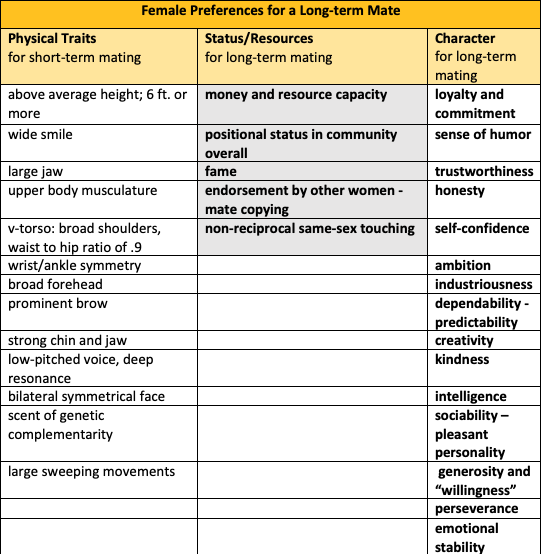
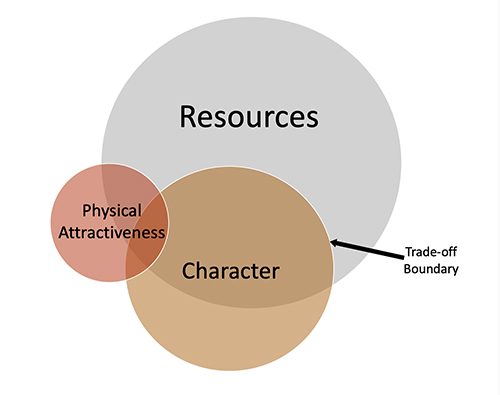
A woman’s long-term mating strategy needs “resources”* (the provision of status and power) and character – especially generosity and loyalty to her and their children. As women may readily tell their female friends, there is often a tension between these two dating/mating priorities. In America, resources usually win this game of mate selection preference, often with rationalization and denial about the lack of optimal character. Good providers and protectors get a more extended mate selection “interview” than “beta” men who are good listeners.**

With Zelenskyy, there is no need to rationalize. He is the sexist man in the world right now because he so obviously hits the sweet spot of these two preferences.

Zelenskyy Has Not Redefined Manhood – Many Came Before

Kathleen Parker is by no means the first to identify the “warrior-artist.” Years ago, Geoffrey Miller and Tucker Max identified this man in their book Mate as the “tender-defender.” Stephen Marche in The Unmade Bed called him the “macho-caretaker.” Sex author and relationship expert Alana Pratt called him a “noble badass.” (Could there be a better description for Zelenskyy?)

Threading the Needle

One of the “needle-threading” double binds that men encounter is reflected by this mate selection request by women: “I want a ‘beast’ for protection — who is dangerous to others but not to me.” Author and couple’s psychotherapist, Esther Perel, is unequivocal on this subject. She calls this man the “tamed beast.”

Masculinity is Like Coffee

Maher said there may be a little but necessary “toxicity” in this sexier “Zelenskyy-man.” Maher uses the term “toxicity” for convenience, not as a psychological or sociological truth. But he says, “masculinity is like coffee; even when you decaffeinate it, there is still a little caffeine in there.” Maher’s overall point, which I generally embrace, is that we need to stop “decaffeinating” our men. Such men are not sexy, and they will not protect us.

Zelenskyy is the Heroic Masculine

Volodymyr Zelenskyy is a hero. He is not an example of toxic masculinity. He is an example of noble male energy. He is a man of action and clarity of purpose, undeterred by rival dictators (or anybody else).

The Way of the Superior Man

Over 25 years ago, David Deida named and described the virtues of the warrior-artist, the sexually and spiritually evolved man, in his seminal work, The Way of the Superior Man. He anticipated the powerful impact of Zelenskyy on women. Chapter 37 of his book is entitled She Wants the “Killer” In You. “Although your woman doesn’t want you to be a killer, she is turned on by your capacity to kill. She is turned off by your lack of this capacity. She does not want you to be a killer, but she does want to feel you are capable of facing death for her. And it is this capacity that makes you trustable as a man, both as a human warrior but also as a spiritual warrior.”

A Superior Man Will Die for You

A superior man, a Volodymyr Zelenskyy and all the Ukrainian men who stayed behind, will die to protect his woman (and his country), but he absolutely will not always do what she wants. Sometimes he will just take the nail out of her head.

Now Please Watch:
Related posts and/or pages:


*“Resources” equates to financial/material security and is, therefore, a direct proxy for physical protection.

**Physical attractiveness is heavily weighted in contemporary culture, but is influenced directly, in the female mind, by status, power, and to some degree, character. It is worth noting: Zelenskyy is not tall nor exceptionally handsome.

Please Note: Your comment may take up to 12 seconds to register and the confirmation message will appear above the “Submit a Comment” text. 
Female Sexual Fluidity:  Power of Context and the Future of Heterosexual Partnerships

Female Sexual Fluidity: Power of Context and the Future of Heterosexual Partnerships


 “Power comes to women who bring gay expectations to their heterosexual couplings.”

~ Jennifer Baumgardner

Mutually satisfying romance, love, and sexuality are teetering on the edge of failure in the modern heterosexual mating economy.  Women are turning away from men and toward other women.  Recognition and knowledge of female sexual fluidity may expand our understanding of human intimacy and improve the quality of heterosexual relationships, perhaps not a moment too soon.  Let me start with a prescription and challenge to men and women in response to this trend.  The rest of this post gives background and rationale for my “solutions,” focusing on nine formulations of context underlying female sexuality and fluidity.

What Can Be Done to Improve Heterosexual Partnerships       

  • Men (and women) need to learn much more about female sexual response, including sexual fluidity.  Men need to accept and be curious about female sexual fluidity for what it can teach them.
  • Men need to further develop the capacity for interpersonal intimacy and connected conversation. Creating that context is crucial for the future of heterosexual relationships.
  • Men need to learn how to “interpret” the individual needs of women and create a sex-positive context specific for that woman.
  • Women need to be patient with men as they learn and apply “gay expectations.”
  • Women need to prefer men with high emotional intelligence over men with greater resources, status, and power. Establishing this preference is a very tall order for women because it runs counter to evolutionary pressures in mate selection.  Female choice is always paramount.  Women shape male behavior by their criteria for sexual access.  The energetic and sexual charge between men and women must “diversify” (somehow) so that the alpha male does not always get the most desirable woman.
  • Men need to reclaim the traits of heroic masculinity while monitoring and reducing particular forms of dominance. Servant leadership is the model.  A man can be heroic without being “toxic.”  Disengaging from the need for status and power is also a tall order.  Male psychology has been shaped by hierarchy over thousands of years of mate selection in collusion with women.
  • Women can readily encourage positive masculinity (heroic masculinity) by respecting and verbally acknowledging men for acts of service and by pushing back against the thinking that (all/most) men are “the problem.”
  • Male sexuality should not be vilified as a malevolent force in nature but understood for its biological basis and evolutionary purpose.  Political feminists who disparage or discourage male sexuality must acknowledge the sexual complexities of women concerning desire, power, and erotic objectification.
  • American economic and social systems must allow average, working-class men to provide for their families and women to be supported in the workforce with a provision of care for their children.

Female Sexuality is Different from Male Sexuality

Women have their unique sexuality, like a fingerprint, and vary more than men in anatomy, sexual response, sexual mechanisms, and how their bodies respond to the sexual world.  Women vary more widely from each other and change more substantially over their lifetime than do men.

 Women’s sexual functioning includes sexual attractions, romantic affections, sexual practices/behaviors, and preference/orientation identities that are different from men’s sexual functioning due to biological and cultural adaptations. 

Female sexuality is different from male sexuality in ways that affect all of us, all of the time.

What is Female Sexual Fluidity?

 According to researcher Lisa Diamond, the fundamental and defining feature of female sexual orientation is fluidity (Sexual Fluidity — Understanding Women’s Love and Desire). 

 Diamond defines sexual fluidity as “situation-dependent flexibility in women’s sexual responsiveness that makes it possible for some women to experience desires for either men or women under certain circumstances, regardless of their overall sexual orientation.”  Further clarifying is the definition of bisexuality by author Robyn Ochs (Getting Bi: Voices of Bisexuals Around the World):  “A bisexual person has the potential to be sexually and/or romantically attracted to more than one sex, but not necessarily at the same time or to the same extent.”

 Female Fluidity is Growing

Female sexual fluidity is on the rise.  There is an increase in the percentage of women who identify as lesbian or bisexual in practice.   Women are more likely to be “hetero-flexible” in their behavior than men, perhaps by a large margin.  Researchers believe this has always been true, but it is a growing behavioral and cultural trend.  Women are turning away from men for romance and connection; they prefer the company of women for a variety of socio-cultural reasons (e.g., response to memes of “toxic masculinity and the “me-too” movement).

A 2005 study by the Centers for Disease Control found that 11 percent of women aged 15-44 reported having some form of sexual experience with women; women were also three times more likely than men to have had both male and female partners in the last year. (1)  

Liberal Generation Zs – An Increasingly Fluid Population

A recent Gallup poll found one in six (15.9%) Generation Z adults (ages 18-23) identified as LGBTQ.  LBGTQ identification is lower in each older generation, including 2% or fewer respondents born before 1965.  Young people who are politically liberal identified as LGBTQ at astronomical rates.  Gallup found nearly thirty-one percent (30.7) percent of Gen Z liberal adults identified as LGBTQ. In 2021, female bisexual behavior is so common, the concept of “orientation” fits women less than men.

Bisexual women reveal preference instead of orientation.

Female Sexual Fluidity Reveals the Power of Context

Female sexuality is more context-specific than male sexuality. All external circumstances of everyday life influence the context surrounding a woman’s arousal, desire, orgasm, choice of partner, and orientation identity. Diamond observed, “the more we learn about women’s desires, the more obvious it becomes that they involve complex interplays between biological, environmental, psychological, and interpersonal factors.” 

Formulations of Female Context

Related to fluidly and context, men and women are not the same sexual species.

Women’s sexual behavior and fluidity emerge out of several formulations of context.

1. Context of emotional connection

More than ever, women feel more emotionally connected to other women than to men. If this emotional trigger is strong enough, same-sex behavior as a preference can easily emerge.  “Straight” women genuinely fall in love with other women; straight men do not often (or ever) fall in love with men in the same way. 

Women Have More Interest in the Character Traits of Connection

Men and women have different preferences and priorities for traits desired in a mate.  While there is some agreement about preferring kindness, stability, humor, and care of children, women overall have much more interest in character traits that may bring interpersonal connection.  Preference for interpersonal connection powerfully drives interest in same-sex behavior.

2. Context of being empowered and politically progressive

As extensively detailed by Jennifer Baumgardner (Look Both Ways – Bisexual Politics), female same-sex sexuality often emerged out of a political context.  It provided a kind of virtue signaling – a badge of cultural wokeness.  Female sexual fluidity was politically in alignment with the movement of women to equalize power dynamics and disengage from men and “structures of patriarchy.”  Segments of the modern feminist movement have demonstrated strident but unexamined misandry.  It has turned many women away from men as a political statement.  Loving and being sexual with women becomes the correct political statement.  

“Gay Expectations” – Contexts 1 and 2 Combined

“There are two reasons to be drawn to women when you are a woman,” explains Baumgardner.  First, “being with a woman provides comfort.  She is like the first person you bonded with, the nurturer; through her, you get understanding.”  The second reason is political, she says, and forces this question:  “Can I have a more satisfying, more equal relationship in which I like myself better with a woman?”  Baumgardner answers this by saying, “I have yet to have a relationship with a man where I feel as strong and independent as I felt with the two serious female relationships I’ve had.”  

“Gay expectations” are essentially the best traits in the character cluster of a heterosexual woman’s long-term mating strategy. Baumgardner says “power comes to women who bring gay expectations to their heterosexual couplings.”  By “power” she means significant benefits of relationship satisfaction produced from asserting the need for a co-equal partnership with a man – a partnership where the woman also “brings” her criteria for emotional affinity.  (To be clear, Baumgardner is not talking about a woman’s erotic power in a heterosexual partnership; Baumgardner may not even acknowledge the privilege of female erotic power.)

3. Context of being hip, renegade, and more sexually interesting

Bisexual or hetero-flexible women may be seen as more interesting, adventurous, and sexual than straight women.  And, there is almost no downside for a woman to fall in love or want to have sex with a woman while continuing to attract men.  Men are often more turned on by the thought of a woman who also loves a woman.  Women who are sexual in a variety of ways are erotic for most men.

4. Context of belonging and community

“Membership” in the bisexual, “queer,” or lesbian community can often bring a powerful sense of belonging, especially for young adults.  In an episode of The Bisexual, a young woman turns to the lead (bisexual) female character and says in a sense of comradeship, “well, you know, I am queer.”  Our 30-something, experienced bisexual protagonist turns to her and says derisively, “well, everyone under 25 thinks they are queer.”

Belonging Is Intoxicating

Belonging is an intoxicating and essential human need.  For marginalized or minority communities of any kind, belonging to a subculture is salvation.  Sexually fluidity brings membership in a tribe that is counter to mainstream culture.  It is potentially a provocative and charismatic club.  Like a tattoo, it is an outward affectation that says, “I am adventurous; I am (paradoxically) unique and sexy.” 

Dissension Within the Fluid Community

It is also true that there are subcultures and dissention within the fluid community, queer umbrella.  Baumgardner details the struggles of bisexuals to be accepted within the lesbian community and the internal tensions about female sexuality within the feminist movement.

“Bi For Now”

We have witnessed popular terms such as “Lesbian until Graduation” (LUG) or “Bisexual until Graduation” (BUG) as sex researchers viewed college as a place where young women explore their sexuality and have their first and sometimes only lesbian relationship. 

In 2003, a New Yorker magazine article, “Bi for Now,” suggested that women’s involvement in their college’s gay scene exposed them to a different culture, like a junior year abroad in “Gay World.”  A large study (13,550 responses) by the Centers for Disease Control and Prevention found that the prevalence of  “gay until graduation” may be overestimated compared to non-college women. Yet, they also found the gender gap on homosexuality remained substantial:  twice as many women as men reported same-sex behavior.

5. Context of men as undesirable and a liability

Men are perceived as less interesting and are less admired by women than ever before. 

Being attracted to only men may even be seen as a liability, a disability, or just provincial.   Women and the popular media often portray men as emotional and moral “children.”    Sometimes bisexual women have to defend or hide their interest in men to self-identified lesbians.

6. Context of safety and a “sex-positive” situation

Women’s sexual functioning is influenced by their internal brain state — how they experience the present moment and how they generally think and feel about sex. Judgment, shame, stress, mood, trust, body image, and past trauma influence a woman’s sexual well-being.  A woman’s brain must create a context that sees the world as a secure, pleasurable, and sexy place.  A sex-positive context for a woman is a moment with low stress, high affection, high trust, and is explicitly safe.

What a woman wants and enjoys will change with her external circumstances and internal state.  Women are often different from one another because a variety of contexts work to create female interest and readiness (female response variability).

7. Context of female competing intentions for erotic intimacy

Satisfaction in long-term relationships often requires balancing a polarity of human needs:  safety, familiarity, attachment, and security on one pole, and adventure, risk, mystery, and novelty on the other.   Bridging this polarity calls for a reconciliation between intimacy and caretaking (human bonding) and the sexual-erotic life, which often relies upon surprise and even distance. 

Human beings want and need both sides of this polarity in order to experience optimal happiness.   The need for familiarity and attachment may be a driver of same-sex behavior among women.  But the need for distance or difference also seems to enter the equation of women’s sexual fluidity, especially for hetero-flexible or bisexual women.  “One of the pleasures of the opposite sex is directly opposed to intimacy,” says Baumgardner.  “It is the fact of our mysteries to them and theirs to us that fires some of the relationship.”

Female Sexual Fluidity Deals With Trade-offs Between Character and Power

Bisexual women want emotional bonding with women, the equality of sameness – politically, physically, and emotionally.  Yet, as detailed by Baumgardner, bisexual women may also want the difference of a male body and the polarity of power experienced with a man – in a vaguely understood psychological soup of dominance and submission, subject and object.   Baumgardner explains: “There is more to life than being a sex object.  But the pleasure of being objectified – thought beautiful, sexy, special, and captivating – was drastically underplayed by feminists.”

“My sense of how hot and foxy a lover found me during sex had always been one of life’s greatest pleasures, and now I had trouble believing that this girl would or could objectify me.”  ~ Jennifer Baumgardner

Author and bisexual sex researcher Lisa Featherstone was asked by Baumgardner what she learned from dating men that she could bring to her sexual relationship with a woman.   “When I first started having sex with women, I remember thinking, I really like this, but I kind of want to be a little more attacked and objectified.”   Featherstone continued: “It sounds weird, but you have more freedom to express the range of your sexuality to a man or another bi woman (than to a lesbian).”

Unconscious Double-binds

Below the “surface” of conscious awareness in hetero-flexible or bisexual women are complex unconscious factors and double-binds related to dominance, submission, desire to be desired, desire to be safe, and the internal struggle between preferring alpha traits of dominance and beta traits of kindness loyalty, and commitment.  These are the same competing intentions of heterosexual women for long-term mating, amplified under the influence of modern feminism.

The “modern” woman must juggle her aspiration for personal power with her attraction to traditional forms of male power, embodied, not systemically, but in a particular man.  She must also navigate trade-offs in mate selection between the apparent “polarities” of power and character.  She wants both in different amounts at different times from the same person.

8. Context of supply and demand

One of the most potent “situations” in female heterosexuality is the workings of the overall mating economy – the impact of male spontaneous desire, initiation, and intrasexual competition.  Sex for most women is an abundant resource; it is not in short supply.  It is a need (within self-imposed selection preferences) that willing men can almost always meet. Therefore, there is no need to attend to it.  If the refrigerator is full, there is no need to fantasize or strategize about getting food.  If there is a man “pulling up” (like a bus) every 5 minutes, there is no need to worry about missing or choosing not to take the last bus. 

In the recent opening episode (Half the Money) of Paramount’s Yellowstone, hard-charging Beth Dutton gives a woman direct advice on why she should stand up to her husband:  “You have half the money and 100 percent of the pussy!”   Enough said; Beth Dutton (and the writers of Yellowstone) understand female erotic power and its demand in the mating economy.  This supply and demand dynamic is also salient for practicing bisexual women.

Supply and demand in the mating economy mostly encourages female sexual fluidity.

9. Context of physiological response, subjective desire, and sexual motivation.

As outlined in prior posts (see Appendix), female sexual fluidity is influenced by less testosterone and a weaker “sex drive” compared to men.  Women operate primarily from “response-desire” and an “inhibition-braking” system, whereas men operate from “spontaneous-desire” and an “accelerator-excitation” system.  Women also have very low “concordance” (agreement) between their subjective sexual desire and their physiological arousal compared to men.  All of these factors influence the complexity of female sexual fluidity and undergird all other contextual factors.

Feminism Must Reconcile Complexities of Female Sexual Fluidity and Response

Positions of feminism that disparage or discourage male sexuality must recognize and reconcile the sexual complexities of women concerning desire, power, and objectification.  Heterosexual feminist women sometimes disown the differences in male and female sexuality.  Yet, they may desire “alpha male sexuality” and collude with it when it suits them.  These complexities are also revealed in the multitudes of female sexual fluidity. 

Male Sexuality Should Not Be Uniformly Criticized

We are in an era where masculinity itself is often considered toxic, not just specific inappropriate behaviors.  The impact of the “me-too” movement is mainly a social good, but men are often lumped together as a singular class of predators.   Male sexuality should not be vilified as a malevolent force in nature but understood for its biological imperatives.  Men and male sexuality should not be criticized for “objectification” in many or most cases.  Men are hard-wired and hormonally constructed to look and want.  Bisexual and heteroflexible women (along with their heterosexual “sisters”) still “want to be wanted” and “erotically objectified” by men if the context is sex-positive.

The Drift Away from Men

Women are creating more distance from men, not less

The “drift away” from men appears to be an exercise in preference, not orientation.  Female sexual fluidity is emerging in a new context of romantic and sexual preference.  The bisexual behavior of women may be uncovering an inherent female bisexual orientation, and it could also be an expression of disenchantment with men and masculinity in general.  As the tee-shirt says, “the future is female.”

The Future of Male-Female Relationships

This “new” bisexuality and hetero-flexibility of women significantly influences the heterosexual mating marketplace –  a marketplace that already favors the erotic power of women to choose and the struggles of men to be chosen.  Studies have shown that female selectivity for mates is at an all-time high (except on college campuses with a surplus of women). Most men do not “make the grade” – they are not acceptable or attractive to women as mates.  Preferences for same-sex relationships squeeze men even further out of the mating economy.  Men often feel frustrated in their attempts to please women emotionally and sexually.  The future of male-female relationships and heterosexuality depends upon understanding the fluidity of female sexuality emerging in young women (young millennials, Gen Z, and Gen Alpha).  Like climate change, we may already be behind the curve in understanding and adapting to it.

Why does this matter?

 Recognizing the sexual fluidity of women underscores the evolved behavioral sex differences between men and women.  Acknowledging differences between male and female sexuality is a necessary starting point for improving male-female sexual partnerships.  But the truth of evolved differences is often resisted by feminists.  Pockets of academia continue to cling to a “blank-slate,” standard social science model that overemphasizes culture (“proximate” causes) and underemphasizes evolutionary biology (“ultimate” causes).

 Cultural Forces Matter Going Forward

While accepting evolutionary biology and the tenets of mate selection science in the etiology of human sexuality, we must also acknowledge recent cultural forces that have increased female sexual fluidity.   The growing disrespect of male heterosexuality and the drift away from men as sexual partners is probably not healthy or sustainable long-term.  Solutions (“What can be done….?) must come through new knowledge and its application — perhaps a Sisyphean task considering ions of mate preference evolution and the rigidity of political-economic power structures, especially in the U.S.

Understanding Fluidity and Context Can Make Men Better Lovers

In conclusion, the understanding of female sexual fluidity and the formulations of female context can have an immediate positive impact on the quality of sexual relating for heterosexual couples, same-sex couples, and “queer” couple variations. (The effect on gay male couples is probably negligible.)  It can significantly help men better understand female physiology, arousal, and the power of context. 

Bottom line: understanding the power of context for female sexual fluidity can help men become better lovers for women.

Note
  1. Mosher, W. et al; Sexual Behavior and Selected Health Measures: Men and Women 15-44 Years of Age, Advanced Data 2005; U.S. Department of Health and Human Services.

Please Note: Your comment may take up to 12 seconds to register and the confirmation message will appear above the “Submit a Comment” text. 

Mate Value of High-Income Men: Seeking Arrangements and the Erotic-Economic Bargain

Mate Value of High-Income Men: Seeking Arrangements and the Erotic-Economic Bargain

“You can lose a lot of money chasing women, but you will never loose women by chasing money.”
                    ~ Chris Rock — I Think I Love My Wife

Evolution and Behavior published (September 2021) a recent study by Rosemary Hopcroft 1 that confirms that high-income men have a higher value as long-term mates in the U.S.   The study’s conclusions are almost too obvious to report given years of data and research that have confirmed this fact of mate selection in America (and around the world), but like climate change, the benefits of Covid vaccines, and the integrity of the 2020 election result, some things bear repeating over and over until the impact is understood.

I will take this occasion to share the conclusions of this study and revisit related posts and pages on Mating Straight Talk (also see concluding Appendix.)  My intent (a return to basics) is similar to that of First Principle: Acknowledge Male-Female Differences, where I reviewed fundamental sex differences as a prologue to understanding the sexual fluidity of women.  In a couple of weeks, I will get back to that topic:  beginning a deep dive into the conditions, context, and politics (all proximate causes) of contemporary female sexuality.

Hopcroft Study

“High-income men have high value as long-term-mates in the U.S.: personal income and the probability of marriage, divorce, and childbearing in the U.S.”  Rosemary Hopcroft in Evolution and Human Behavior, 42 (2021) 409-417.

Study Abstract (abridged)

“Using data that includes complete measures of male biological fertility for a large-scale probability sample of the U.S. population (N=55,281), this study shows that high-income men2are more likely to marry, are less likely to divorce, if divorced are more likely to remarry, and are less likely to be childless than low-income men.

Study Conclusions

• Women Prioritize Earning Capability

Income is not associated with the probability of marriage for a woman and is positively related to divorce.  High-income women are less likely to remarry after divorce and more likely to be childless than low-income women.

These results are behavioral evidence that women are more likely than men to prioritize earning capabilities in a long-term mate and suggest that high-income men have high value as long-term mates in the U.S.”

Higher-income Men in the U.S. and Scandinavia

Prior research in the U.S., Norway, Sweden, and Finland has shown that higher-income men have more biological children than lower-income men and higher-income women have fewer biological children compared to lower-income women.

Men with Status in Pre-industrial Societies

Hopcroft says research findings in the U.S. and Scandinavia are relevant to studies in behavioral ecology and evolutionary demography that detail the relationship between status and reproductive success for men in pre-industrial societies.   “Status is positively related to reproductive success for men in pre-industrial societies, whether status is measured as land ownership, hunting ability, prestige, or wealth.”

Evolutionary Psychology and Mate Preferences

According to Hopcroft, these research findings are also supported by the literature in evolutionary psychology regarding sex differences in mate preferences. The positive relationship between income and fertility is predicted by sexual strategies theory. “Financial prospects and status in a long-term mate are a higher priority for women than for men, according to mate preferences research.”  (Buss, 1989, 2016; Buss & Schmitt, 2019; Fales et al., 2016; Walter et al., 2020; Wang et al. 2018; Williams & Sulikowski, 2020.)

Income and Wealth are Most Important in the U.S.

In most modern societies, status is measured by education, occupation, or household income.  Hopcroft reports that in the U.S., education does not have a robust correlation with income.  Income or wealth is the most crucial ingredient for reproductive decision-making in the U.S., while reproductive success is still associated with overall male status.

Low-Income Men Are More Likely to Be Childless

Men’s income is positively associated with fertility because low-income men are more likely to be childless than high-income men.  “This is further supported,” Hopcroft says, “by evidence that low-income or unemployed men are less likely to be married and more likely to be divorced.”

Watch What She Does — Not What She Says

Hopcroft cites the research of evolutionary psychologists Paul Eastman, Eli Finkel, and Jeffry Simpson (2019) 3 that showed stated preferences for traits in a partner might not be in alignment with a chosen partner’s actual characteristics.  “Female choice influences the occurrence of marriage, divorce, and childbearing.  This suggests a revealed female preference for earning capability in a long-term mate, regardless of stated preferences or ideals.”  In other words, watch who women marry, not who they say they might want to marry.

Females Value Resources, Men Not So Much

“While income for men predicted greater success in long-term mating and reproduction, income for women was either unrelated or negatively related to long-term mating and reproduction.”

It is About Female Choice

“Increased marriageability, lack of divorce, re-marriageability, and increased likelihood of fatherhood by high-income men are evidence that the marriage, divorce, and reproductive behavior of men reflect female choice,” Hopcroft said.

Societal Norms Are Shaped by Evolved Predispositions

Hopcroft asserts (as do most evolutionary psychologists) that evolutionary approaches and sexual strategy theories take into account societal norms, values, and individual preferences that “are themselves shaped by evolved predispositions, so that sociological explanations do not exclude a role for evolved factors.”

High-income Men Beat Low-income Men in Intrasexual Competition

Any reproductive advantage that accrued to high-income men stemmed from their marriageability and re-marriageability alone, Hopcroft’s analysis suggested.  “Competition for mates is always intrasexual,” Hopcroft concluded, “and the evidence presented here suggests that in this competition, high-income men win out over low-income men.”

Higher-income Men More Likely to Have Younger Mates

Hopcroft reminds us that sexual strategies theory predicts male preference for younger women as mates, and men with higher personal income may be more likely to fulfill that preference. 4

Seeking Arrangement

One way for high-income men to fulfill the preference for younger mates is to find motivated and willing women online.  The phenomenon of young women seeking financial and “entrepreneurial” support from rich men has seen a recent uptick.  College is expensive.  The website service Seeking Arrangement matches “sugar daddies” with “sugar babies.”  The site’s mission directly embraces and expresses the perennial exchange between men and women – what sociologist Catherine Hakim calls the use of “erotic capital” to achieve mating objectives.5

Erotic Capital

Hakim defined erotic capital as “an individual’s beauty, sexual attractiveness, enhanced social integration, liveliness, social presentation, sexuality, and fertility that can provide opportunities to advance in life.”  Erotic capital, she says, plays a subconscious role in daily life decisions, such as career offerings, enrichment opportunities, and social networking.    Hakim asserts that current dating apps and subsequent decisions for marriage are driven by a woman’s erotic capital and a man’s economic capital.   I call this the erotic-economic bargain. (See Dynamics in the Mating Economy: Domain #1 of Male-Female Difference.)

Seeking a Wallet in the Form of a Person

Seeking Arrangement implores women to “meet a rich sugar daddy who can provide exotic trips, lavish gifts, financial support, mentoring, and the up-graded lifestyle you desire.”  Every profile comes with a “gift wish list.” One profile I read (for research purposes only) said, “I need a man that gets off by buying me things — seeking a wallet in the form of a person.”

What’s Your Price?

Seeking Arrangement has created several sister sites, including “What’s Your Price?” which allows men to bid against each other for a first date with a beautiful woman.  This bidding process promotes intrasexual economic competition between men that gives the woman a cash reward – a pay-to-play before you even get on the field.

Glorified Escort and Sex Work

Female proponents of the Seeking Arrangement tout it as a vehicle for female empowerment (with some validity).  In reality, the site primarily operates as a glorified escort and sex-worker service, which has existed for thousands of years.  Some of the women may be fantasizing about securing a rich man to marry.  Men, of course,  are fantasizing about having sex with beautiful young women.

Erotic-Economic Bargainthe Unconscious Infrastructure of Heterosexuality

The exchange of physical beauty and fertility (erotic power) for economic power (and/or protection) is the perennial bargain of human mating over eons of time.  This bargain is rooted in the willingness and capacity for parental (economic) investment from the man and the reproductive (sexual) access allowed by the women in response to that investment.  It is the unconscious infrastructure of heterosexuality — the ultimate exchange in the mating economy.

Male Aspiration for Dominance

The ability of a man to protect and provide for children is the crucial ingredient and evolutionary force driving this mate preference by women; it is the trigger for her sexual availability.  Her youth and fertility is her erotic power — a power that controls and influences male aspiration for social dominance, economic power, and competition with other men.   Sexual access to women is the penultimate motivation and prize.

Assortative Paring By Mate Value

The strength of a man’s preference for physically attractive women and a women’s preference for financially successful men works conjointly in relationship to their mate value.   At the upper end of their respective mate value, there is an assortative pairing of the beautiful with the rich.  For the “average” man or woman, the erotic economic bargain is not as stark, but its “hard-ware” (infrastructure) remains an influence along the entire spectrum of class and physical attractiveness. (See Dynamics in the Mating Economy: Domain #1 of Male-Female Difference.)

Renegotiating the Bargain?

In recent decades, the erotic-economic bargain may be undergoing a bit of renegotiation with surface or cosmetic changes that comport with our particular political moment.  Female empowerment and independence from men are progressing and evolving in their influence.   But most evidence “on the ground” of the modern dating scene does not show movement away from our ancient, evolutionary adaptations; there has not been a significant change in the foundational priorities and preferences for a partner by men and women.  Content analysis of dating websites reveals that women explicitly ask for “financially secure” or “professional” partners roughly twenty times more often than men.

Foundational Collusion

Although the exchange of sex for resources is a shared agreement, it is often implicit and “secretly” held – that is what is meant by “collusion.”  Men and women have vastly different parts to play in keeping the agreement in place.  This foundational collusion of exchange influences all other pieces of the heterosexual “puzzle.”  The erotic-economic bargain is often not explicit or conscious; it is largely “undiscussable” (Undiscussables).

“Erotic-Economic Bargain” As  Modern Evolutionary Mismatch

The hard-wired erotic-economic bargain is now destructive to the planet.   Getting off fossil fuel (which is related) may be easier than “getting off” (no pun intended) the desire by women for men with power and resources and the desire by men for women who are physically beautiful (fertile).  The “good news” is that change probably starts (or really must start) with women.

“You’ve Got the Whole World In Your Hands”

When “high mate-value” women TRULY prefer (prioritize) to mate with men of character rather than men of power, status, and money, men will change their behavior, and the planet will be saved.  (Allow me this bit of hyperbole.)  The world may be decidedly less sexy, but women’s capacity for flexibility and fluidity may be part of the roadmap for a more sustainable future.  Sexual access to women by men is a hard-wired co-variant to the desire by men for youthful, fertile, female beauty.  If women changed the criteria for sexual access, there might be a possibility for change.

It’s A Wicked Problem

In addition to hard-wired mating preferences, the intransigence of the erotic-economic bargain presents a “wicked” problem6 with multi-causal systems interacting together – including unregulated capitalism and the myth of unlimited growth.  A social safety net and guaranteed care for children may be needed to change the sexual psychology of men and women in the U.S. .

Sexual Juice Repurposed

Yes, a lot of “sexual juice” between men and women will have to be reconfigured or “repurposed” in a world where alpha-male power can no longer be an energetic-biochemical turn-on.   Women must lead the way.  Female choice is the preeminent dynamic of mate selection.  We could just kill all the men by destroying the Y chromosome – but, if you are watching Last Man Standing on Hulu, that may not be an optimal world for the women (and trans-men) who are left.

Notes

  1. Hopcroft is a Professor of Sociology at the University of North Carolina at Charlotte. She has published widely in evolutionary sociology and comparative and historical sociology in journals that include the American Sociological Review, American Journal of Sociology, Social Forces, Evolution and Human Behavior, and Human Nature.  She is the author of Sociology: A Bio-Social Introduction (2010).
  2. Income is from reported monthly earnings and amounts received from all businesses and investments. High vs. low income was determined by a statistical cut-off within the subject sample distribution.
  3. From the University of California-Davis, Northwestern University, and University of Minnesota, respectively.
  4. See “Age Differences of Male Celebrities and Their Partners,” Appendix, Dynamics in the Mating Economy: Domain #1 of Male-Female Difference.
  5. For discussion of Hakim’s research and related issues, see The Male Sexual Deficit: Social Fact of the 21st Century.
  6. From social planning and systems theory, a wicked problem is difficult or impossible to solve because of incomplete, contradictory, and changing requirements that are difficult to recognize. Most importantly, there are multiple interacting variables and no single solution.
References

Buss, D.M. (1989). Sex differences in human mate preferences:  Evolutionary hypotheses tested in 37 cultures.  The Behavior and Brain Sciences, 12(1), 1-14.

Buss, D.M. (2016). The Evolution of Desire: Strategies of Human Mating.

Buss, D.M., & Schmitt, D. P. (2019).  Mate preferences and their behavioral manifestations.  Annual Review of Psychology, 70, 77-110.

Eastwick, P. W., Finkel, E. J., & Simpson, J. A. (2019). Best practices for testing thy predictive validity of ideal partner preference-matching.  Personality and Social Psychology Bulletin, 45(2) 167-181.

Fales, M. R., et al. (2016). Mating markets and bargaining hands:  Mate preferences for attractiveness and resources in two national U.S. studies. Personality and Individual Differences, 88, 78-87.

Hopcroft, R. L. (2006). Sex, status and reproductive success in the contemporary U.S. Evolution and Human Behavior, 27, 104-120.

Hopcroft, R. L. (2015). Sex differences in the relationship between status and number of offspring in the contemporary U.S. Evolution and Human Behavior, 36(2), 146-151.

Hopcroft, R. L. (2019).  Sex differences in the Association of Family and Personal Income and wealth with fertility in the United States, Human Nature, 30, 477-495

Walter, K. V., et al. (2020) Sex differences in mate preferences across 45 countries:  A large-scale replication. Psychological Science, 31 (4) , 408-423

Wang, G., et al. (2018). Different impacts of resources on opposite sex ratings of physical attractiveness by males and females. Evolution and Human Behavior, 39, 220-225.

Williams, M., & Sulikowski, D. (2020).  Implicit and explicit compromises in long-term partner choice.  Personality and Individual Differences, 166, 110226.

Appendix

From Mate Value and Mating EconomyScience of Attraction and Beauty, and Long-term and Short-term Mating Strategies: Domain # 2 of Male-Female Difference

 Women’s Long-term Strategy

Women’s long-term mating is driven by genetic characteristics and interests of our species: internal fertilization, an extended period of gestation, prolonged infant dependence on mother’s milk, and the need for relatively “high” male parental investment compared to other primates

Women Prioritize Male Status

Women have evolved to prioritize male status before being concerned about other mate characteristics.   It makes sense for women to first verify that a man has sufficient status/resources and then (and only then) seek positive levels of other characteristics. 

Mate Value Budget

Using a budget–allocation and mating screening method, evolutionary psychologist Norman Li found that under constraints of low budget, men spent the highest proportion of their budget on physical attractiveness, and women spent the highest percentage of their budget on status and resource-related characteristics.  As budgets increased, spending on these traits decreased but increased on other traits, such as creativity and intelligence.  But, when choices were highly constrained, men prioritized some minimal level of physical attractiveness, and women prioritized some minimum level of status.  Both sexes also prioritized kindness.

chart: female preferences for a long-term mate
Trade-offs Between Resources and Character

In addition to protection and a provision of resources, a woman’s long-term strategy seeks character traits that ensure stability and loyalty to her and her children over the long term.

What is often more salient in female mate selection and relationship satisfaction is the tension between the two preferences inside the female long-term strategy:  resources and character.   A woman’s long-term mating strategy often involves ambivalence and internal confusion related to her desire for a mate with resources and status and her preference for loyalty, kindness, intelligence, and character traits for parenting. (See “trade-off boundary” on the diagram below.)  In America, resources usually win this game of mate selection preference, often with rationalization and denial about the lack of optimal character.

Venn diagram: women's long-term mating strategy
Please Note: Your comment may take up to 12 seconds to register and the confirmation message will appear above the “Submit a Comment” text.