
Ultimate and Proximate Causes of Female Sexual Fluidity – the Wisdom of Evolutionary Psychology

Ultimate and Proximate Causes of Female Sexual Fluidity – the Wisdom of Evolutionary Psychology

Problems arise when proximate explanations, like sociocultural theories, are used in place of ultimate explanations, or evolutionary theories, to explain human characteristics.  ~ Alex Mackiel

In my last post (First Principle: Acknowledge Male-Female Differences), I underscored the need to acknowledge differences between men and women in their sexual psychology and response in preparation for understanding sexual orientation and the sexual fluidity of women.  I outlined twenty-two domains of difference. Several of these domains (such as #15 – “influence of context”) directly clarify the causes and expression of female sexual fluidity, or as researcher Lisa Diamond describes it, the “situation-dependent flexibility in women’s sexual responsiveness.”  I will address all manifestations, causes, and effects of women’s sexual fluidity in future posts.

Thanks for Letting Me Set the Foundation

Today’s post is very “inside-baseball” and may have limited appeal to casual readers.  What follows is not popular, titillating, twitter-ready, easy-to-eat-like-candy fluff psychology.  Intellectual integrity and rigor demand that consideration of female sexual fluidity (in this particular cultural moment) revisit basic concepts of evolutionary psychology and address misconceptions about its tenets (see Appendix).  I explain and defend evolutionary psychology as an educator and reluctant contrarian to the dominant narratives of the academic social sciences and politically-correct thinking.  Reviewing concepts of evolutionary psychology will provide a foundation for understanding the biological and cultural adaptations of female sexuality.

Women’s Sexual Functioning Demonstrates Biological and Cultural Adaptations

Women’s sexual functioning includes sexual attractions, romantic affections, sexual practices/behaviors, and preference/orientation identities that are different from men’s sexual functioning due to biological and cultural adaptations.

Evolutionary Psychology Explains Biological and Cultural Adaptations

Basic tenets of evolutionary psychology (EP) undergird the arguments and evidence about female sexual fluidity (see What is Evolutionary Psychology?) and clarify the interplay of biological and cultural adaptations that operate in female sexual psychology and response

How or Why “Situations” Trigger Female Sexual Fluidity

If female sexuality is “situation-dependent,” we must understand not only what situations trigger same-sex attractions, bi-sexual identity, or hetero-flexible behavior, but how or why those situations operate as triggers.

Move “Upstream” to Understand Adaptations

Acknowledging the evolved behavioral differences between men and women is a “first principle” that explains the difference between the sexual psychology of men and women; it certainly explains different degrees of sexual fluidity.  But we might need to move “upstream” one step further to understand how behaviors become adaptive over thousands of years of human evolution.  We must clarify the difference between ultimate and proximate causes to completely understand modern-day female sexual fluidity.

Female Sexuality is Sensitive to Context

Female sexuality is dramatically sensitive to context.  Women are more context-dependent than men; all external circumstances of everyday life influence the context surrounding a woman’s arousal, desire, orgasm, choice of partner, and orientation identity.  Situation-dependent equals context-dependent.  Women’s “situation-dependent” sexual fluidity implies the power of proximate causes, but it does not eliminate the possibility of ultimate causes driven by evolutionary adaptation.

Causes of Sexual Fluidity and Patterns of Expression

My next post will address “ultimate” (evolutionary) causation theories for female sexual fluidity, such as the alloparenting hypothesis.  After that, I will handle the “juicy” stuff:  patterns of desire (and its three elements), sexual behavior, and sexual orientation identities.  Importantly, research suggests functional independence (potentially) of these patterns for any particular woman.  You can begin to see the possible permutations of female sexual expression.

Definition and Overview of Evolutionary Psychology

Evolutionary psychology (EP) is the study of human nature – meaning the study of evolved psychological mechanisms or psychological adaptations.  An adaptation is a product of evolution by natural and sexual selection that allows the human species to solve particular problems — most importantly, problems of survival and reproduction.  EP contends adaptations are behind most of our preferences, desires, and emotions and incline us to behave specific ways.  EP is particularly focused on behavior traits that appear to be universal across human populations.

Culture and Nature are Part of Evolutionary design

EP believes humans are born with an innate nature and that culture and learning are part of the evolutionary design and, thus, also innate.  This blend of intrinsic nature and culture is called the “dual inheritance” model of human evolution which explains how we are “structured prior to experience.”

Psychological Adaptations Operate Beneath Conscious Thinking

Psychological adaptations exist in the brain and operate primarily beneath conscious thinking.  For example, male sexual jealousy is an evolved psychological mechanism that prevents cuckoldry and investment in children who will not carry the man’s genes into the next generation.  EP explains human behavior in terms of the interaction between these evolved psychological mechanisms and the current environment in which they express themselves.

Adaptations Emerge at Appropriate Time

Adaptations do not need to appear at birth.  Many adaptations develop long after birth (e.g., walking by humans and development of female breasts).   With some exceptions, an adaptation “must emerge at the appropriate time during an organism’s life in reasonably intact form, and hence be characteristic of most or all of the members of a given species” (Buss, D.M. 1999, p. 36).

Proximate Causes Are Triggers for Female Sexual Fluidity

Evolutionary psychologists examine proximate and ultimate causes of behavior.  Proximate causes of behavior often include stimuli in the immediate environment of the organism or physiological mechanisms inside the organism.  Such stimuli include the current cultural triggers of female sexual fluidity.

When and Where Our Mind Developed – the Timing of Ultimate Causation

Humans (the genus Homo) appeared between 1.5 and 2.5 million years ago, in a time roughly coinciding with the start of the Pleistocene Epoch.   Because the Pleistocene ended only 11,700 years ago, most human adaptations either newly evolved during the Pleistocene or were maintained during that era.   EP, therefore, proposes that the majority of human psychological mechanisms are adapted to solve survival and reproductive problems frequently encountered in Pleistocene environments.

Ultimate Causes from the Ancestral Past

Ultimate causes of behavior evoke our ancestral past and address behavior or psychological processes that were adaptive for survival-based natural selection or reproduction-based sexual selection.  Ultimate causes of a behavior pertain to our evolutionary (phylogenetic) history, addressing these questions (for purposes of this discussion):

How did female sexual fluidity come to be?  How was it adaptive? How did it confer reproductive benefits to individuals with this behavior?

Evolutionary “Situationalism” – Proximate Causes of Survival and Reproduction

EP seeks to understand both proximate and ultimate causes of species-typical psychological processes in light of basic evolutionary theory.    Modern-day EP posits “evolutionary situationalism” (Geher, G. 2014).  Situational factors that matter most in affecting behavior are the ones that bear directly on factors associated with survival and reproductive success. Five decades of feminism and women’s economic progress and political empowerment are likely contributing proximate causes of female sexual fluidity.  (To be explained in subsequent posts.)

Alloparenting is a Proposed Ultimate Cause of Female Sexual Fluidity

The theory of alloparenting is a proposed ultimate cause of female sexual fluidity.  It posits that sexual fluidity in women is a contingent adaptation that increased ancestral women’s ability to form pair bonds with female alloparents who helped rear children to reproductive age.  Under this view, most heterosexual women are born with the capacity to form romantic bonds with both sexes. (My next post will explain this in-depth.)

Interplay of Biological and Cultural Adaptations

EP sees total congruence between learning and evolution; they are natural explanatory partners – perfectly compatible.  Many evolutionary hypotheses are about learning.  Humans are endowed with evolved learning mechanisms embodied in the brain.   For instance, the claim that humans have an evolved fear of snakes and spiders does not mean that people are born with this fear.  Instead, it means that humans are endowed with an evolved learning mechanism that acquires a fear of snakes more easily and readily than other fears. Learning itself is a Darwinian process and provides one of several possible mechanisms of inheritance in addition to conventional genetic processes.

Nature versus Nurture is a Strawman Debate

It should be clear by now that nature versus nurture is an antiquated “strawman” debate*, especially as a critique of evolutionary psychology.  (See Appendix below.)  Ultimate and proximate causes easily co-exist – but it is the “nature” part of the equation, the research about ultimate evolutionary causation, and the evidence of evolved behavioral sex difference that have been under-reported and too often dismissed in the halls of contemporary political and academic inquiry.

Problems arise when proximate explanations, like sociocultural theories, are used in place of ultimate explanations, or evolutionary theories, to explain human characteristics.

Sociocultural and Evolutionary Explanations Are Not at Odds

Sociocultural and evolutionary explanations are not necessarily at odds with each other.  Evolutionary psychology is an interactionalist framework.  Human minds created culture in the first place.  Both operate simultaneously to cause most human actions, such as aggressive behavior.  It would be virtually impossible for humans to acquire and learn their culture and all its complexity without innate mechanisms in place to make it happen.

Evolutionary psychologist Glenn Geher offers, in summary: “Given this focus on both environmental and innate causes of behavior, coupled with a genuine focus on proximate and ultimate cause of behavior, evolutionary psychology is truly an approach to psychology that embraces both the nature and nurture side of that debate” (Geher, G., 2014, p. 22).

Conclusion and Summary

There are both ultimate and proximate causes of female sexual fluidity.  My next post will describe the ultimate cause(s).  After that, I will address the more proximate, modern-day situational causes and expressions of women’s same-sex orientation and bi-sexual and hetero-flexible behavior.  All of this rests on the foundation of evolutionary science – or at least an appreciation of how the field of evolutionary psychology informs the discussion.**  But the contexts or “situations” in our current sociocultural moment are rich with nuance and ripe for observation. Why did your mother take up with a woman in her fifth decade of life in 2021?  I will get to that.

Notes

*A strawman is a fallacious argument that distorts an opposing stance in order to make it easier to attack.  EP has been attacked for supposedly not incorporating “nurture” in its framework.

**Sources Outside of Evolutionary Psychology

It is worth reminding you that MatingStraightTalk draws heavily on psychologists, sexuality educators/researchers, social scientists, neurobiologists, and investigative journalists that fall outside the ranks of evolutionary psychology but whose work mostly corroborates evolutionary ideas about the context-driven, proximate causes of female sexual fluidity.

The theories and writing of Emily Nagoski (Come As You Are) are very on target.

See blog posts:

Also relevant are these posts: 

I will give an in-depth analysis of Lisa Diamond’s seminal work (Sexual Fluidity, Understanding Women’s Love and Desire) and Jennifer Baumgardner’s book, Look Both Ways, Bisexual Politics. Baumgardner relates her personal story and the stories of women in the 70’s and 80’s.  These women were at the leading edge of discovering, integrating, and “coping” with the milieu of the women’s movement through the lens of sexual identification and sexual practice.

Appendix: Correcting Misconceptions about Evolutionary Psychology
  • EP does not focus mainly on mate selection and reproduction.
    While research on evolved behavioral sex differences has been prolific, the broader field studies parenting, education, politics, emotions, morality, aggression, mental health, physical health, technology, and mismatches of evolutionary design in the modern world.
  • A belief in evolved behavioral sex differences does not negate support for women’s equality and political empowerment.
    Most evolutionary psychologists reside in academic institutions; survey research of these psychologists shows a decided leaning to the political left generally representative in the academic community.  Many feminist scholars do indeed disparage evolutionary psychology.  The bias is so strong that it has been studied as a separate phenomenon. Steven Pinker in The Blank State explains an EP position that equality is not sameness: “equality is not the claim that groups of humans are interchangeable; it is the moral principle that individuals should not be constrained by the average properties of that group.”  EP also supports equal access to all rights and privileges of economic power and role flexibility for both sexes.
  • EP does not claim that products of evolution are present at birth or emerge very early in development.
    This is not how natural selection works.  Adaptations come online during the developmental phase in which they are needed – they develop reliably in all or most members of a species during the appropriate developmental state of an organism’s life.
  • Evolution (EP) does not imply that behavior is genetically determined.
    Evolutionary psychologists believe that everything in the mind, body, and brain is co-determined by genes and the environment.  Environmental pressures drive the evolution of adaptations, and adaptations require environmental input to develop correctly during an organism’s lifespan.  Environmental triggers are necessary to activate the adaptation in the present.  All adaptations have a genetic basis but are not genetically determined.  Genes often build different minds in response to different environments.

    Different environments will change the way the mind causes behavior.   Thus, evolutionary psychologists accept that it is possible to change most human behavior. This flexibility is an essential part of how we are designed.  Natural selection has programmed human development to be contingent on various environmental triggers.

    “However, humans are not infinitely flexible.  Changes in the environment still interact with a relatively stable genome and a relatively fixed mental architecture.  We can’t make people fly just by giving them plastic wings” (Evans, D. & Zarate, O., 2005, p. 161).

  • EP does not suggest behavior will be uniform across cultures; it suggests the neurocognitive machinery that produces behavior will be uniform across cultures.
    Natural selection has sculpted a universal ability to learn language, but the language learned depends on where a person grows up.  “Evoked culture” refers to cultural differences between groups that arise from combining a universal psychological mechanism with environmental inputs that differ across cultures.  Cultural differences in mating strategy demonstrate this by responding to a particular operational sex ratio in the local environment.   Evolutionary approaches to psychology predict cross-cultural universality at the level of information processing mechanisms, not at the level of behavior.  Again, this is called the “dual inheritance” model of human evolution, illustrating how we are “structured prior to experience.”
  • EP does not think everything is an adaptation.
    Evolution also yields “byproducts” (spandrels) and “noise.”  Examples of byproducts include racism, sexual fetishism among men, homicide, uxoricide (killing a wife), and filicide (killing a son or daughter), religion and belief in the supernatural.  Evolutionary biology uses the term “spandrel” for features of an organism arising as byproducts rather than adaptations that have no clear benefit for the organism’s fitness and survival.

    Evolutionary psychologists accept that much of human behavior is a side-effect of modules designed for other things.  Some authors believe that the great products of human civilization — including art, religion, and science, are side-effects of modules originally designed for other purposes.  However, Geoffrey Miller (The Mating Mind, 2000) and most evolutionary psychologists now say that capacities for creative expression are, in fact, essential modules, or primary adaptations inside the global adaptation of sexual selection.

  • EP does address individual difference.
    Although evolutionary psychology began with studying universal and sex-typical mechanisms, the last twenty years have produced a plenitude of research on individual differences related to personality characteristics, sexual jealousy, disgust, mating strategies, and within-sex variation, to name a few.
  • EP does not assert that what is true ought to be true (the “naturalistic fallacy”).
    Evolutionary psychologists attempt to describe what human nature is like, not prescribe what humans should do.  They argue that discoveries of EP could be used to inform left-wing policies just as much, if not more than right-wing policies.  For example, the equal distribution of wealth could be advocated for by knowing that humans are adapted to live in groups in which inequality is relatively low.  EP does not make moral or value judgments. 
  • EP does not believe in or promote eugenics.
    EP does not believe in selective breeding or optimizing the gene pool.  (Do I have to say this?) EP is focused on human behavior as shaped to optimize an individual’s chances of reproduction with no regard for saving the species.  Natural selection happens at the level of the individual organism.  Eugenics is a group-selection doctrine.  But finding mates with good genes is indeed one of the significant functions of mate choice across all sexually reproducing species.
  • EP does not use questionable research methodologyit is not “just-so stories.”
    “Just-so storytelling” refers to the process by which a researcher notices something about human behavior, proposes an explanation for it (an evolutionary one in this case), and then decides to believe that explanation without further inquiry or testing.  This criticism asserts EP over-applies evolutionary explanations and that there are no safeguards against such over-application.  But, it is a misconception that evolutionary psychologists will take any finding and mold it into an evolutionary explanation after the fact.
  • Evolutionary psychology (EP) is not simply a sub-discipline of psychology.
    Evolutionary theory integrates the life sciences and unites many disciplines.  Thus, modern evolutionary theory provides a foundational, meta-theoretical framework that integrates the entire field of psychology.  EP draws insights from anthropology, economics, computer science, and paleo-archaeology but relies mostly on the combination of evolutionary biology and cognitive psychology.
References

Buss, D.M. (1999). Evolutionary Psychology, The New Science of Mind.

Buss, D.M., & von Hippel, W. (2018). Psychological Barriers to Evolutionary Psychology: Ideological Bias and Coalitional Adaptations.  Archives of Scientific Psychology, 6(1) 148-158.

Evans, D., & Zarate, O., (2005).  Introducing Evolutionary Psychology.

Geher, G. (2014).  Evolutionary Psychology 101.

Mackiel, A. (2019) What Explains the Resistance to Evolutionary Psychology?  Quilette (April 8).
Please Note: Your comment may take up to 12 seconds to register and the confirmation message will appear above the “Submit a Comment” text. 
First Principle: Acknowledge Male-Female Differences

First Principle: Acknowledge Male-Female Differences

As I prepare to address issues of sexual orientation and fluidity (see Sexual Orientation, Gender Identity, Presentation, and Biological Sex), it seems appropriate if not necessary to review “first principles” related to my mission and central message, including:

  • Assumptions of Mating Straight Talk
  • General differences between men and women in sexual psychology and response
  • The twenty-two (22) domains of male-female difference. Domain #13 is related to the influence of context, and domain #15 is about sexual orientation, preference, and response variability.  These domains will receive special attention in coming posts. But nearly all domains have an impact on sexual fluidity.
Denial of Sex Differences is Problematic

Part of the mission of Mating Straight Talk is to affirm the differences between the sexes as revealed by evolutionary science and psychological research.  My motivation?  The denial of relevant sex differences in our culture is nearly as problematic as the denial of similarities related to race, ethnicity, and religion.

We Are Uniquely The Same

As a degreed person from a  humanistic psychology graduate program started by a colleague of Abraham Maslow, I am well aware of Maslow’s hierarchy of needs.  Although at least one evolutionary psychologist (Douglas Kenrick at Arizona State) has offered a revision of Maslow’s hierarchy to include sex, mate acquisition, and mate retention, I embrace Maslow’s original ideas describing the universal features of human beings – similar needs of all human men and women.  But from an evolutionary perspective, a salient question remains: How do men vs. women uniquely meet the needs of esteem, belonging, and intimacy as a function of their biological sex?  Is it the same in aggregate?  I think not.

Universal Emotions — Sex-Specific Causes

I believe in exploring universal emotional needs as a pathway for healing interpersonal relationships, perhaps, especially for couples.  All men and women experience anger, sadness, fear, joy, anticipation, surprise, disgust, and trust.*  But there are often sex-specific causes for these emotions.

We are “spiritually” all one.  In the quantum universe, we are the same.  In the material world of dimorphic human culture, we are most often diverse and functionally unique as an expression of our gender and sex.

Assumptions of Mating Straight Talk

Men and women have similarities as human beings and aggregate differences that are primarily a function of biology and evolutionary adaptation.  Our similarities do not often cause conflict.  But our differences, and the denial of those differences, often cause “trouble.”

Women and men have differences that we must acknowledge and understand to have satisfying heterosexual (romantic and sexual) relationships.

Men and women have differences that we must acknowledge to “re-balance” and integrate the biological and social sciences in academia and overcome resistance to the facts of evolved behavioral sex differences and evolutionary psychology.

Women and men have differences that we must acknowledge and understand to clarify the “politics” of sex and gender and challenge pockets of censorship in the public domain.

Men and women need “straight talk” (radical honesty) to uncover and accept our differences.

Women and men need “straight talk” about our differences to empower one another for co-creative relationships.

Vive la Différence

Over the millennia, men and women have evolved with different objectives and strategies of sexual psychology and response related to choosing a mate, reproduction, and parental investment.

General Differences between Men and Women in Sexual Psychology and Response
  • Women have their unique sexuality, like a fingerprint, and vary more than men in anatomy, sexual response, sexual mechanisms, and how their bodies respond to the sexual world. Women vary more widely from each other and change more substantially over their lifetime than do men.
  • Women are less likely to have alignment (“concordance”) between their genital response and subjective arousal; this causes confusion and misunderstanding for women and their male partners. Men have dramatically more concordance between their genital response and subjective arousal.
  • All sex happens in context. Women are more context-sensitive than men, and all external circumstances of everyday life influence the context surrounding a woman’s arousal, desire, and orgasm.
  • Women’s sexual functioning is more influenced by their internal brain state — how they think and feel about sex. Judgment, shame, stress, mood, trust, body image, and past trauma influence a woman’s sexual well-being.
  • Men and women have significantly different hormones and some variations in brain structure. Differences caused by the amount of testosterone cannot be overstated.
  • Women and men differ significantly in visual orientation for physical attraction and production of sexual thoughts.
  • Men and women have different preferences and priorities for the traits desired in a mate (with agreement about kindness, stability, humor, and care of children).
  • Human sexual response consists of a “dual control” system with an excitation mechanism (“accelerator”) and an inhibition mechanism (“brake”). Men are accelerator-dominant, and women are brake-dominant.
  • Related to differences between the sexual “accelerator” and “brake,” men operate primarily from “spontaneous desire” triggers, and women operate primarily from “response desire” triggers.
  • Men sell (primarily), and women buy (most often) in the mating economy; this is the predominant evolutionary dynamic. The psychology of the sexual initiator and pursuer is vastly different from that of the one pursued and the one who chooses among her pursuers.
  • The psychology of male intra-sexual competition differs from that of female intersexual selection (preferential mate choice.) Also, women’s intra-sexual competition (competing against each other) for male attention is a different behavioral phenomenon than male-on-male competition.

And last but not least:

  • Women’s sexual functioning includes sexual attractions, romantic affections, sexual practices/behaviors, and preference/orientation identities that are different from men’s sexual functioning due to biological and cultural adaptations. The fundamental and defining feature of female sexual orientation is fluidityMen are not nearly as fluid as women.  Researcher Lisa Diamond (Sexual Fluidity — Understanding Women’s Love and Desire) defines sexual fluidity as “situation-dependent flexibility in women’s sexual responsiveness.”

Terms of Engagement – Prelude to Understanding Female Sexual Fluidity

Diamond uses the term “sexual orientation” to mean a consistent pattern of sexual desire for individuals of the same-sex, other-sex, or both sexes, regardless of whether this pattern of desire is manifested in sexual behavior.

Sexual Identity

“Sexual identity” refers to a culturally organized conception of the self, usually “lesbian/gay,” “bisexual,” or “heterosexual.”  As with “sexual orientation,” Diamond says we cannot presume that these identities correspond with particular patterns of behavior, especially for women.  Nor can we assume that they correspond with specific patterns of desire.  Women often reject conventional labels in favor of “queer,” “questioning,” “pansexual,” or simply “unlabeled.”

Same-Sex and Other-Sex Orientation

Diamond uses the term “same-sex orientation” to refer to all experiences of same-sex desire, romantic affection, fantasy, or behavior.  She uses “other-sex” sexuality instead of “opposite sex” because (she says) it is more scientifically accurate.  She uses the terms “lesbian” and “bisexual” but considers them problematic (to be addressed later.)  If a person is 100 percent attracted to one sex, they are “exclusively” attracted (in Diamond’s terminology).  All other patterns of attraction are “nonexclusive.”

Domains of Male-Female Differences in Sexual Psychology

Here is a list of the twenty-two domains of male-female differences in sexual psychology and response.  There is overlap and synergy between the domains, but the underlying distinctions are clarifying. These differences are based on statistical aggregates of all men and women from authoritative research studies and cannot predict the unique sexuality of a particular man or woman.

  1. Behavioral dynamics in the mating economy
  2. Long-term vs. short-term mating strategies
  3. Trait preferences and priorities for mate selection
  4. Physical attraction and perceptions of beauty
  5. Concordance between physiological response and psychological desire
  6. Spontaneous desire vs. response desire
  7. Sex and love-making that fuels desire
  8. Accelerator vs. brake: sexual excitation and inhibition systems
  9. Brain structures: sexual pursuit and visual stimuli
  10. Hormonal differences
  11. Variety and novelty
  12. Sexual mentation and “sex drive”
  13. Influence of context
  14. Female competing intentions and imposed double binds
  15. Sexual orientation (and preference) fluidity and response variability
  16. Orgasm – purpose and characteristics
  17. Meta emotions
  18. Romance and desire, together and apart
  19. Psychology of monogamy
  20. Infidelity – reasons and response
  21. Jealousy – triggers, tactics, and consequences
  22. Sexual fantasies

I will eventually examine each domain as a distinct phenomenon of difference. However, some domains will be addressed together because they are related or parallel in physiological or psychological response.  Differences between men and women in genetic make-up and physical morphology are not included as separate domains (see Biological Differences).  But genetic differences will be addressed in a future post about “biological sex.”

*In modern-day “assortative mating” — the economy of mate selection — a similarity of interests, values, and background works better for relationship satisfaction than “opposites attracting.”


Please Note: Your comment may take up to 12 seconds to register and the confirmation message will appear above the “Submit a Comment” text. 
Sexual Orientation, Gender Identity, Presentation, and Biological Sex

Sexual Orientation, Gender Identity, Presentation, and Biological Sex

“Everyone under 25 thinks they are queer.”

~   The Bisexual (Hulu)

Mating Straight Talk (MST) attempts to scientifically demonstrate the evolved behavioral sex differences between men and women and explain human mate selection; it does so because heterosexual (behaviorally) men and women produce human children and the race of homo sapiens on earth.

MST affirms “straight” male and female sexuality as drivers of procreation and protection of offspring but recognizes outliers of sexual orientation that must be explained or incorporated into the understanding of the forces that propel sexual reproduction.  We cannot fully understand “straight” sexuality without considering the proportion, “causes,” and role that homosexuality (and all apparent variations of sexual orientation along a continuum) may play in the evolution of human species — or at least the role of sexual orientation variations in contemporary dating and mating.

Starting with a Basic Foundation of Sexual Orientation

In the coming months, I will write about the complex and sometimes confusing world of sexual orientation, gender identity, identity presentation, and the biology of sex. I will start by addressing a “basic foundation”: sexual orientation among cisgender individuals – (people who identify with the biological sex that they were assigned at birth).

Cisgender Is Subjective

While cisgender individuals are the statistical norm (mode), even “cisgender” (as a category of gender identity) has a psychological component. Identity is always subjective and personal.  For example, a person can have an xx chromosomal/genetic makeup, female external genitalia, female internal reproductive organs, be considered a girl by the hospital, midwife, and parents, yet still “choose” to identify as a man.  However, being cisgender theoretically says nothing about sexual orientation — nothing about who that person desires and wants to have sex with (or why).   Sexual orientation, gender identity, and gender presentation often get conflated and confused in the immense vocabulary of “identity” parlance.  Later, I will introduce the variations of gendered identity beyond cisgender and biological sex (i.e., “male” and “female.”)

But to simplify, let’s begin with sexual orientation among cisgender identified individuals and consider the following “foundational” spectrum:

Orientation Spectrum
  • Homosexuality (gay/lesbian): (Near) exclusive sexual attraction to, or sexual activity with, the same sex.
  • Bisexuality: Some proportion of attraction to both the opposite sex and the same sex (roughly within a 30-70% split one way or another as a conceptual null hypothesis) exhibited by internal experience, desire, and behavior depending upon the context and a host of factors.
  • Mostly straight” women:  I will also call them “hetero-flexible.”  These are self-identified heterosexual women who express an “occasional” or infrequent feeling of desire for another women or behavior of sexual attraction to another woman.  Along with outright bisexuality, this orientation designation draws from a broad spectrum of research on women’s sexual fluidity that is dramatically on the increase among Gen Y.1 (25-29 years old) and Gen Z (up to 24 years of age).
  • Mostly straight” men: Based on the book and research by Rich Savin-Williams at Cornell, these are supposedly self-identified heterosexual men who occasionally have a desire for and sexual behavior with other men. For me, this is the most interesting (and perhaps controversial) category to investigate on the sexual orientation spectrum.  What does evolutionary psychology have to say about these men?
  • Heterosexual men and women: Men and women who are sexually attracted to the opposite sex.  They are the most common orientation and the subject of most research on sexual selection in evolutionary psychology.
  • Where do asexuals, “pansexuals,” and “demi-sexuals” fit along the above spectrum? Are they an actual orientation?  All of this will be explored in future posts.
Sources of Information

These are broad and complex topics studied and researched primarily within the field of “gender studies.”  I will draw upon just a fraction of the available literature, including:

Books:

  • Lisa Diamond’s classic Sexual Fluidity, Understanding Women’s Love and Desire (2008).
  • Rich Savin-Williams’ ground-breaking book, Mostly Straight, Sexual Fluidity Among Men (2017).
  • Jennifer Baumgardner’s Look Both Ways — Bisexual Politics (2007).

Popular – Lay Critiques:

  • “The Science of Gender (Time Magazine, Special Edition, 2020).
  • “The Gender Revolution” (National Geographic, Special Edition, Jan. 2017).
  • Writings and resources from the website Them and writings in the categories of relationship and sexuality appearing in Medium.

Last But Not Least — from Evolutionary Psychology:

  • Numerous critiques, studies, and articles.


Commentary in Future Posts – Confusion and Inquiry

Here are some of the issues that I will be addressing in the coming months:

What Are the Effects of Increasing Female Sexual Fluidity on Heterosexual Relationships?

  • The “new” bisexuality and hetero-flexibility of women may significantly influence the heterosexual mating marketplace – a marketplace that already favors the erotic power of women to choose and the struggles of men to be chosen.  We would be well served to understand the cultural forces that seem to have increased female sexual fluidity.
  • Is there a drift away from men as sexual partners and less understanding and respect for male heterosexuality? This “drift away” from men appears to be an exercise in preference, not orientation.
  • What are the problems of heterosexual men in attempting to partner with these women? The bisexual behavior of women may be uncovering an inherent female bisexual orientation, or it could also be an expression of a disenchantment with men and masculinity in general.
What Are the Sociological Causes of Increased Declarations of “Queer” Identity?
  • Is the increased number of “queer-identified” (used as a convenient short-cut, catch-all term) young Americans due to new permission to “come out,” or is there some deeper nature-nurture co-evolution expressing itself (albeit with radically accelerated speed)?
  • How much of “queer identity” is a cultural meme related to the need to be unique and “cool” yet also (paradoxically) driven by a need to belong and relieve anxiety?
  • How much of this cultural phenomenon (or even a fast-moving nurture-nurture co-evolutionary effect) is a function of the digital and virtual world where any identity can be tested and tried with relative anonymity? (See episodes of Black Mirror.)
  • How much of “queer identity” reflects a lens of activism projected through the entertainment media: the view of the outlier and artist who is disproportionately “queer,” providing commentary on all these issues through film, TV, and theatre?  Are we being “hammered” by political correctness and snowflake psychology to put a flashing (and exaggerated) neon light on the need for change?  Does this powerful voice of change necessarily represent a proportional expression of the actual numbers of people within the sexual orientation and gender identity communities across the globe?
Conflating of Terms Across Domains of Function

There is a mixture and conflating of orientation, gender identity, biological sex, and gender presentation in the umbrella category of LGBTQ2SIA+.

The LGBTQ2SIA+ acronym is a political designation that identifies anyone who does not identify with the biological sex “assigned to them” at birth or anyone who is not heterosexual.  Therefore, this categorical umbrella has myriad designations of biology and subjective psychological states which overlap and involve redundancy with inadequate definitions and distinctions between them.  (This is one of the reasons why there is much internal strife between political advocacy groups representing these designations.)

Conflating of Biological Sex and Gender Identity in Arguments

In the political advocacy writings about (and from) these groups, there is often a conflating of biological sex and gender identity in their arguments.  On the one hand, the difference between biological sex and gender identity is described.  Then several paragraphs later, gender identity will be used to imply biological sex and vice versa without noting that a blurring of definitions has occurred.

What About Trans-sexuality and Intersex?

The issues, needs, and stories of transsexuals are compelling and deserve our full attention and support. Unpacking the permutations of gender identities and expressions of sexual orientation among transsexuals (and their partners) is one of the most unexplored areas of sexual, psychological research.  One question jumps out in this sphere:  what is the biological basis (genetic, hormonal, neural) for gender dysphoria?

There are differences of opinion about the nature and amount of people who do not present as one biological sex or the other, i.e., as men or women.  These people are called intersex — an umbrella term for several biological and physiological conditions.  Intersex folks are rare, but their political advocacy is not.

Do We Still Have Biological Men and Women?

What we are perhaps left with, inside the advocacy of these various groups, is the idea that a biological “man” and “woman” may no longer make sense.  It is asserted (in some circles) that not only is gender “non-binary” (with literally millions of possibilities of proclaimed identification) but that biological sex is also non-binary (which is NOT to say it is a continuum).  And yet, we need sperm and ovum (unfertilized female gamete) to make the human race on planet earth.

Political Battles and Framing

One might notice that much of the discussion about gender identity, orientation, etc., is framed as a political battle of us vs. them, oppressed vs. oppressor, victim vs. perpetrator. This framing is not incorrect per se; it just obfuscates the knowledge within the biological and psychological sciences.   It heightens the influence of the social and emotional context in the field of human sexuality (especially female sexuality) and reproduction.  The history and certitude of human reproduction and sexual selection are blurred under the weight of group politics and individual expressions for belonging, recognition, and justice.

Why Swim in These Waters?

An attempt to systematically unpack the confusing and ever-evolving narratives of sexual orientation and gender identity is probably a fool’s errand.  Why address issues of sexual orientation in the posts of MST (leaving aside, for now, the multitudinous universe of gender identity variations)?  From the About page on this site, one of the purposes of MST is “to explore and bring clarity to issues of gender politics and the tensions between men and women related to roles, power, and sexual strategies with a focus on honesty, mutual understanding, and complementarity.” The upcoming posts are “on purpose.”

Evolutionary Psychology Joins the Conversation

Conversations about orientation and identity are ubiquitous in current politics, popular psychology, social media, and entertainment.   They are staring us in the face.  Evolutionary psychology and mate selection science must be in the mix with critique and information and thus utilize this cultural moment to expand our knowledge of what it means to be a sexual human being.

Outliers Reveal More About Evolved Sex Differences?

Statistical outliers of orientation may help elucidate the nature of male and female sexuality and the evolved behavior differences between “the sexes.”  The broader conversation about the spectrum of sexual orientation and gender identity may increase our understanding of the co-evolutionary synergy of biology and culture.  Grasping the contours of sexuality in 2021 seems to require exploring the continuum of “queer” identities; it calls for an inquiry about the biology, psychology, and cultural politics of desire and sexual relating.   Certainly, it provokes curiosity about what it means to be human.

Beyond Nature and Nurture

Relatedly, evolutionary psychology (EP) must continue to articulate insights beyond the “nature vs. nurture” debate and explain what is meant by “dual inheritance” or “structured prior-to-experience.”  Also, EP must recognize the possibilities of human potential that come from “naming” (if not discovering) new forms of identity.

The Tenets of Sexual Selection Do Not Change

Alas, perhaps it is not necessary to solve the riddle of homosexuality, bisexuality, and “mostly straight” sexuality (and other variations of orientation) as it relates to evolution and sexual reproduction.  (More of the fool’s errand?  The jury is still out.) The basic tenets of mate choice (sexual selection) for reproduction do not change.  Procreation between biological men and women (sperm and ovum) seems to operate unimpeded on its own terms.


Please Note: Your comment may take up to 12 seconds to register and the confirmation message will appear above the “Submit a Comment” text. 

Women’s Preferences for Male Facial Masculinity

Women’s Preferences for Male Facial Masculinity

The face is more honest than the mouth will ever be.”

~ Daphne Orebaugh

In a prior post (Want An equal Marriage? Then Date As Equals),  I described the “trade-off problem” (coined by evolutionary psychologists) that women have in choosing between male alpha traits of dominance and status and male beta traits of loyalty and kindness.  Recent research reveals this trade-off phenomenon is operative when a woman rates a man’s attractiveness as a function of his facial masculinity.  Do women who are attracted to men prefer a macho, masculine appearance? Or is a gentler, more feminine face the ideal?

Take-away – High-level

Along a continuum of digitally produced hyper-feminine to hyper-masculine faces, women preferred the “moderately” masculine face.  Women’s preference for moderately masculine faces comports directly with the overall female mating strategy that attempts to find the “sweet spot” of an alpha-dominant man (with resources, prestige, and hierarchical power) and a “beta” man who will be trustworthy and invest in her children.  This trade-off problem is solved by finding a compromise for facial masculinity –  identifying a masculine face rated above the mean but not so masculine as to be perceived as untrustworthy.   A preference for “moderately” masculine faces demonstrates the combination of a woman’s long-term and short mating strategy and her competing intentions for selecting traits in an ideal mate.

Order of Facial Preference (Summary)

After moderately masculine faces, the order of preference for male faces was “intermediate” (balanced masculine and feminine) faces, followed by extremely masculine and moderately feminine faces.  Extremely feminine (male) faces were the least attractive to heterosexual women.

Masculine Traits in the Animal Kingdom

In the rest of the animal kingdom, males with exaggerated masculine traits are favored.  For example, the showy plumage of a bird of paradise or the puffed-up chest of a silver-back gorilla makes these animals luckier in love. This is likely because there is a link between these macho traits and health and vigor. A preference for masculine traits is a preference for a male who will make a good biological father.

Tough Guys and Sensitive Types

In our species, perhaps unsurprisingly, the story is more complicated. Some women prefer “tough guys,” and others prefer more sensitive types. Why?  In some circumstances, masculine qualities are more valuable. In others, a more feminine partner might be the better choice.

Dimorphism and the Masculine Human Face 

Men’s facial masculinity expresses the degree of dimorphism or physical differences between the sexes in humans.  A masculine face has narrower eyes and thinner lips; a broader mandible (jawbone), chin, forehead, and (wider) nose; larger cheekbones, a long lower face height below the nasal region, a more protruded and robust brow ridge, straighter eyebrows, facial hair, and darker complexion. The heavy lower face that women favor in men is a visible record of the surge in testosterone and other male sex hormones that turn small boys into athletic men.

Male Facial Hair and Attractiveness

A paper published in January 2020 found that facial masculinity was positively correlated with attractiveness, and beards significantly increased attractiveness in both short-term and long-term scenarios. The effect is demonstrated by the fact that full-bearded feminine (male) faces (otherwise least attractive) were rated as more attractive than clean-shaven moderately masculine faces (otherwise, the most attractive).

“Moderate” Man Pictured Above

The signature image for this post demonstrates (IMO) a moderately masculine face.  This man has narrow eyes, a wide jaw bone, prominent cheekbones, a fairly robust brow ridge, facial hair, and a darker complexion.  He does not have a broad nose or significant face height below the nasal region.  His facial symmetry (see Appendix) is nearly perfect, generating overall attractiveness (and perhaps a touch of femininity). His expression is determined, if not slightly menacing, adding an artifact to his overall masculinity.

What is a Feminine Face?

Given the dimorphism between the sexes, it is necessary and instructive to consider the “feminine face” to access levels of facial masculinity.  Social psychologist Michael Cunningham at the University of Louisville found dimensions and proportions of the ideal female face: large eyes, small chin and nose, high cheekbones, and narrow cheeks.  These traits are signs that a woman has reached puberty.   The tiny jaw is essentially a monument to estrogen and obliquely to fertility – signaling the increased odds that she could get pregnant.  High eyebrows, dilated pupils, and broad smile signal excitement and sociability.  Cunningham also found that men are looking for lips that have “fullness, redness, and warmth.”

Hyperfeminine Face

When researcher David Perrett exaggerated the ways in which the prettiest female composite differed from the average composite, the resulting face was judged more attractive.  “It turned out that the way an attractive female face differs from an average one is related to femininity,” say Perrett.  “For example, the female eyebrows are more arched than males and exaggerating the difference from average increases femininity.”  Perrett created a “hyperfeminine” face in his studies by slightly changing the face to have larger eyes, a smaller nose, plumper lips, a narrow jaw, and a smaller chin. (See “Averageness and Exceptionality” in Appendix.)

The hyperfeminine face is considered attractive (if not beautiful) by both men and women.  The hypermasculine face is considered less attractive than average, especially by women.

Healthy Men Can Afford High Levels of Testosterone

Facial masculinity is a secondary sexual trait caused by sex-specific ratios of androgens (testosterone) and estrogens, affecting morphology (physical form and structure) and behavior.   It is hypothesized that women should find facial masculinity attractive in potential mates because masculinity may act as an honest signal for male health.  Only men with above-average health in adolescence can “afford” to produce high levels of testosterone that masculinizes the face.   Facial masculinity is positively associated with some aspects of men’s health and disease resistance.

Facial Masculinity May Signal Competitive Ability

Facial masculinity may signal competitive ability to other men and the ability to provide protection and resources.  It may also provide relevant information to potential mates and same-sex rivals regarding reproductive maturity, underlying health, formidability, and social status. More masculine-looking men tend to have more muscular physiques and greater physical strength, health, and competitive ability.

Facial Masculinity is Associated with Behavioral Dominance

Facial masculinity is associated with behavioral dominance, an open sociosexual orientation (level of “sapiosexuality”*), and higher social rank in same-sex dominance hierarchies.    It has been reported that square-jawed men start having sex earlier than their peers and attain higher ranks in the military.

Trade-off: Good Health vs. Good Parent

Masculine facial traits increase both perceived dominance and decreased quality as a parent.  High levels of testosterone have been linked to undesirable social traits such as aggression and decreased parental investment.   Again, women may face a trade-off between choosing a less masculine but more agreeable (and investing) long-term partner versus choosing a man whose masculine appearance indicates good health — but who may have less socially desirable traits. Thus, variation in preference for masculine men may reflect choices for more prosocial partners and nurturing fathers over possible indirect (genetic) and direct benefits associated with masculine facial traits.

“Masculine” Men and Likelihood of Sexual Infidelity

Masculine-looking men are perceived to be less warm, kind, and less paternally investing.   Further, masculine men state higher preferences for short-term mating than for long-term relationships.  They engage in more short-term relationships than their less masculine peers, and women accurately assign the likelihood of sexual infidelity for the masculine facial shape in static photographs.  Women find less masculine faces more attractive for a long-term relationship, perhaps because macho men are generally less committed.

Women Prefer More Masculine Men for Short-term Flings

Illustrating collusion or synergy related to a masculine man’s short-term mating preference, the results of 15 years of research consistently show that women find above-average masculine faces to be sexiest and most attractive for a casual sexual encounter.

Study Rated Degrees of Facial Masculinity

As reported in Adaptive Human Behavior and Physiology (2017),  Iris Holzleitner (Institute of Neuroscience & Psychology in Glasgow) published a comprehensive study of how women differ in their preferences for male facial masculinity.  Holzleitner recruited 563 women who rated the attractiveness of a set of male faces that had been manipulated to appear more feminine or more masculine. Masculine faces were altered to have a more robust jaw, narrower eyes and lips, and a wider nose. In many research studies, volunteers are only asked to compare one feminized face with one masculinized face; in Holzleitner’s study, volunteers individually rated faces of varying degrees of masculinity.

Example of Continuum of Facial Masculinity

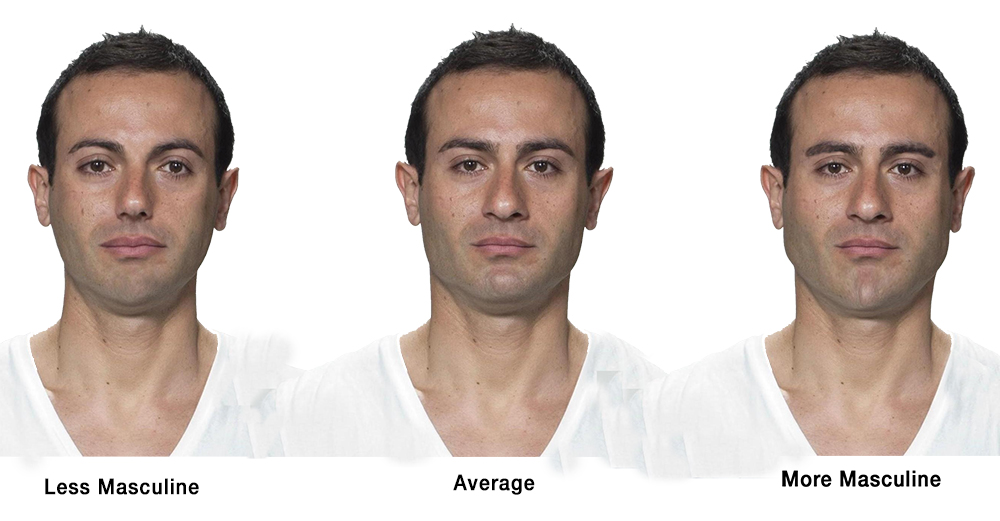
Degrees of facial masculinity are depicted below as an illustrative example.  The “average” face is from a research data set; the “less masculine” and “more masculine” faces are alterations from the “average” made by web-master and photographer Tom Carroll, especially for this post.   Changes to the jawline, cheeks, chin, lips, eyes, and eyebrows exaggerate the difference between a “feminized” male face and a strong (perhaps “hyper”) masculine face; Holzleitner’s computer-generated facial changes were more subtle, systemized, and “mathematical” along a continuum. The average face depicted here is roughly equivalent to a “moderately” masculine face.

three faces of masculinity
Women Preferred the “Moderately Masculine”

Holzleitner found that women most preferred male faces that were moderately masculine. Very masculine or feminine faces were less appealing. However, the degree of masculinity a woman preferred in a man’s face depended somewhat on her own characteristics.

Sexual Orientation-Fluidity Effect

Not surprisingly, women who had some attraction to women tended to rate feminine male faces more attractive.  Whereas women who were exclusively attracted to men had a stronger preference for more masculine faces. “The more women were exclusively sexually attracted to men, the more attractive they found highly masculine faces,” reported Holzleitner.

Recent Research on Sexual Fluidity Effect 

Variations in the sexual orientation (degree of fluidity or “hetero-flexibility”) of self-identified heterosexual women influence preferences for male facial masculinity, according to recent research by Carlotta Batres (2020) published in the International Journal of Sexual Health.  Batres is a professor and director of The Preferences Lab** at Franklin & Marshall College.

Batres and colleagues asked 27,611 heterosexual women to report their level of sexual attraction to women, level of sexual attraction to men, hormonal contraceptive use, relationship status, attitude toward casual sex, and self-assessed attractiveness. The participants were then shown pairs of male faces and instructed to select which face from each pair they considered to be the most attractive.

Sixty-two Percent of Heterosexual Women Reported Some Attraction to Women!

Even though all the women identified as heterosexual, 62.6% reported some level of sexual attraction to other women. This finding was quite significant (if not surprising) by itself.  But more pertinent to the study was the finding that attraction to women influenced assessments of male attractiveness.

“Heterosexual” Women Who Are Attracted to Women Prefer Less Masculine Faces

Batres found the same effect as did Holzleitner.  Women with higher levels of attraction to other women were more likely to view less masculine-looking male faces as more attractive.

Attractive Women Did Not Prefer Feminine Faces

Women also differed in their preferences according to their self-rated attractiveness.  Women who thought they were high in attractiveness didn’t find feminine male faces very attractive at all, but less attractive women rated them moderately appealing. Both self-rated attractive and self-rated unattractive women agreed that moderately masculine men were the most appealing and that very masculine men were slightly less so (as in “order of preference above”).

More Attractive Women Want More Masculine Faces

Stated another way, more attractive women showed less tolerance for lower levels of masculinity than did less attractive women.  The more physically attractive the woman (by self-rating), the stronger preference for higher levels of masculinity.  More attractive women also showed greater discrimination than less attractive women in their preference for masculine faces.

Male-Female Polarity Phenomenon

Greater discrimination or more “choosiness” is a predictable behavior of more attractive women.  As uncovered in Batres’ research, this result is a phenomenon of male-female polarity:  beautiful women want and get more masculine men (men with masculine facial features, taller, and with more defined v-shaped torsos). This polarity seems biologically unconscious as well as predicted by “sorting” in the mating economy.  There is a “mate value” agreement: beautiful women have a high mate value and taller, masculine men generally have higher mate value than shorter and less physically masculine men.

Beautiful Women Can “Afford” More Masculine Men

Attractive women have more immunity from the costs of disloyalty often imposed by more masculine men.  Masculine men are less likely to abandon very beautiful women.  The costs are higher for less attractive women – those women calculate the risk and often “trade” for more “beta” character traits in their choice of a long-term partner.

Women Prefer Masculine Faces in Better Economic Conditions

According to a study appearing in scientific reports  (2019), women’s preference for facial masculinity is strongest under favorable ecological conditions.    Improved economic conditions reduce the need for parental investment from men.  Women may prefer a less masculine and more loyal mate under more tenuous economic conditions – conditions for which assured parental investment is most important.

Female Short-term Mating Increases in Favorable Economic Conditions

Women’s preferences for masculine faces, bodies, voices, and odors are stronger when considering short-term rather than long-term mates.  Economically favorable conditions and reduced need for parental investment may cause women to have more interest in short-term mates and thus more masculine men, referred to as higher “sapiosexuality.”  Under favorable economic conditions, women reported greater willingness to engage in less romantically committed relationships and were more likely to select masculine faces as most sexually attractive.

Holzleitner proposed that women in prosperous countries were more sexually liberated and economically secure, thus freer to make costly mate choices.   Holzleitner’s research does seem to provide further evidence that promiscuous women tend to prefer more masculine men.

Menstrual Cycle Affects Facial Preference

Women may be attracted to masculine-looking men at the most fertile time of their menstrual cycle.  This “ovulatory shift hypothesis” contends that a woman’s preference for more masculine partners as short-term mates may be strongest at the peri-ovulatory phase of the cycle.  In a study conducted in Scotland and Japan, researchers asked women to select one “face” they were most attracted to for a short-term sexual relationship.  In the most fertile week of their menstrual cycle, women preferred more masculine faces.   During the less fertile time, women chose men with more feminine-looking faces.  These men were seen as kinder and more cooperative but less strong and healthy genetically.  However, the choice of face did not vary for women using an oral contraceptive or those asked to choose the most attractive face for a long-term relationship.  Research supporting the ovulatory shift hypothesis is not conclusive.

Preference for Masculine Faces Associated with Poor National Health

Evolutionary mating theories propose that women overlook the costs of selecting less paternally investing masculine traits to secure benefits associated with phenotypic masculinity that could enhance offspring (genetic) fitness.  Indeed, preferences for facial masculinity were highest among women living in countries and states in the U.S. that have lower health and higher levels of pathogens.  These findings are bolstered by experimental studies reporting that exposure to pathogens result in higher preferences for facial masculinity.  This suggests that any social costs of selecting masculine partners may be circumvented under conditions where potential indirect (genetic) benefits may be realized.

Confusing and Contrary Research?

While some studies have shown a preference for more masculine traits in poor health conditions, other studies have shown a preference for less masculine traits in poor economic conditions (as stated above). Undoubtedly, poor economic conditions and poor health conditions go together in some cultural-geographical environments.  This appears to reveal confusing or incompatible research results.

Preferences Related to Homicide Rates and Income Inequality

Adding to the mix of data, research by DeBruine, et al. reported that women’s preferences for facial masculinity were strongest in countries with high homicide rates, male-on-male violence, and income inequality (indices of male intra-sexual competition) rather than reduced national health.

Conclusion

In my last post (Side-swiped: Evolutionary Mismatch and Sex Differences with Mobile Dating) I explained how physical appearance takes on a disproportionately large role in dating by mobile app.  A face flickers across the screen, and juices of attraction or disapproval are registered in an instant.  The degree of facial masculinity is recorded in old regions of the brain before a reason for sexual interest can be articulated in words.   (“The face is more honest than the mouth will ever be.”)

Women’s preference for a moderately masculine face aligns with the female long-term mating strategy of finding an “alpha-dominant” man who also reveals safety and loyalty in his face.  This preference is often a compromise or trade-off made by a woman depending upon her attractiveness and mate value, degree of attraction to women, economic security, the health and safety of her environment, and her situational desire for a short-term fling.  Even her menstrual cycle may play a role in the level of facial masculinity she “requires” for sexual attraction.

Studies broadly suggest that women’s perception of male attractiveness is sensitive to facial cues of masculinity.  These facial preferences are shaped by sexual selection, which dictates the benefits and costs associated with choosing a (facially) feminine or masculine partner.

In the world of sexual selection, a face is not just a face.

References

Batres, C; Jones. B.; Perrett, D., “Attraction to Men and Women Predicts Sexual Dimorphism  Preferences,” International Journal of Sexual Health online,  Jan. 21, 2020.

Burriss, R., Ph.D., evolutionary psychologist at Basel University, Switzerland. The Psychology of Attractiveness podcast.

DeBruine, L.M., et al.  “The health of a nation predicts their mate preferences: cross cultural variation in women’s preferences for masculinized male faces. Proc. R. Soc. Lond. B. Biol. Sci. 277 (2010).

Holzleiter, I. J., & Perrett, D. I, “Women’s preferences for men’s facial masculinity: Trade-off Accounts Revisited.”  Adaptive Human Behavior and Physiology (2017) 3:304-320.

Marcinkowska, U. et al., “Women’s preferences for men’s facial masculinity are strongest under favorable ecological conditions.” Scientific Reports, March 2019.

Notes 

*Sapiosexuality (SOI) refers to the desires for and attitudes toward short-term uncommitted and long-term committed sexual partners.   More sexually open or unrestricted people report high scores for sexual openness, more sexual partners, and may not place high importance on sexual monogamy. By contrast, people with a more restricted sociosexuality have fewer sex partners and place greater importance on monogamy, love, and fidelity.  SOI varies both within and between cultures in ways that conform to mating strategy theories. 

** The Preferences Lab examines the information that faces convey.  The lab’s website says:  “It takes only milliseconds for our brains to process someone’s face, and unconsciously we use facial cues to make a myriad of social judgments, ranging from how dominant someone is to how attractive we find them.”

Appendix

From Science of Attraction and Beauty

Bilateral Symmetry

Humans and most other animals are bilaterally symmetric.   The left and right sides of the body are basically the same, including the face in humans.    Small deviations from this symmetry are called “fluctuating asymmetry” (FAs).  Behavioral ecologist Randy Thornhill and other researchers have discovered a preference for symmetry (low FAs) and its influence on human perception of sexual beauty.  Men with symmetrical bodies tend to have symmetrical faces and bodies that are more muscular, taller, and heavier than those of men with less symmetrical bodies.   A bilaterally symmetrical face is a cue to genetic quality and developmental stability.

An Asymmetrical Male Face

asymmetrical male face example

Symmetry Linked to More Sex and Orgasms

Thornhill found that men with symmetrical bodies were more athletic and more dominant in personality than their peers. He also found that symmetrical human males started having sex three to four years earlier than asymmetrical males, have sex earlier in the courtship, and have two to three times as many partners.   

In 1995, Steven Gangestad and Thornhill surveyed 86 couples and found that women with highly symmetrical partners were more than twice as likely to climax during intercourse than those with low-symmetry partners.  When women have extramarital affairs, they tend to choose symmetrical men as partners.

Symmetrical women were favored too.  They have more sexual partners than less symmetrical females and may be more fertile.  Interestingly, women’s symmetry changes across the menstrual cycle.  They are more symmetrical (and presumably more attractive to their partners) on the day of ovulation.

Averageness and Exceptionality

Humans love “average” faces (koinophilia).  The more “average” you are, or closer to the mean of all people, the more attractive you are perceived to be.  From an evolutionary perspective, a preference for extreme normality makes sense, says researcher Judith Langlois: “individuals with average population characteristics should be less likely to carry harmful genetic mutations.”

Yet, paradoxically, the faces we find most attractive are not average!  Victor Johnson at New Mexico State University found the “ideal” female had a higher forehead than average, fuller lips, shorter jaw, smaller chin and nose, and more arched eyebrows. The most exquisite people are slightly away from average.  “Average faces are attractive, but they are not usually the most beautiful.  Maybe it’s the exaggerations of certain features the creates celestial features,” Johnson wrote. 

Baby Face Phenomenon                               

Large eyes, thick lips, a relatively short nose, and a large curved forehead are considered baby face traits.  Many studies indicate that this “baby face phenomenon,” or the tendency to find infant-like facial features attractive, occurs not only because these features suggest youth, but also because they elicit the same warm feelings as our typical response to babies, both human and animal.

Golden Ratio in the Face

The golden ratio or golden rectangle is one of the most satisfying of all geometric forms.  It is a mathematical relationship (a/b = (a+b)/a = 1.618…) that appears in all of nature and science:  plants, animal bodies, painting, architecture, sculpture and even music.  It has been called the “divine proportion.” 

The golden ratio occurs repeatedly in the dimensions of the human face and produces our perception of balance and physical beauty.  The human head forms a golden rectangle with the eyes at the midpoint.   The mouth and nose are each placed at golden sections of the distance between the eyes and the bottom of the chin.  The golden ratio can be found in more than twenty facial calculations.  Human facial beauty is based on divine proportion.  From Queen Nefertiti to Marilyn Monroe, beautiful women throughout history display the golden ratio in the face.


Please Note: Your comment may take up to 12 seconds to register and the confirmation message will appear above the “Submit a Comment” text. 

Side-Swiped: Evolutionary Mismatch and Sex Differences with Mobile Dating

Side-Swiped: Evolutionary Mismatch and Sex Differences with Mobile Dating

“With the rise of the mobile dating app, we are in evolutionary unprecedented waters.” 

                        ~ Justin Garcia, Kinsey Institute

Set in the cities and college campuses of Austin, New York City, Santa Cruz, and Plainfield, Illinois, HBO laid bare the lives of Gen Zers and their use of dating apps in the 2018 documentary, “Swiped – Hooking Up in the Digital Age.”  Based on what they uncovered, HBO may have intended “swiped” as a metaphor for being disappointed or blind-sided, in addition to noting the addictive action built into the phone and app design. 

A Generation Built to Swipe

Gen Zers (up to 24 years of age) and a small number of Gen Y.1 (25-29 years of age) were exposed to the internet and computers from a very young age. It is natural (if not cognitively conditioned) to connect to their world and others through a display screen.  But Tinder, Snapchat, Instagram, and Facebook deliver and create a reality that sometimes interferes or competes with real-life (IRL).  In “Swiped,” we see scenes of young people in a crowded New York City bar – but their attention is only on their phones.  One HBO interviewee said folks are “almost zombified, looking at their phones even when all together in the same space.”  “If you called someone these days, you would probably get labeled a psychopath,” joked another young man.

“Swiping” Market is Huge

Tinder estimated there were 1.5 billion swipes per day in 2018.  As a part of a 2.5 billion dollar dating industry, 40 million Americans use online dating.   Adults age 18 to 30 spend an estimated 10 hours a week on dating apps.  One out of two single people in the US has a profile on a dating app.

We Evolved in Small Groups with Few Potential Mates

Dating by mobile device may conflict with our evolutionary hard-wiring.  In an interview for “Swiped,” evolutionary psychologist David Buss explained the problem with dating apps:  “We evolved in the context of small groups ranging from 50 to 150 with limited geographical mobility. You would encounter perhaps a few dozen potential mates in your entire lifetime.  We take this small-group dating psychology and transplant it in the modern world with thousands of mates, and it triggers this short-term mating psychology in a way that never would have been triggered ancestrally.”  And with all of these options, the value of each person in the mating economy goes down.

Evolutionary Mismatch

The field of evolutionary psychology has become more interested in these instances of modern “evolutionary mismatch.”    “Since organic evolutionary processes take a long time to effect change, our minds are better suited to ancestral, pre-agricultural contexts than they are to modern contexts,” says Glenn Geher and Nicole Wedberg in their book Positive Evolutionary Psychology (2020).  Studies of pre-agricultural forms of diet and exercise (paleo fitness and movement) and ways to increase “social capital” in our cities are examples of solution-focused evolutionary psychology.  Mobile apps as currently designed may not be part of the solution.

We are engaging ancient biological parts of our behavior, but the platform is novel and unprecedented. With the rise of the mobile dating app, we are in evolutionary unprecedented waters,”  cautions Justin Garcia of the Kinsey Institute.

A Picture is Worth a Thousand Deceptions

The dating app photo, especially on Tinder, is everything.   Physical appearance overwhelms all other information and takes on a disproportionately larger role.  As described in the film by clinical psychologist Jennifer Powell-Lunder, mating strategies are evident on the apps: “men present in a very stereotypical male way – providers, hunters, puffing up their chests.  And women present in more sexual ways.”  Powell-Lunder identified a phenomenon brought on by the relative anonymity of the mobile app.  She called it the “Clark Kent syndrome.”  “Mild-mannered average guys get to feel like a Superman, powerful and sexually aggressive.”  This kind of dating is all “performative,” she says.

Male-Female Difference

Men and women use these apps differently.  Hinge CEO and founder, Justin McLeod, was interviewed in the HBO film:  “Women are more selective.  On the whole, a majority of women are looking almost exclusively for a relationship on these services.  The majority of the men are primarily looking to hook-up.”  Those looking for a hook-up have the upper hand in this new world.  Women in the documentary lamented: “Guys will have one girlfriend per network (Instagram, Twitter, Facebook, and Snapchat).”

Traditional Romantic Relationship vs. a Hook-Up

In a lecture to the Feminist Student Association at the University of Indiana, Garcia presented data from college students about which type of relationship they preferred — a traditional romantic relationship (TRR) or a  hook-up.  Sixty-three percent (63%) of the men said they preferred TRR, and 34% said they favored a hook-up.  Eighty-three percent (83%) of the women preferred TRR and just 13% wanted a hook-up.  One woman in the documentary said, “I want a boyfriend; I don’t want a fuck buddy.”  CEO and founder of Tinder, Sean Rad noted “80% of users are looking for a serious relationship.”  This is about right for the women, but not overall.  Rad might be exaggerating a big to make Tinder look a bit nobler.  In the film, females actively looking for hook-ups on Tinder were derisively called (by the men) “tinderellas.”

Men and Women Differ in Comfort Level of Hook-up Behaviors

Garcia also reported on women’s comfort level for certain hook-up behaviors compared to what was attributed to them by men (on a scale of -5 to +5).  Men overestimated a women’s comfort level with sexual intercourse and oral sex (both giving and receiving) by a significant margin.

 Design and Addiction of the App Architecture

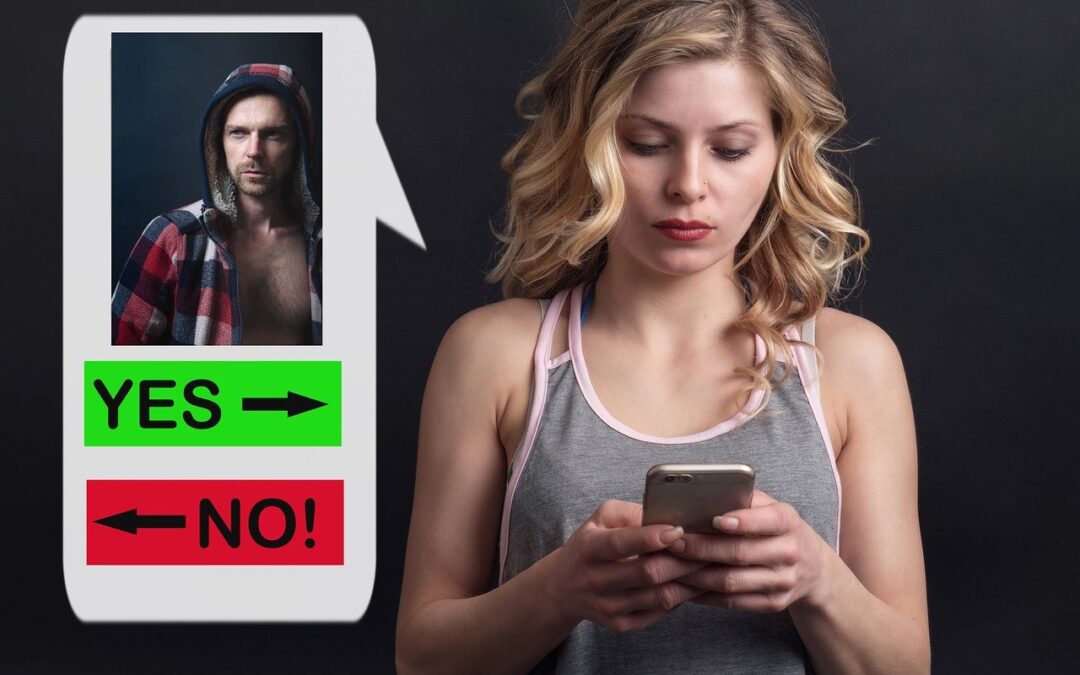
The architecture of dating apps is built for split-second decision-making  – are you “hot or not?”

Gamification is a well-researched design feature.  Swiping produces unpredictable yet frequent rewards – intermittent reinforcement based on the operant conditioning studies of B.F Skinner.  (Pigeons are the precursors to swiping-obsessed GenZers.) Visual pop-ups show a match with fanfare and a dopamine rush.  Yet, anticipation is a greater rush than the reward.  Like gambling addiction, swiping or sexual compulsion is more of a “high” than a genuine pleasure.

Effects On Emotional Health and Relationship Satisfaction

“I hate it that everything depends upon how you look,”  said a young woman from Austin.  One clinical expert interviewed by HBO said, “mobile apps cause us to feel like we are always dating, always promoting your product.”   A black woman from New York City spoke of emotional abuse from an online relationship.  “I was heartbroken.  I feel like he treated me like an object almost.”   A college student in Santa Cruz gave a male perspective:  “if you do care, you have to not show it; you act like you don’t.”

Women overall are wary and disappointed in the digital online environment.  Men are pleased and discouraged by dating using the apps.

The Hinge Difference?

McLeod says Hinge is “designed to be deleted.” Unlike his swipe-centric rivals, McLeod doesn’t want his user base to stay endlessly glued to the app. McLeod has drug addiction in his history – he understands this problem.  McLeod described Tinder “as a numbers game where users were betting to find a match after never-ending swipes.  It just turned into a game in a casino.”  McLeod realized that it was time for love-seekers to put themselves out there.  “It is about vulnerability and opening up and softening your edges.”

Hinge no longer conforms to the swipe template. Instead, users (as of in 2019) have to answer a choice of three prompts that encourage sensitivity.  Instead of the “hot selfie,” Hinge encourages “photos that lend themselves to a conversation.”

Hinge Inspired Modern Love

McLeod’s own love story is depicted in Episode 2 of Amazon’s highly praised Modern Love.   Dev Patel’s character builds an app called Fuse and reconnects with his soulmate just before she was supposed to marry another man.  In real life (IRL), McLeod flew to Europe and declared his love for his long-lost soulmate, Kate, one month before her wedding to another man.  McLeod and Kate got married and have a child.  McLeod’s real love story informs his approach to Hinge, although Hinge has been fully acquired by dating monopolist IAC Match Group, which also owns Tinder.

Does Bumble Empower Women?

“Bumble is a site where only women are going to make the first move,” explains a female Bumble executive interviewed for the documentary.   But does Bumble empower women?   Zoe Strimpel, a dating historian and columnist for The Sunday Telegraph, said, “Bumble is just codifying that women have to do more work – have the burden of dating – the communication and emotional work.”   Regardless of the questionable premise (IMO) that women have “the burden of dating,”  Strimpel “does not see how Bumble fixes the mistakes that Tinder has made.”

Gay Apps Maybe Provide a Needed Service

The documentary explains how dating apps and the internet generally have given gay men and lesbians more access to each other.  Garcia said the internet is good for the LGBTQ community in that regard.  But one man complained that it has cut down on “cruising” in person, which he described as fun and, more importantly, part of gay culture.  One gay Austinite said that when he sees a guy in a bar, he immediately goes to Grindr to find out more about him and even communicates to him through the app as he stands just 30-feet away.  One gay site gets a favorable mention.  SCRUFF is supposedly a top-rated and reliable app for gay, bi, trans and queer guys to connect. 

Physical Risk in the App Ecosphere

Online-related sexual assault has multiplied over the years.  According to general news and wellness site, Phactual, one out of every ten sex offenders uses online dating to meet people.  A 2018 Buzzfeed article told the story of an alleged “Tinder Rapist” who said he felt entitled to sex from a female he’d met on the dating app because “she wanted it and the Tinder app was for that.”

“Are dating apps contributing to rape culture?”   Mandy Ginsberg, CEO of IAC Match Group, avoided answering that question in the documentary, citing the company’s focus on safety tips for women.  (IAC Match Group owns Match, Tinder, Plenty of Fish, OK Cupid, Black People Meet, Senior People Meet, and now Hinge.)

Revenge Porn is a Nasty Artifact

As starkly depicted in the HBO documentary, sexting is also a risk.  One in 25 Americans has been the target of revenge porn – the unauthorized use and spread of nude photos.  Instagram photos of all types may lend themselves to reputation damage, even affecting employment and careers.  Tinder co-founder and CSO Jonathan Badeem seemed sympathetic but had no concrete plans (at the time of filming by HBO) to stop revenge porn or reduce the incidence of sexual assault associated with the app.

Future of the Apps and Mobile “Dating” Experience

“The use of apps will not slow down because there is too much money to be made,” according to Adam Alter, a social psychologist at New York University. He added, “the apps are getting better and better at designing experiences that are addictive.” Furthermore, virtual and augmented reality apps are coming!

 Through Eyes of Alex and Kyle

Midway through the documentary, we are introduced to an adorable couple in New York City.  Alex and Kyle found each other on an app and felt authentically connected as friends and lovers.  They had great simpatico and playfulness — enough trust and comfort to try to be with a third person.  (Alex, the woman, is a self-proclaimed “heteroflexible”).  They swiped together as a couple, looking for a woman to join them.  It was exciting and fun.  Their coupling seemed to work.  At the end of the documentary, we see them for the third time. Kyle and Alex sat on the bed and reflected on their relationship together. Now, it seems, they are not a couple.

 But Love is Sweet

 Kyle became distant, and he does not know why.  Kyle hooks-up with other women on Tinder. Alex seemed sad and resigned.  She wanted a real relationship with Kyle.  She tells the camera that expressing love is sweet. She can have other sexual encounters if she wants to (and does), but we get the impression that she just wanted a committed relationship with him.

“Tinder Exhausts Me”

 Alex finally says, “Tinder exhausts me but I use it to judge people, and I like to swipe.  I like doing the swiping, I always have.”  “Nothing good happens from Tinder,” says Kyle in response. Then, Alex turns to Kyle and gives him a penetrating look, “we met on Tinder.”

Summary

  • Digital apps produce a vastly different environment for short-term mating from what existed in our evolutionary past.
  • The focus on physical looks has dramatically increased in the digital environment. This change is especially significant in the overall mix of female sexual strategies.  Short-term mating for women has always put more emphasis on physical attractiveness, facial symmetry, and a man’s v-torso.  A woman’s predominant long-term strategy, which still operates on the apps, emphasizes character, resources, and commitment.
  • Young women are having a bit more casual sex because of this environment, but they are not necessarily more satisfied. (There was only one woman depicted in “Swiped” that seemed centered and comfortable with a non-monogamous lifestyle.)
  • Though women are experimenting more with casual sex and non-monogamy, 80% of women want or use the apps in hopes of developing a long-term relationship.  This confirms the hard-wired difference of mating strategies between men and women.
  • Few long-term relationships come from dating app hook-ups.
  • Women overall are wary and disappointed in the digital online environment.
  • Men are pleased and discouraged by dating using the apps.
  • HBO’s documentary does not explore the sex-ratio difference on college campuses (more women than men) that has also contributed to changes in the female approach to casual sex and intrasexual competition between women, and is the cause of multiple partners for men.
  • Women rightly fear rape and other kinds of abuse (physical and emotional) or assault.
  • Reputation damage and revenge porn have dramatically increased with the use of dating apps and the reach of the internet.


Please Note: Your comment may take up to 12 seconds to register and the confirmation message will appear above the “Submit a Comment” text. 

Want An Equal Marriage? Then Date As Equals

Want An Equal Marriage? Then Date As Equals

Based on “If You Want a Marriage of Equals, Then Date As Equals,” by Ellen Lamont in The Atlantic, February 14, 2020.

“I know it feels counterintuitive…..I’m a feminist,” the first woman said.  “But I like to have a guy be chivalrous.”

Heterosexual women with progressive-liberal political leanings often say they want an equal partnership with men. “But dating is a different story entirely,” according to feminist sociologist Ellen Lamont of Appalachian State University and author of  The Mating Game: How Gender Still Shapes How We Date. Lamont’s research found that such women expected men to ask for, plan, and pay for dates.  They also expected men to initiate sex, confirm the exclusivity of a relationship and propose marriage.  “After setting all those precedents, these women then wanted a marriage in which they shared the financial responsibilities, housework, and child care relatively equally,” wrote Lamont in an article for The Atlantic.  Very few of Lamont’s female subjects saw these dating practices as a threat to their feminist credentials or their desire for egalitarian marriages.  Lamont says they are wrong on both counts.

Glaring Disconnect – Progressive Beliefs vs. Lived Experience

Lamont noticed a glaring disconnect between straight women’s views on marriage and thoughts on dating.  Lamont found that once these women were married, it was difficult to “right the ship.”  The same gender stereotypes that they adopted while dating played out in their long-term partnerships.

Interviewing “Woke” Millennials

Lamont interviewed heterosexual and LGBTQ people in the San Francisco Bay area – highly educated, professional-track young adults.  Everyone she interviewed was quite vocal in their support of gender equality and readily accepted the label “feminist.”

Three-quarters of millennials in America support gender equality at work and home and agree that the ideal marriage is equitable.  Consequently, Lamont expected her female interviewees to epitomize feminist liberation.  Yet, when they thought of equality among men and women, they focused more on professional opportunities than on interpersonal dynamics.

Gender Equality Gains at Work – Not at Home

Lamont had long been interested in how gender influences behavior in romantic relationships. She was well aware that research showed more significant gains in gender equality at work than at home.   Americans with a college education now get married in their early 30s on average.  Young adults put their love life on hold while they invest in their education and establish a career.  Lamont’s female subjects expected their partner to support their ambitious professional goals.  The men said they desired and respected these independent, high-achieving women and saw them as more compatible partners as a result.

“It’s a Deal Breaker If He Doesn’t Pay”

“Can I be a self-sufficient, empowered woman and still enjoy it when a guy picks up the check?” appeared as a question in a recent Vogue opinion column.  Apparently, the answer is “yes.”  Many of the women Lamont spoke to enacted strict dating rules.  “It’s a deal-breaker if a man doesn’t pay for a date,” one 29-year-old woman said.  A 31-year-old woman said, “if a man doesn’t pay, “they just probably don’t like you very much.”  The women assumed that many of the men were looking for nothing more than a hook-up, so some of these dating rituals were tests to see whether the man was truly interested in a commitment.  A third woman, also 31, told Lamont, “I feel like men need to feel like they are in control, and if you ask them out, you end up looking desperate, and it’s a turnoff to them.”

Risk of Not Paying: Reduced Mate Value

Female commentators in the relationship advice genre for men have suggested that men pay for first dates (at least) as a default position, lest the man is viewed as:

  • Cheap (unnecessarily frugal and no fun)
  • Ungenerous of character (does not readily give to others – a serious red flag)
  • Poor (on a tight budget – definitely a limitation as a potential mate)
  • Not interested in the woman (a possible false negative)

It is no wonder that men err on the side of paying even if they hope for equity in a long-term relationship.  First, they have to “win the day” and protect their first impression – and their perceived mate value.

“I Like a Guy to be Chivalrous”

On dates, the women talked to Lamont about acting demure and allowing men to do more of the talking.  Women, they said, were more attractive to men when they appeared unattainable, so women preferred for the men to follow up after a date.  None of the women considered proposing marriage; that was the man’s job.  “I know it feels counterintuitive…..I’m a feminist,” the first woman said.  “But I like to have a guy be chivalrous.”

Men Want These Rituals?

Not all of the heterosexual women Lamont interviewed felt strongly about these dating rules.  “Yet even the few women who fell into this category,” says Lamont, “tended to go along with traditional dating rituals anyway, arguing that the men they dated wanted these rituals, and the women just didn’t care enough to challenge the status quo.”  Yet, some men admitted to Lamont that they had run into “conflicts” with strong-willed women.

Men Sometimes Resisted

The heterosexual men Lamont interviewed claimed that a woman’s assertiveness took the pressure off them.  While some liked paying for dates, feeling that the gesture was a nice way to show they cared, others were resistant.  One man told Lamont that he splits the cost of a date fifty-fifty.  “Just because I carry the penis does not mean that I need to buy your food for you.  You’re educated or want to be educated; you want to be independent  – take your stance.”

Undoing Gender Roles in Marriage Was Difficult

Lamont found that when men and women endorsed these traditional gender roles early in their relationship, undoing those views in marriage was difficult. The married men she interviewed often left caregiving and housework to the women and considered themselves primarily breadwinners and decision-makers.  Time-use surveys in the U.S. show that women still do about twice as much unpaid labor in the home as men.  One woman said of her husband, “he’ll take our son on bike rides with him.  But in the middle of the night, I’m the one getting up.”

Set Up Expectations from the Outset

The majority of LGBTQ people Lamont interviewed wanted no part of the dating scripts they saw as connected to gender inequality.   “We have explicitly said we’re not normal or traditional so that we can write the script ourselves.”  Most noteworthy, the LGBTQ interviewees set up the expectations of equality from the outset of dating, not after it. This approach shifted their understanding of what was possible for intimate relationships, and they, for the most part, had more equal long-term relationships as a result.

Outside of the Heterosexual Mating Dynamic

LGBTQ individuals espoused similar ideals about equity but were more likely to reject and resist dominant courtship scripts.  This resistance is not surprising to evolutionary psychologists.  Once outside of the male-female mating dynamic (based on sexual selection for reproduction) and the co-evolutionary “arms race” of competing male-female sexual psychologies, it is expected that such courtship rituals would have less relevance.

Sociology vs. Evolutionary Psychology

According to fellow academics who reviewed her book, Lamont uses the “sociological imagination” to interpret her data.  A focus on the relationship between individual agency and larger social structures represents the customary sociological view of the bidirectional relationship between individuals and society.

Lamont does not seem to understand or acknowledge the evolutionary power of male-female differences in mating strategy that undergirds traditional courtship scripts.  Traits that have a long evolutionary history for successful mating either supersede or interact with existing social structures.  Confidence and displays of status and competence are critical attractors for women; they are unconsciously embedded in many traditional courtship rituals.

It is Not “Counterintuitive” – It is Sexual Selection

“I want a man who’s kind and understanding. Is that too much to ask of a millionaire?”  ~ Zsa Zsa Gabor

Women want both power (resources) and kindness in their mates. Women have a natural attraction and sexual charge for alpha traits (which are preeminently desired) but also have a secondary need for safety and loyalty (beta traits) to ensure long-term mating success and ongoing provision and protection of children.  Male beta traits are more correlated with progressive-liberal political leanings and likely incorporate favorable views of feminist ideology; these traits mostly signal kindness, not power.

Female Competing Preferences – the Trade-off Problem

Because status and power do not easily co-exist with loyalty and kindness, women must often choose between these traits (what evolutionary psychologists call the “trade-off problem”) in an attempt to find the right combination in a chosen mate.  Men of status and power usually get the first or longest “interview” with women.  The sexual attraction to them is strongest; the hope is that the man will turn out to be loyal and authentically generous – at least for that particular woman.

Double Trouble for Men

Women’s competing mate preferences often cause double binds for men.  (See Psychological Double Binds Imposed on Men.)  The man wants to please a woman, but she may be confused from moment to moment or in a constant state of dilemma and tension about what she wants and needs.  She wants a chivalrous suitor AND an egalitarian partner.  (To be fair, those behaviors are not necessarily mutually exclusive.)

Trade-off Problem in Era of Female Empowerment

“A showdown between traditionalism and egalitarianism is underway.”  ~ Ellen Lamont

The “trade-off” problem for women has become particularly acute during the modern era of female empowerment and feminist cultural framing; the “shadow self” of female biological imperatives has become more hidden yet prone to “leak out” with mixed messages to the surface of present-day male-female mate selection and romantic-sexual relating.

Lamont uncovered these mixed messages in her research. The first step in addressing a double bind, hypocrisy, or a mixed message is to see it and name it for what it is – or write a book about it, in Lamont’s case.

Dating As Equals – “I Want This and That”

Here are a few mixed messages (expression of needs) from women related to the issues of “dating as equals.”  Men often process them as menacing double-binds.   It is challenging to find a compromise or middle ground in response, although it is not impossible for an emotionally intelligent and strong man.

As Lamont discovered, these needs often lurk underneath the contemporary tension between men and women in heterosexual relationships.  They operate on a continuum but are magnified here without nuance to bring clarity to their evolutionary roots and power —  and to demonstrate the reason why they are so “undiscussable.”

Even liberated women might say:

  • “I want full equality of economic power and opportunity, but I also want to mate with a man who has as much or more power than me, and preferably more power than other men.”
  • “I will rail against gender power inequality while I actually want to partner and have sex with a man who is at the top of the power hierarchy.”
  • “I want a man who embraces feminist positions politically while being an alpha among his peers.”
  • “Please have the willingness and capacity to provide, be generous, make decisions, be chivalrous, and offer protection. I prefer that you offer to pay for most everything and never expect me to pay for you.  I do not want to embrace the role of ‘receiver of gifts’ even though it turns me on.”
  • “I want to be seen as taking care of myself. Provide for me in some way but do not patronize or disempower me as you do that.”
  • “Please help around the house! But your domestication may remove my sexual charge for you.”  (This possibility has been found in a study or two.)
How “Gender” Still Shapes How We Date

Lamont’s research and book look at how people with diverse gender identities and sexualities date, form relationships, and make decisions about commitments as they negotiate an uncertain romantic landscape.  She uncovers how “gender” still shapes how we date.

Lamont’s decidedly liberal subject sample makes a strong case that espoused progressive cultural values do not dramatically change the courtship behavior of heterosexuals.  Evolutionary mate selection dynamics, biological imperatives, and the nature of male and female sexuality most often supersede new cultural norms.  Women want men who show confidence, initiation, and generosity –  the capacity to use resources on their behalf.

Conclusion

Lamont says that most heterosexuals engage in courtship rituals that reinforce gender differences despite claiming a desire for egalitarian relationships with equal division of work/household labor and financial independence of both partners.  Lamont makes the case that by clinging to traditional courtships scripts, young adults unwittingly undermine the gender revolution they say they embrace.

Epilogue

 “Ultimately, what was revealed (it seemed to me), unspoken but acted upon, was that the ‘old male’ was still very much desired by women for the security they delivered.” 

~ Steven Fearing, Origins of Mating Straight Talk – Reasons and Reflections

References

Lamont, E. “If You Want a Marriage of Equals, Then Date As Equals,” The Atlantic, February 14, 2020.

Lamont, E. (2020). The Mating Game: How Gender Still Shapes How We Date.

Please Note: Your comment may take up to 12 seconds to register and the confirmation message will appear above the “Submit a Comment” text.